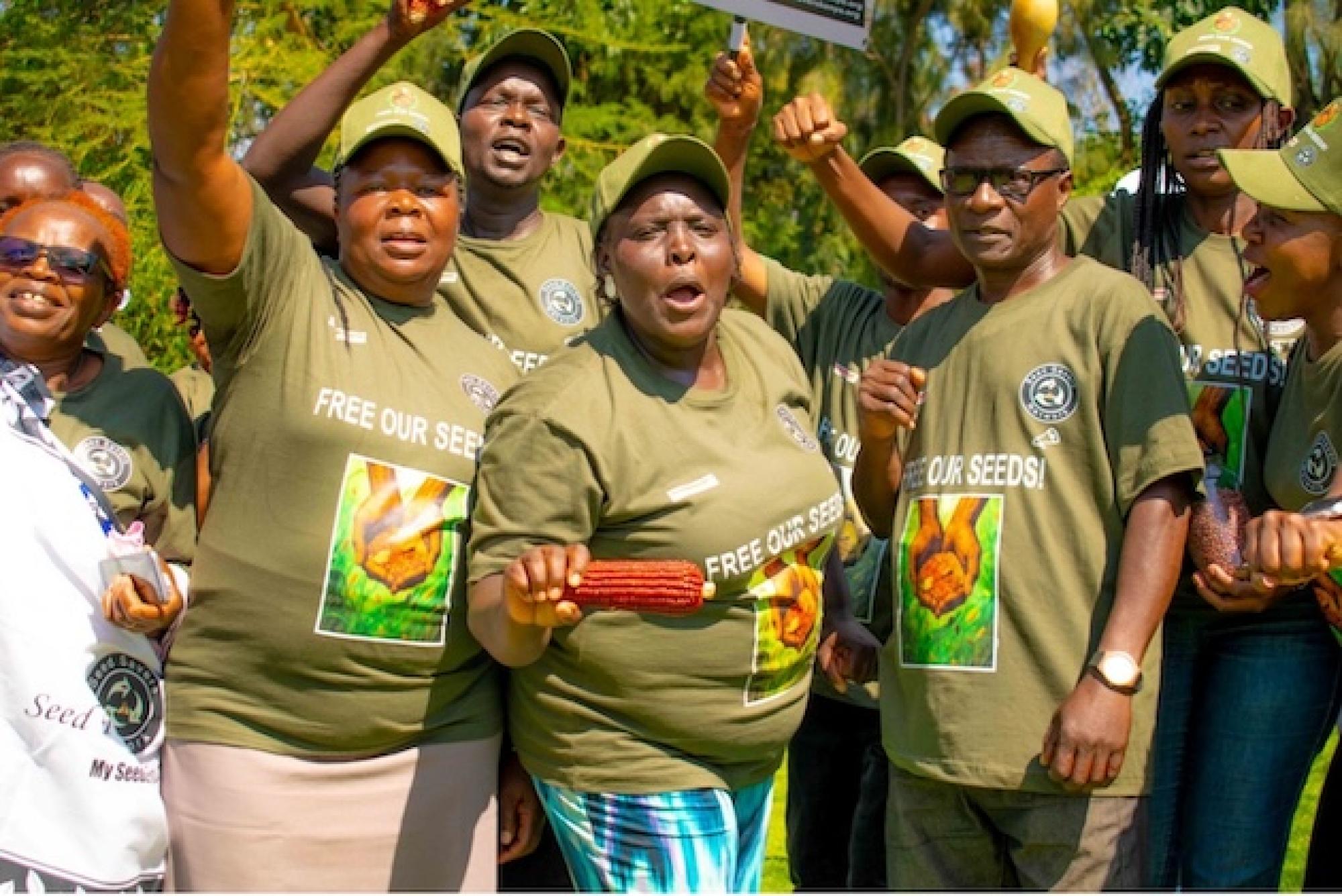
Kenya's highest court recently struck down as unconstitutional a law that forbade seed sharing, a long practiced traditional means of diversifying crop production and resilience. The law, whether inadvertently or by design, made Kenya another country within the network of those whose seed industry is virtually controlled by a small group of international conglomerates like Bayeror Monsanto before it was bought out. Advocates on behalf of small-scale farmers and indigenous communities in Kenya said the 2016 Seeds and Plant Varieties Act infringed on their rights to practice indigenous activities, while advocates for seed-saving and seed-sharing say that the practice produces drought-resistant, pest-resistant crops better suited to local areas that don't require as many imported agrochemicals to grow. In November, Kenyan High Court Justice Rhoda Rutto ruled that by limiting "access to traditional and indigenous seeds, contrary to the Constitution," the law violated "the petitioners' and small-scale farmers' cultural rights" and eroded "the cultural distinctiveness of Kenya's indigenous peoples." "This judgment rightly recognizes that seed sharing is not a crime, but a fundamental element of peasants' identity, resilience and contribution to national food systems," said the Working Group on Peasants. Like many traditional farming cultures, Kenyan farmers share and exchange seeds after the growing season, and over time this has led to millions of genetically distinct crops.
Latest
Latest News
Each news summary is created according to strict standards. Here's how we do it.
Each summary is created using a consistent editorial procedure. The target length is approximately 16 lines of 11-point Arial text in a 650-pixel-wide column. Up to 25% of a summary may be set in bold to emphasize the most important ideas. Summaries are composed of verbatim excerpts presented in the same sequence as they appear in the original news source, with very minor editorial additions. Where material has been omitted between excerpts, the omission is indicated with ellipses (...). Any words added by an editor for clarity or context appear in [brackets]. Our original news editor was Fred Burks. Tod Fletcher edited most summaries from 2007 through 2014, and Mark Bailey has served as news editor since 2014.