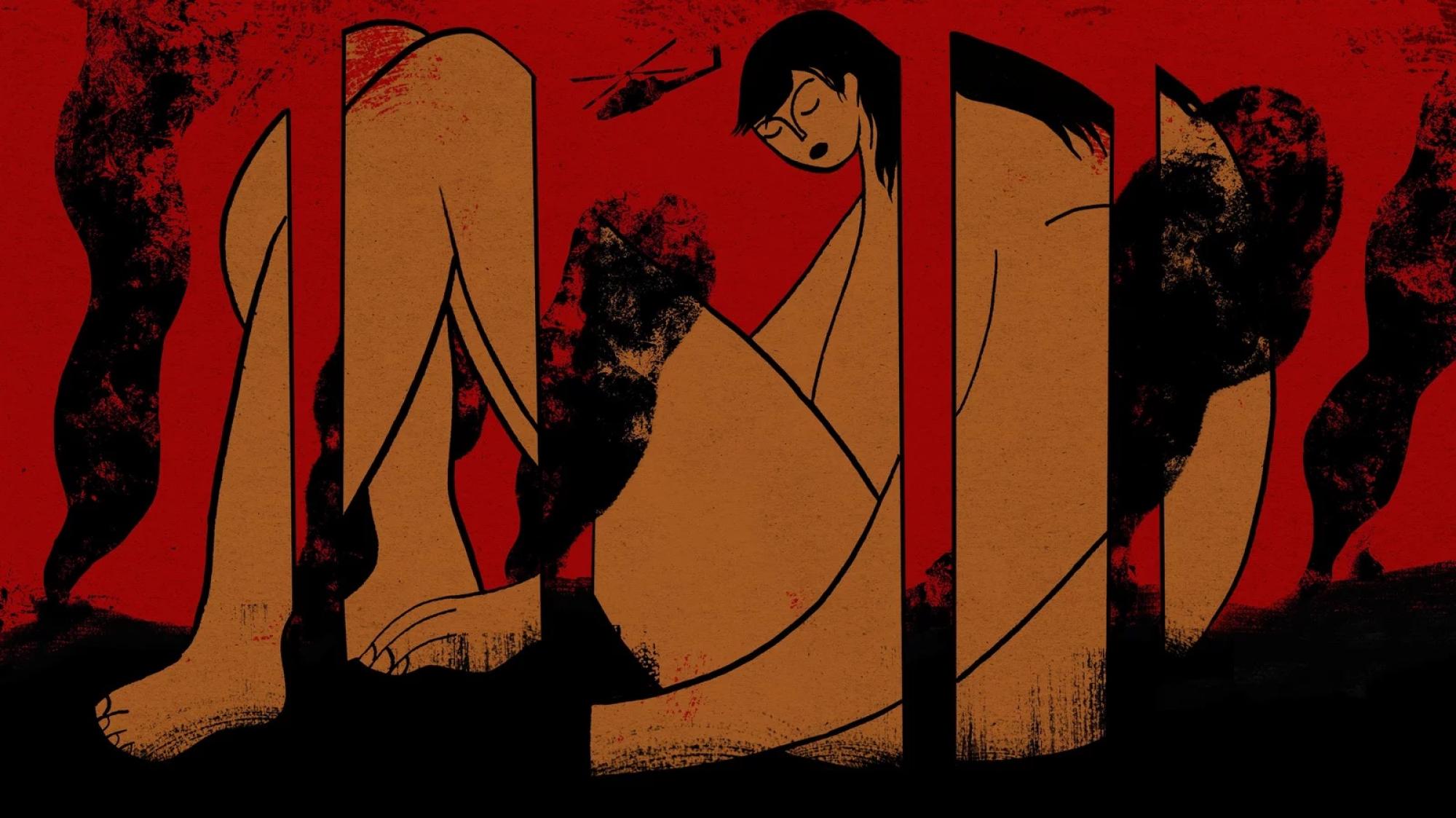
Despite its long history as part of conflicts, sexual violence is often not reported because of the trauma and shame it brings to survivors, their families and their wider communities. There has also been reticence among various authorities to speak out. Only in modern times, in the 1990s when wars broke out in Rwanda and Yugoslavia, did the United Nations begin to recognize sexual violence as ... a category of war crime. The specific term conflict-related sexual violence," or CRSV, was first introduced in 2000 when the United Nations Security Council issued a resolution that launched the Women, Peace and Security Agenda. The U.N. defined the term as "rape, sexual slavery, forced prostitution, forced pregnancy, forced abortion, enforced sterilization, forced marriage and any other form of sexual violence of comparable gravity perpetrated against women, men, girls or boys that is directly or indirectly linked to a conflict." [CRSV] is widespread and is used as a tactic of war to assert dominance and power. "It can be just as traumatizing to see your daughter, your sister or your parents being raped in front of you," says [Dr. Ranit] Mishori. "Or you're forced to strip naked in front of soldiers or in the city square. People often carry this trauma without knowing it's an international crime and minimize what happened to them." For conflict resolution and peace building to be successful, survivors need to be included in the process. For some countries this method has already started to work. [In Colombia], they have built women into the peace process. It's not perfect " no peace is perfect " but it is progressive and it is intentional, and that is important. Intentional peace building must be inclusive of survivors of this form of violence.
Latest
Latest News
Each news summary is created according to strict standards. Here's how we do it.
Each summary is created using a consistent editorial procedure. The target length is approximately 16 lines of 11-point Arial text in a 650-pixel-wide column. Up to 25% of a summary may be set in bold to emphasize the most important ideas. Summaries are composed of verbatim excerpts presented in the same sequence as they appear in the original news source, with very minor editorial additions. Where material has been omitted between excerpts, the omission is indicated with ellipses (...). Any words added by an editor for clarity or context appear in [brackets]. Our original news editor was Fred Burks. Tod Fletcher edited most summaries from 2007 through 2014, and Mark Bailey has served as news editor since 2014.