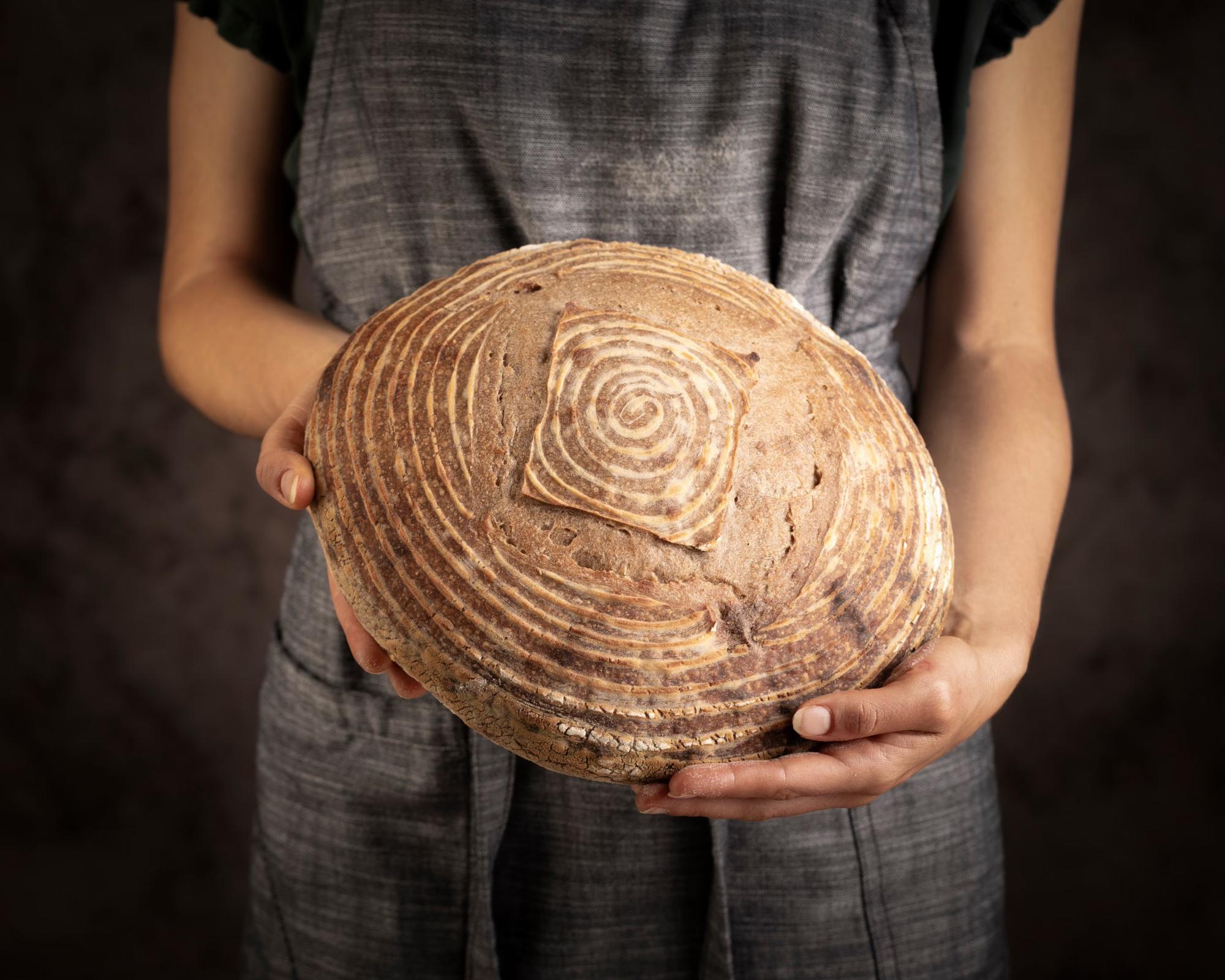
"These plants are the winners, the ones that get to pass their genes on [to future generations]," says Lee DeHaan of the Land Institute, an agricultural non-profit based in Salina, Kansas. If DeHaan's breeding programme maintains its current progress, the descendant of these young perennial crop plants could one day usher in a wholesale revolution in agriculture. The plants are intermediate wheatgrass. Since 2010, DeHaan has been transforming this small-seeded, wild species into a high-yielding, domesticated grain crop called Kernza. He believes it will eventually be a viable " and far more sustainable " alternative to annual wheat, the world's most widely grown crop and the source of one in five of all calories consumed by humanity. Remarkably, DeHaan does not paint the current agricultural-industrial complex as the enemy. "Every disruptive technology is always opposed by those being disrupted," he says. "But if the companies [that make up] the current system can adjust to the disruption, they can play in that new world just the same." The Land Institute's strategy is redirection rather than replacement. "Our trajectory is to eventually get the resources that are currently dedicated to annual grain crops directed to developing varieties of perennials," says DeHaan. "That's our [route to] success." There are signs that this is already working, with the food firm General Mills now incorporating Kernza into its breakfast cereals.
Latest
Latest News
Each news summary is created according to strict standards. Here's how we do it.
Each summary is created using a consistent editorial procedure. The target length is approximately 16 lines of 11-point Arial text in a 650-pixel-wide column. Up to 25% of a summary may be set in bold to emphasize the most important ideas. Summaries are composed of verbatim excerpts presented in the same sequence as they appear in the original news source, with very minor editorial additions. Where material has been omitted between excerpts, the omission is indicated with ellipses (...). Any words added by an editor for clarity or context appear in [brackets]. Our original news editor was Fred Burks. Tod Fletcher edited most summaries from 2007 through 2014, and Mark Bailey has served as news editor since 2014.