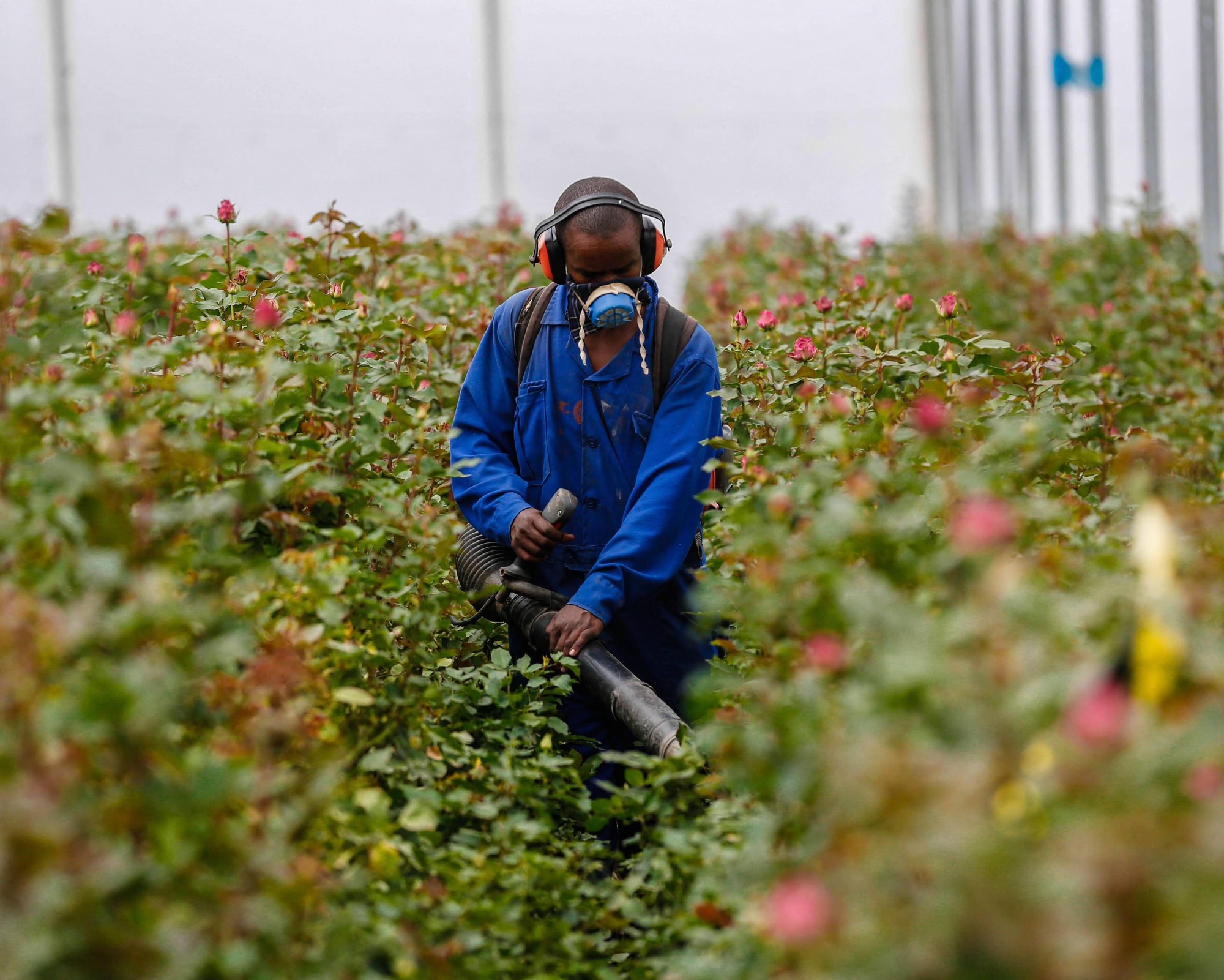
For two decades, Phyllis Nduva, 72, has grown mangoes and citrus in Wote, a town in Kenya’s eastern Makueni County. In the beginning, she only had to worry about ordinary fruit flies. She handled them simply, buying chemical pesticides and spraying her trees. But then, in 2014, the false codling moth turned up on her farm. She sprayed her trees frequently but in 2016 lost more than 60% of her harvest to the pest. That was when she began to investigate the alternatives and became interested in integrated pest management (IPM), where farmers reduce their pesticide use and instead combine approaches including traps, natural predators, field sanitation and selective pesticide use. IPM was developed in response to steadily increasing pesticide use and became internationally recognised in the 1960s and 1970s after concerns grew about pesticide resistance, environmental pollution, health risks to farmers and consumers and destruction of beneficial insects such as bees. A review by the British government in 2020 found that IPM could be effective at reducing pesticide use while controlling pests and diseases. It was complex, but it reduced costs for farmers and was beneficial for biodiversity. “The shift from chemical pesticides to IPM was not just an agricultural decision; it was a moral one,” Nduva said. “I realised that what I was doing was harming the environment, exposing my family and consumers.
Latest
Latest News
Each news summary is created according to strict standards. Here's how we do it.
Each summary is created using a consistent editorial procedure. The target length is approximately 16 lines of 11-point Arial text in a 650-pixel-wide column. Up to 25% of a summary may be set in bold to emphasize the most important ideas. Summaries are composed of verbatim excerpts presented in the same sequence as they appear in the original news source, with very minor editorial additions. Where material has been omitted between excerpts, the omission is indicated with ellipses (...). Any words added by an editor for clarity or context appear in [brackets]. Our original news editor was Fred Burks. Tod Fletcher edited most summaries from 2007 through 2014, and Mark Bailey has served as news editor since 2014.