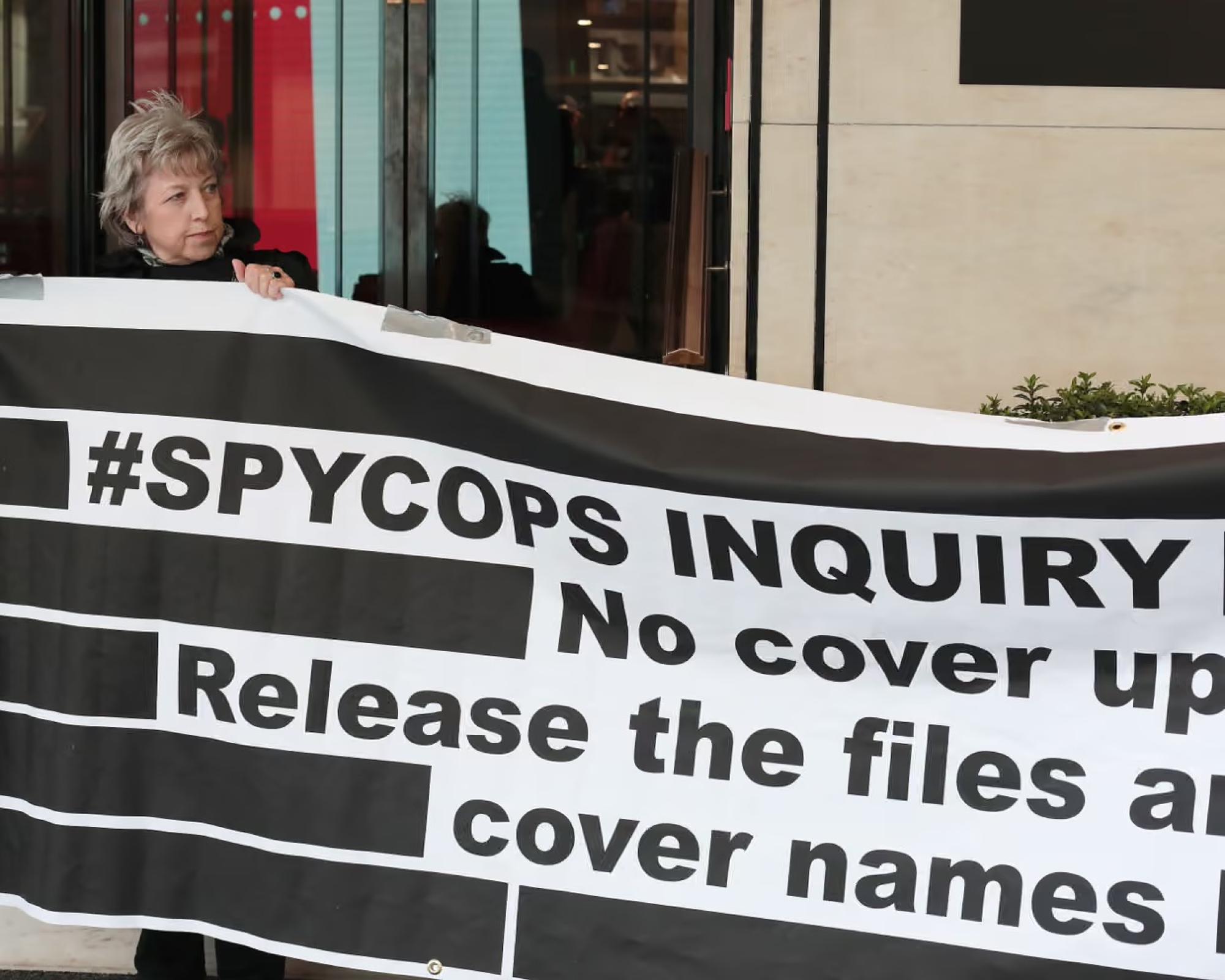
Thousands of surveillance reports compiled by undercover police officers who spied on political campaigners were routinely passed to MI5, documents obtained by the spycops inquiry have revealed. Police sent undercover officers on long-term deployments to infiltrate mainly leftwing protest groups and gather enormous quantities of information about their political and personal activities. It can now be revealed that most of those clandestine reports were sent to MI5, helping the Security Service to build up large files on peaceful protesters who were engaged in democratic protests for an array of causes. MI5 still retains these surveillance reports in its files today. Officers have been criticised for spying on thousands of political organisations such as campaigns against racism and nuclear weapons, the Socialist Workers party, justice campaigns and trade unions. Their reports logged personal information about protesters, including their marriages, sexuality, holiday plans and bank accounts, as well as their plans for political action such as demonstrations. Stamped on the surveillance reports are a tell-tale sign " Box 500, a nickname for MI5 ... which confirms that they were sent to the Security Service by the police spies. Working in tandem, senior police officers running the undercover spies and MI5 met regularly to discuss the political groups they wanted to infiltrate. On several occasions, MI5 warned that particular police spies were in danger of being rumbled by activists.
Latest
Latest News
Each news summary is created according to strict standards. Here's how we do it.
Each summary is created using a consistent editorial procedure. The target length is approximately 16 lines of 11-point Arial text in a 650-pixel-wide column. Up to 25% of a summary may be set in bold to emphasize the most important ideas. Summaries are composed of verbatim excerpts presented in the same sequence as they appear in the original news source, with very minor editorial additions. Where material has been omitted between excerpts, the omission is indicated with ellipses (...). Any words added by an editor for clarity or context appear in [brackets]. Our original news editor was Fred Burks. Tod Fletcher edited most summaries from 2007 through 2014, and Mark Bailey has served as news editor since 2014.