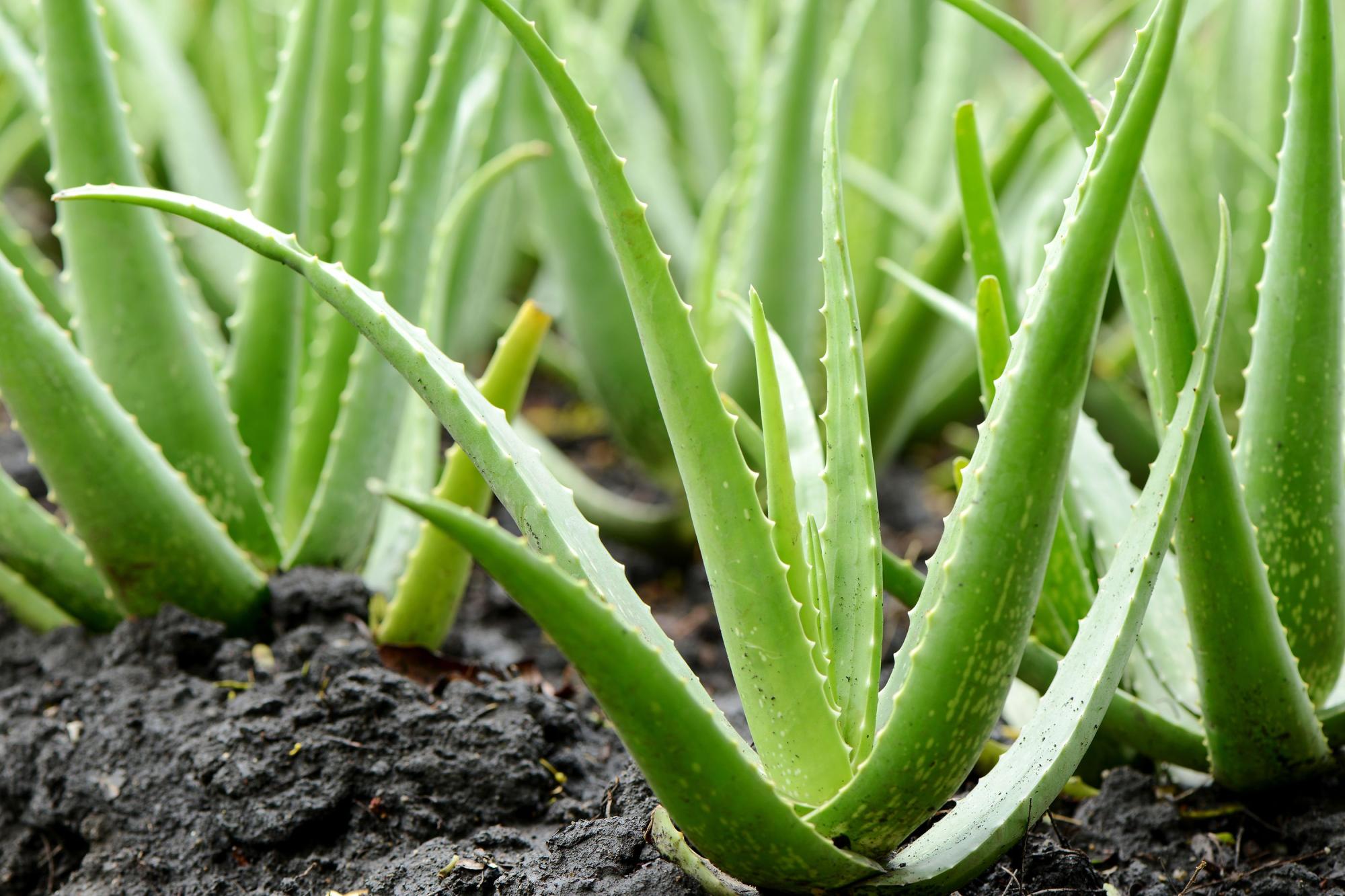
Aloe vera unveiled a new weapon in its arsenal: its discarded peels. Previously discarded as agricultural trash, these peels are now set to become nature's response to crop-munching pests. Scientists at the University of Texas Rio Grande Valley developed a mechanism for converting this underutilized resource into a powerful natural insecticide, presenting a novel approach to pest management. Humans have already used aloe vera for a plethora of reasons. However, none of these applications takes advantage of the peel. "Millions of tons of aloe peels are likely discarded globally each year," the driving force behind this botanical discovery, Dr. Debasish Bandyopadhyay, stated. The idea came to Bandyopadhyay after he noticed bugs biting plants at an aloe manufacturing center but leaving the aloe vera leaves alone. Based on this discovery, the team embarked on an adventure to unearth the hidden potential of aloe peels. Bandyopadhyay emphasizes the dual benefit of inventing a pesticide that avoids dangerous synthetic chemicals, which not only maintains agricultural output but also saves public health. The researchers ... extracted a number of compounds, each with its own set of properties. Octacosane stood out among these for its ability to repel mosquitos. In terms of insecticidal activity, DCM, a separate molecule, outperformed hexane extract. During this procedure, more than 20 compounds were isolated from aloe vera peels, six showing considerable insecticidal activity.
Latest
Latest News
Each news summary is created according to strict standards. Here's how we do it.
Each summary is created using a consistent editorial procedure. The target length is approximately 16 lines of 11-point Arial text in a 650-pixel-wide column. Up to 25% of a summary may be set in bold to emphasize the most important ideas. Summaries are composed of verbatim excerpts presented in the same sequence as they appear in the original news source, with very minor editorial additions. Where material has been omitted between excerpts, the omission is indicated with ellipses (...). Any words added by an editor for clarity or context appear in [brackets]. Our original news editor was Fred Burks. Tod Fletcher edited most summaries from 2007 through 2014, and Mark Bailey has served as news editor since 2014.