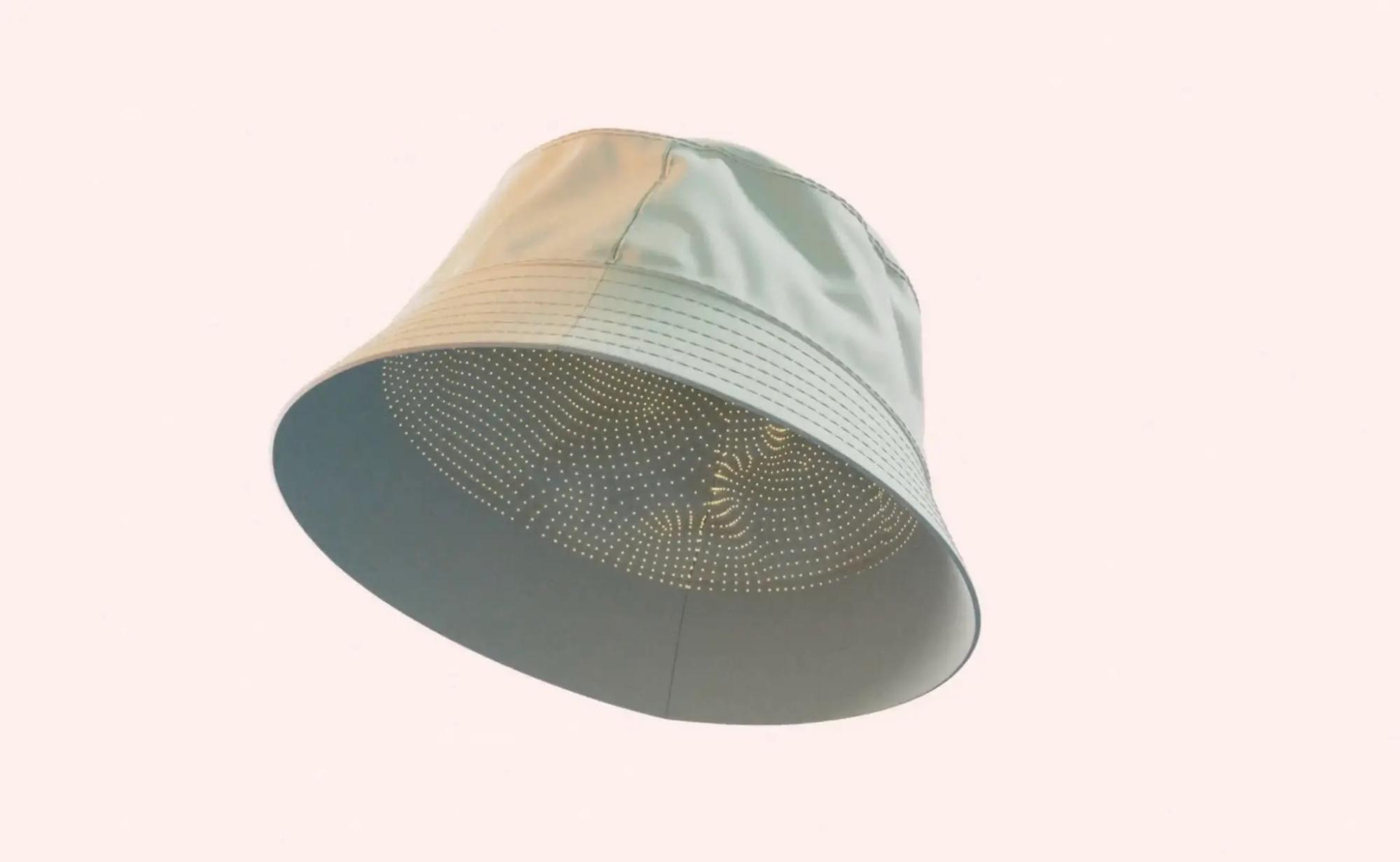
A new tech company claims it has developed a hat that can literally read your mind then translate it onto a computer. Much has been discussed about brain implants which require ... putting microchips directly onto your grey matter, but new company Sabi says that's not necessary for its beanies and caps. They have 70,000 to 100,000 sensors built in them which can "pinpoint exactly what and where neural activity is happening ... to decode what a person is thinking," then translate it to a computer command, according to CEO Rahul Chhabra. Tom Oxley, the CEO and founder of Synchron ... is working in the same field as Neuralink, trying to give severely disabled patients the ability to communicate through their brainwaves. The company are partnered with Apple and their chips are implanted through an injection into the jugular vein in the neck, then the chip moves up a blood vessel near the brain's motor cortex in order to read brainwaves. "Non-invasive wearables sit outside the skull, so the signals they pick up are much weaker and less precise. That makes it very difficult to achieve the kind of speed and accuracy needed for real-time control, especially for clinical applications like restoring function in paralysis," said Oxley. Until Sabi's tech arrives and revolutionizes our brainwaves, we'll be stuck behind the keyboard in the near future, at least in America. China has recently approved their first implanted brain computer interface for commercial use.
Latest
Latest News
Each news summary is created according to strict standards. Here's how we do it.
Each summary is created using a consistent editorial procedure. The target length is approximately 16 lines of 11-point Arial text in a 650-pixel-wide column. Up to 25% of a summary may be set in bold to emphasize the most important ideas. Summaries are composed of verbatim excerpts presented in the same sequence as they appear in the original news source, with very minor editorial additions. Where material has been omitted between excerpts, the omission is indicated with ellipses (...). Any words added by an editor for clarity or context appear in [brackets]. Our original news editor was Fred Burks. Tod Fletcher edited most summaries from 2007 through 2014, and Mark Bailey has served as news editor since 2014.