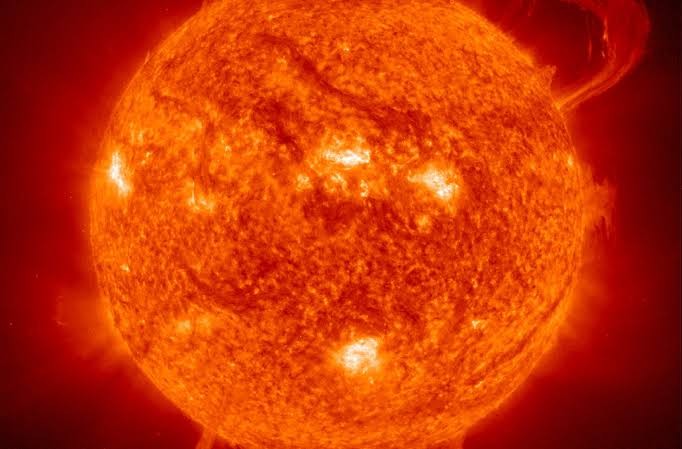
Being accused of attempting the impossible is not unusual for the scientists and engineers working on nuclear fusion projects around the world. After all, they are attempting to capture, on Earth, the reaction that powers the Sun. Success could mean abundant, cheap and emission-free electricity. But the challenges are daunting. Fusion is the process of fusing hydrogen nuclei together, which releases immense amounts of energy. To maintain fusion here on Earth, extremely high temperatures - many times those found on the Sun - are needed. So, a fuel (usually a combination of the hydrogen isotopes tritium and deuterium) is heated until it becomes a burning hot plasma, which then has to be controlled and manipulated to spark fusion. There are a number of ways to do this, and Germany's Proxima Fusion is attempting one that is considered difficult, even by the extreme standards of the fusion industry. A common approach to fusion is to build a tokamak. It's a doughnut-shaped device, which uses powerful magnets to contain the plasma. But Munich-based Proxima is working on a stellarator. It also uses magnets to manipulate the plasma but the reaction container has a more complicated shape, with twists and turn. "There's real momentum across fusion right now," [said former nuclear submarine captain Ryan Ramsey]. "The real question now is not which concept is most interesting, but which can credibly deliver a power plant."
Latest
Latest News
Each news summary is created according to strict standards. Here's how we do it.
Each summary is created using a consistent editorial procedure. The target length is approximately 16 lines of 11-point Arial text in a 650-pixel-wide column. Up to 25% of a summary may be set in bold to emphasize the most important ideas. Summaries are composed of verbatim excerpts presented in the same sequence as they appear in the original news source, with very minor editorial additions. Where material has been omitted between excerpts, the omission is indicated with ellipses (...). Any words added by an editor for clarity or context appear in [brackets]. Our original news editor was Fred Burks. Tod Fletcher edited most summaries from 2007 through 2014, and Mark Bailey has served as news editor since 2014.