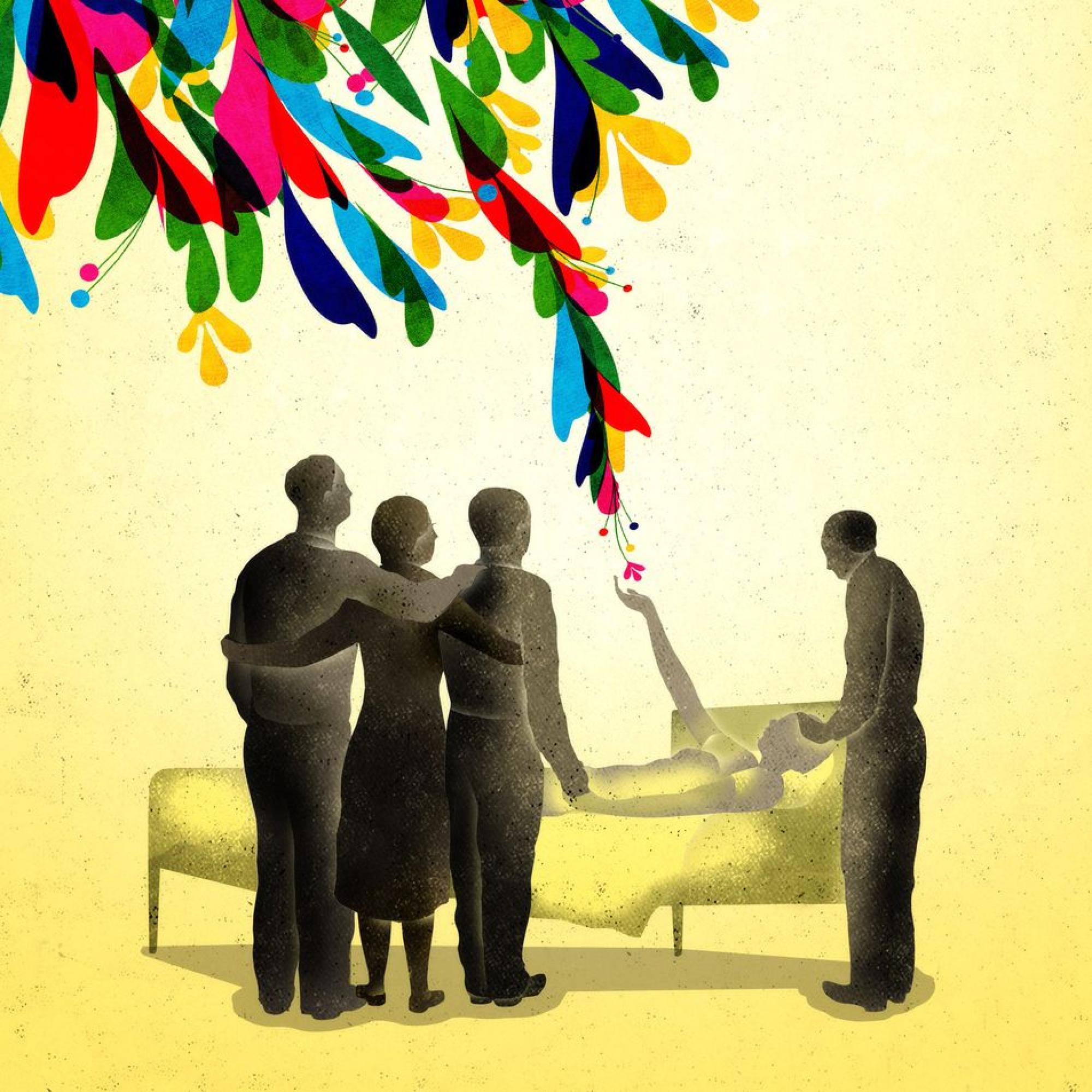
She has been at the bedside of over 1,000 people globally in their last moments of lifefrom her home in the U.S. to Thailand and Zimbabwe. O'Brien, a registered nurse, had an impulse to move into hospice care over two decades ago and has since worked as an oncology nurse and a death doula, supporting those at the end of life. O'Brien's recent book, The Good Death, aims to normalize the realities of death and the need to plan for the end. At the end of life, many people share what they didn't do but knew they always wanted to do, O'Brien says."We all are here for a purpose, and we all have gifts, and when we don't share them and act upon those, that's where the huge regret comes," O'Brien says. Not "dipping into the unknown" or trying something new is a factor of having an abundance mindset, she says. When we consider our time sacred and limited, we are less afraid to take action on something that may excite us. "One of the things we don't know is how many days we have," she says. "When you get that feeling, or you have something that you want to do, don't let your ego, the fear part of you, shut it down." Many people at the end of life regret not being vulnerable enough to let themselves be loved and give love. They often share that they could not reach a level of forgiveness with someone else or themselves, O'Brien says. It's essential to extend ourselves grace, know when to take ownership, and release guilt, she says. O'Brien encourages patients to envision the time they're struggling to let go of and ask themselves if they did what they could in the moment with the information and resources they had.
Latest
Latest News
Each news summary is created according to strict standards. Here's how we do it.
Each summary is created using a consistent editorial procedure. The target length is approximately 16 lines of 11-point Arial text in a 650-pixel-wide column. Up to 25% of a summary may be set in bold to emphasize the most important ideas. Summaries are composed of verbatim excerpts presented in the same sequence as they appear in the original news source, with very minor editorial additions. Where material has been omitted between excerpts, the omission is indicated with ellipses (...). Any words added by an editor for clarity or context appear in [brackets]. Our original news editor was Fred Burks. Tod Fletcher edited most summaries from 2007 through 2014, and Mark Bailey has served as news editor since 2014.