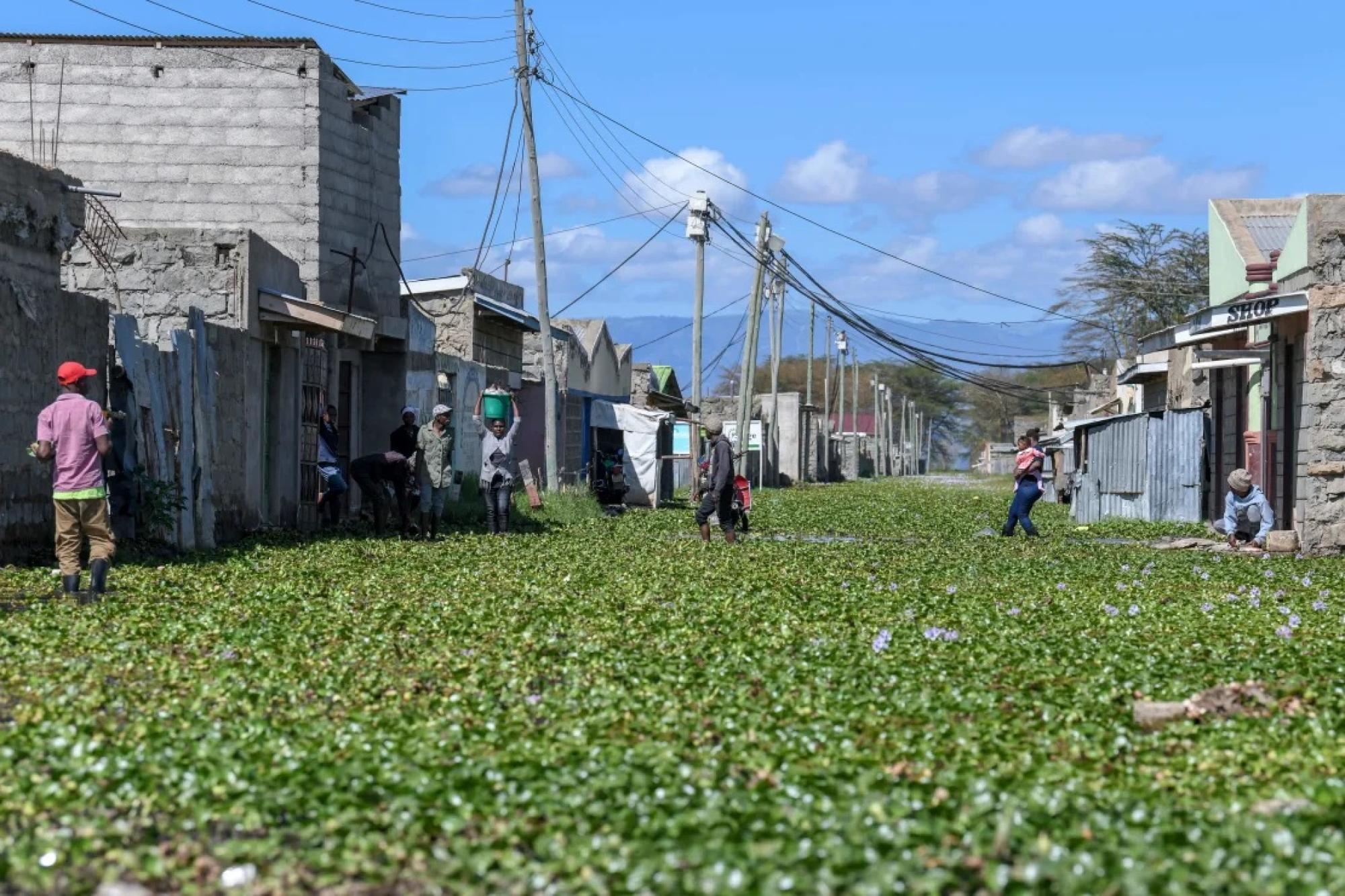
Water hyacinths are native to South America, but were introduced as an exotic ornamental to many other countries. They've since taken over freshwater environments and are labeled an alien invasive species on every other continent aside from Antarctica. As well as their impact on biodiversity and livelihoods, the floating plant can clog hydroelectric and irrigation systems, meaning that one does not need to live in their proximity to be affected. It's the highest-profile example of an invasive aquatic plant crisis that has cost the global economy tens of billions of dollars historically, and now more than $700 million annually. Now a Kenyan company is addressing the problem as well as the country's plastic pollution issue by turning the invasive plant into a bioplastic. HyaPak Ecotech Limited, founded by Joseph Nguthiru, began life as a final year project by the former Egerton University civil and environmental engineering student. Nguthiru's bioplastic is made from dried water hyacinth combined with binders and additives, which is then mixed and shaped. The product, which biodegrades over a few months, was first used as an alternative for plastic packaging. HyaPak has gained widespread attention, winning the Youth category at the East Africa Climate Action Awards, a prize at UNESCO's World Engineering Day Hackathon, and a Prototype for Humanity Award 2023 announced at the COP28 climate conference.
Latest
Latest News
Each news summary is created according to strict standards. Here's how we do it.
Each summary is created using a consistent editorial procedure. The target length is approximately 16 lines of 11-point Arial text in a 650-pixel-wide column. Up to 25% of a summary may be set in bold to emphasize the most important ideas. Summaries are composed of verbatim excerpts presented in the same sequence as they appear in the original news source, with very minor editorial additions. Where material has been omitted between excerpts, the omission is indicated with ellipses (...). Any words added by an editor for clarity or context appear in [brackets]. Our original news editor was Fred Burks. Tod Fletcher edited most summaries from 2007 through 2014, and Mark Bailey has served as news editor since 2014.