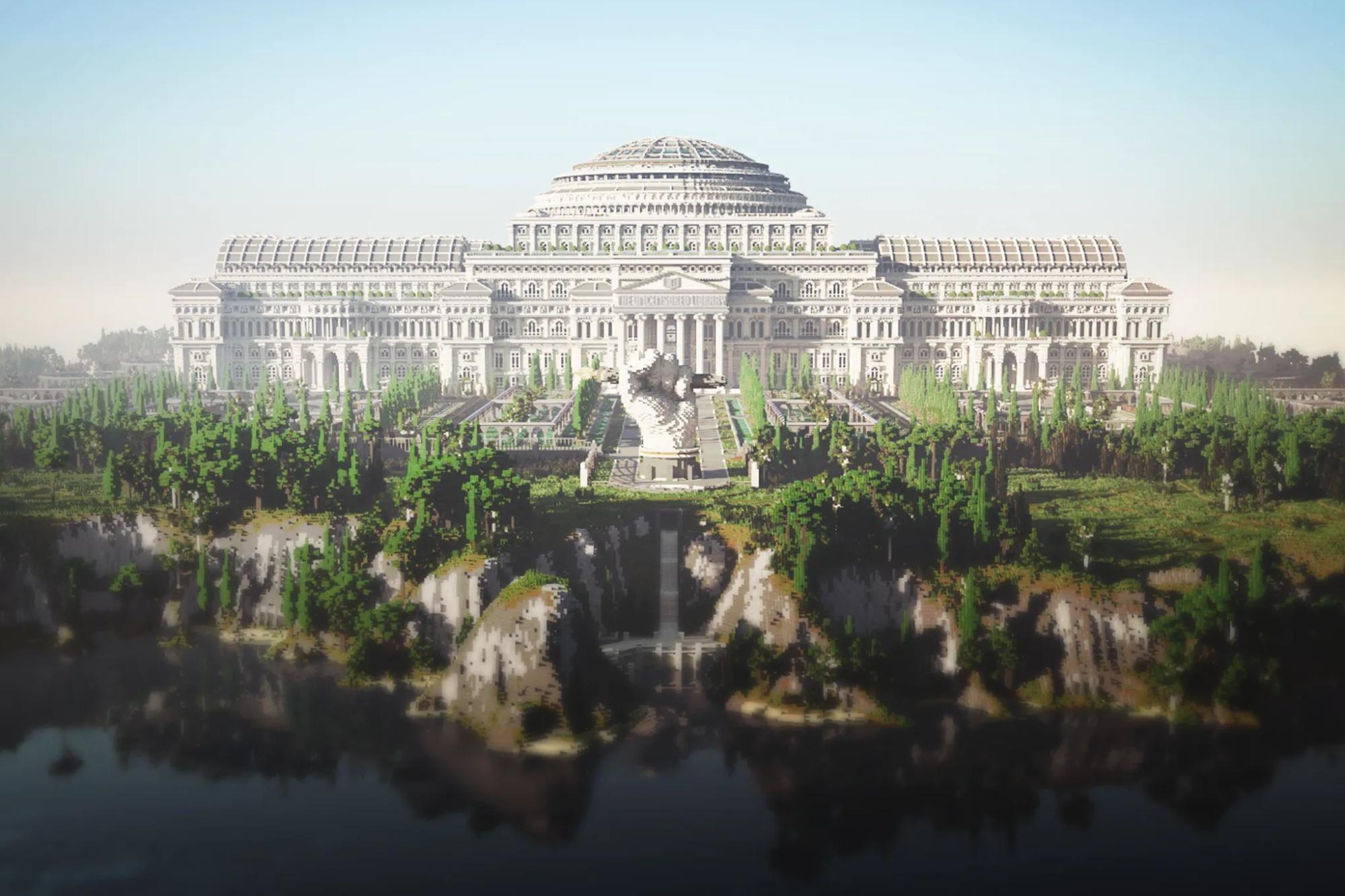
Minecraft has established itself as a cultural phenomenon for many reasons: it's creative, collaborative, and sufficiently facile as to be considered accessible to almost anybody. These benefits ... form the perfect vehicle for Reporters Without Borders' Uncensored Library, a virtual hub housing a collection of otherwise inaccessible journalism from all over the world, with specific sections devoted to Russia, Egypt, Mexico, Saudi Arabia, and Vietnam. "In Egypt there's no free information," Reporters Without Borders media and public relations officer Kristin Bässe tells me. Mexico is the country where journalists are most at risk, she adds, with governmental and cartel interference often culminating in the death of those voices deemed dissident. "It's a different form of censorship," Bässe explains. "People don't want to publish because they're scared." "In the Mexico room we built memorials to 12 Mexican journalists who have been murdered," [said Blockworks managing director James] Delaney. Delaney tells me that the forms of censorship in Egypt are more blatant. "The articles you see in this room are actually banned," he explains. "If you live in Egypt you're unable to access them unless you come to our Minecraft server." This is the case for the Russian, Vietnamese, and Saudi Arabian sections, too. "The content you find in these rooms is illegal, but we can see from the server logins that we've already had people from all five of these countries join and read up on this information," he says.
Latest
Latest News
Each news summary is created according to strict standards. Here's how we do it.
Each summary is created using a consistent editorial procedure. The target length is approximately 16 lines of 11-point Arial text in a 650-pixel-wide column. Up to 25% of a summary may be set in bold to emphasize the most important ideas. Summaries are composed of verbatim excerpts presented in the same sequence as they appear in the original news source, with very minor editorial additions. Where material has been omitted between excerpts, the omission is indicated with ellipses (...). Any words added by an editor for clarity or context appear in [brackets]. Our original news editor was Fred Burks. Tod Fletcher edited most summaries from 2007 through 2014, and Mark Bailey has served as news editor since 2014.