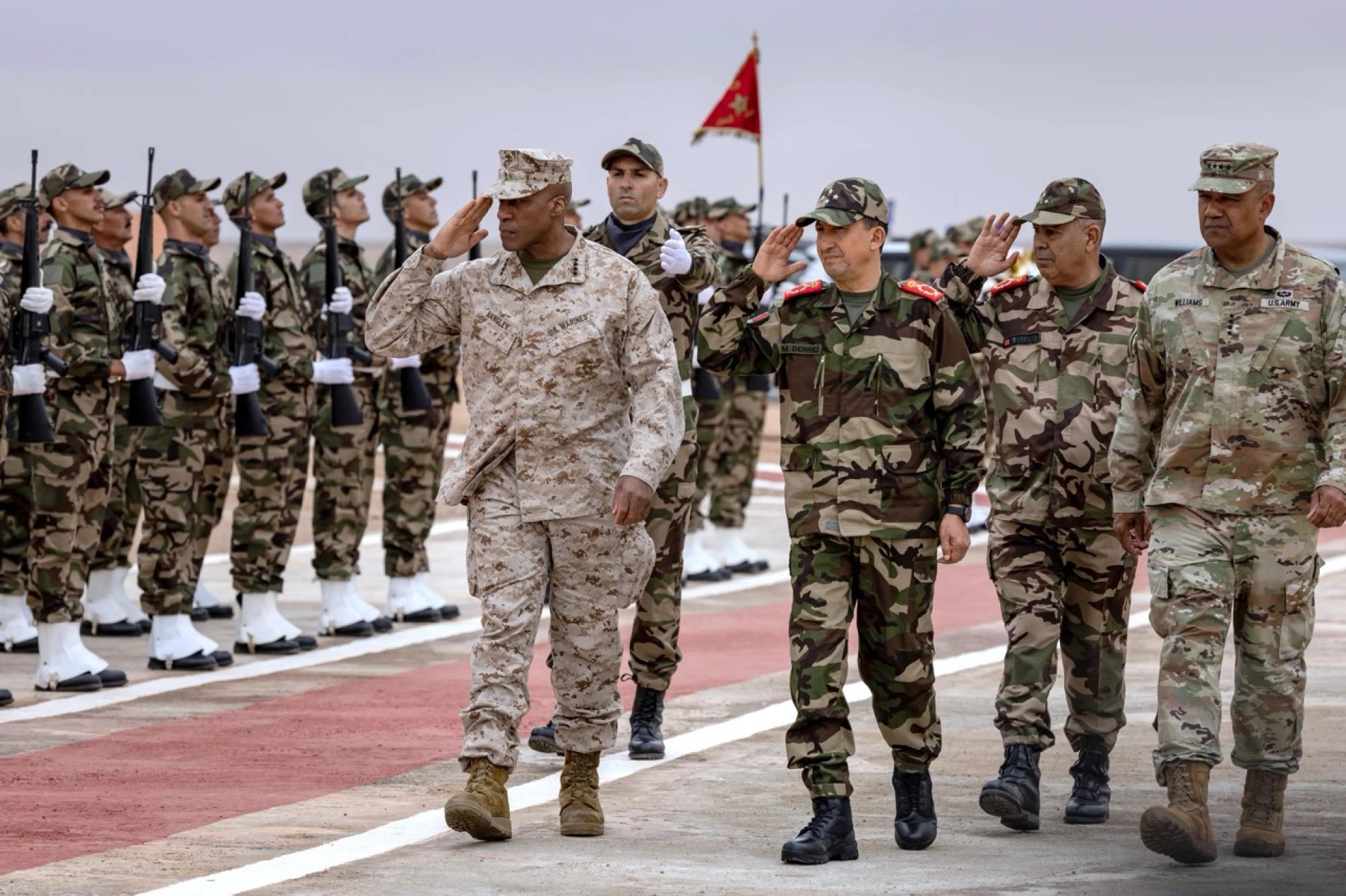
President George W. Bush created a new command to oversee all military operations in Africa 18 years ago. U.S. Africa Command was meant to help "bring peace and security to the people of Africa." Gen. Michael Langley, the head of AFRICOM, offered a grim assessment of security on the African continent during a recent press conference. The West African Sahel, he said last Friday, was now the "epicenter of terrorism" and the gravest terrorist threats to the U.S. homeland were "unfortunately right here on the African continent." Throughout all of Africa, the State Department counted 23 deaths from terrorist violence in 2002 and 2003, the first years of U.S. counterterrorism efforts in the Sahel and Somalia. By 2010, two years after AFRICOM began operations, fatalities from attacks by militant Islamists had already spiked to 2,674. There were an estimated 18,900 fatalities linked to militant Islamist violence in Africa last year, with 79 percent of those coming from the Sahel and Somalia. This constitutes a jump of more than 82,000 percent since the U.S. launched its post-9/11 counterterrorism efforts on the continent. As violence spiraled in the region over the past decades, at least 15 officers who benefited from U.S. security assistance were key leaders in 12 coups in West Africa and the greater Sahel during the war on terror. At least five leaders of the 2023 coup d'état in [Niger] received American assistance.
Latest
Latest News
Each news summary is created according to strict standards. Here's how we do it.
Each summary is created using a consistent editorial procedure. The target length is approximately 16 lines of 11-point Arial text in a 650-pixel-wide column. Up to 25% of a summary may be set in bold to emphasize the most important ideas. Summaries are composed of verbatim excerpts presented in the same sequence as they appear in the original news source, with very minor editorial additions. Where material has been omitted between excerpts, the omission is indicated with ellipses (...). Any words added by an editor for clarity or context appear in [brackets]. Our original news editor was Fred Burks. Tod Fletcher edited most summaries from 2007 through 2014, and Mark Bailey has served as news editor since 2014.