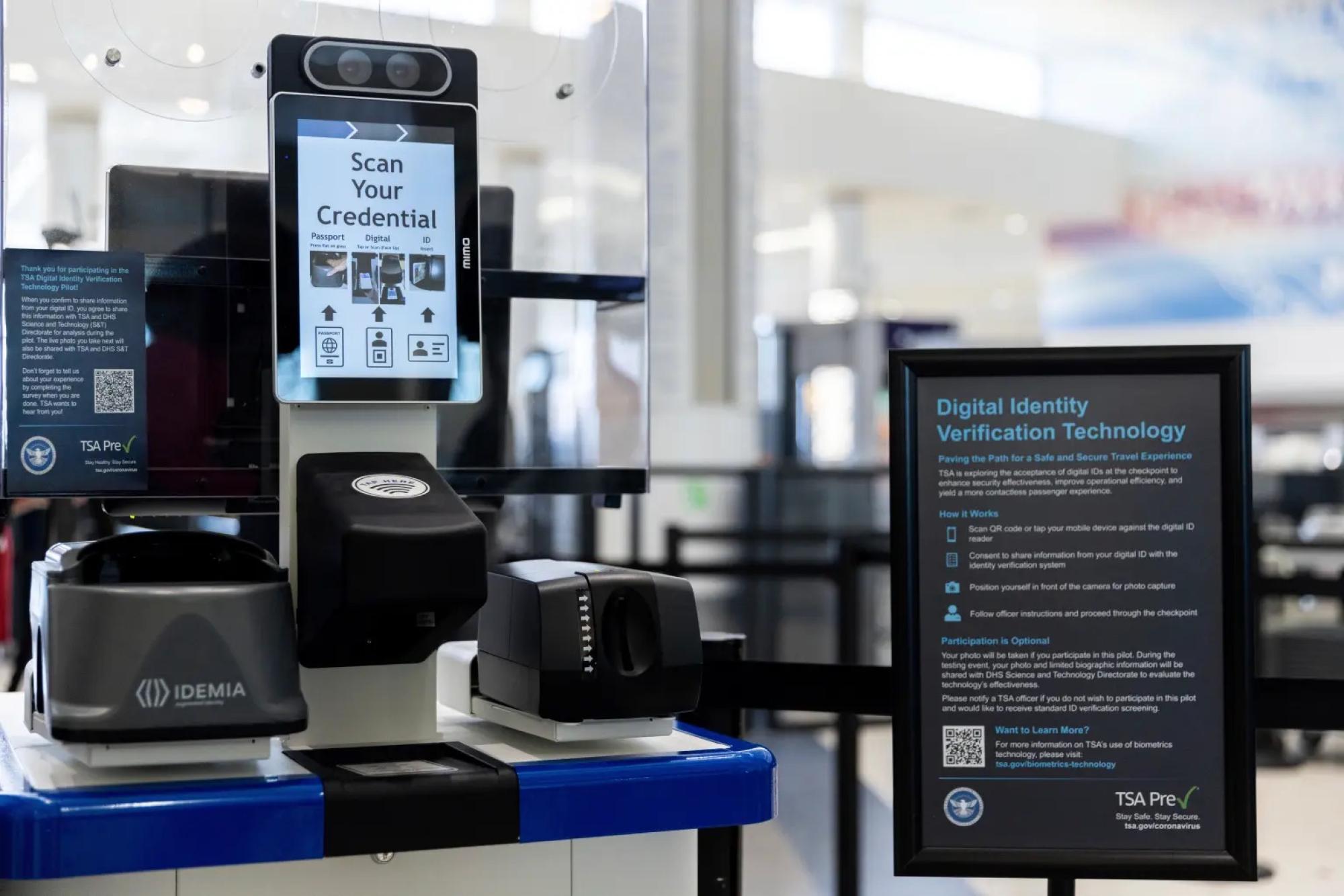
The Transportation Security Administration (TSA) sparked privacy concerns after unveiling plans to roll out controversial facial recognition tech in over 400 US airports soon. "TSA is in the early stages of deploying its facial recognition capability to airport security checkpoints," a spokesperson [said] regarding the ambitious program. They explained that the cutting-edge tech serves to both enhance and expedite the screening process for passengers. Dubbed CAT-2 machines, these automated identification systems accomplish this by incorporating facial recognition tech to snap real-time pictures of travelers. They then compare this biometric data against the flyer's photo ID to verify that it's the real person. These CAT-scans enable "traveler use of mobile driver's licenses," thereby improving the security experience, per the spokesperson. The TSA currently has 600 CAT-2 units deployed at about 50 airports nationwide and plans to expand them to 400 federalized airports in the future. Following the implementation of these synthetic security accelerators at US airports last winter, lawmakers expressed concerns that the machines present a major privacy issue. "The TSA program is a precursor to a full-blown national surveillance state," said Oregon Senator Jeff Merkley. "Nothing could be more damaging to our national values of privacy and freedom. No government should be trusted with this power."
Latest
Latest News
Each news summary is created according to strict standards. Here's how we do it.
Each summary is created using a consistent editorial procedure. The target length is approximately 16 lines of 11-point Arial text in a 650-pixel-wide column. Up to 25% of a summary may be set in bold to emphasize the most important ideas. Summaries are composed of verbatim excerpts presented in the same sequence as they appear in the original news source, with very minor editorial additions. Where material has been omitted between excerpts, the omission is indicated with ellipses (...). Any words added by an editor for clarity or context appear in [brackets]. Our original news editor was Fred Burks. Tod Fletcher edited most summaries from 2007 through 2014, and Mark Bailey has served as news editor since 2014.