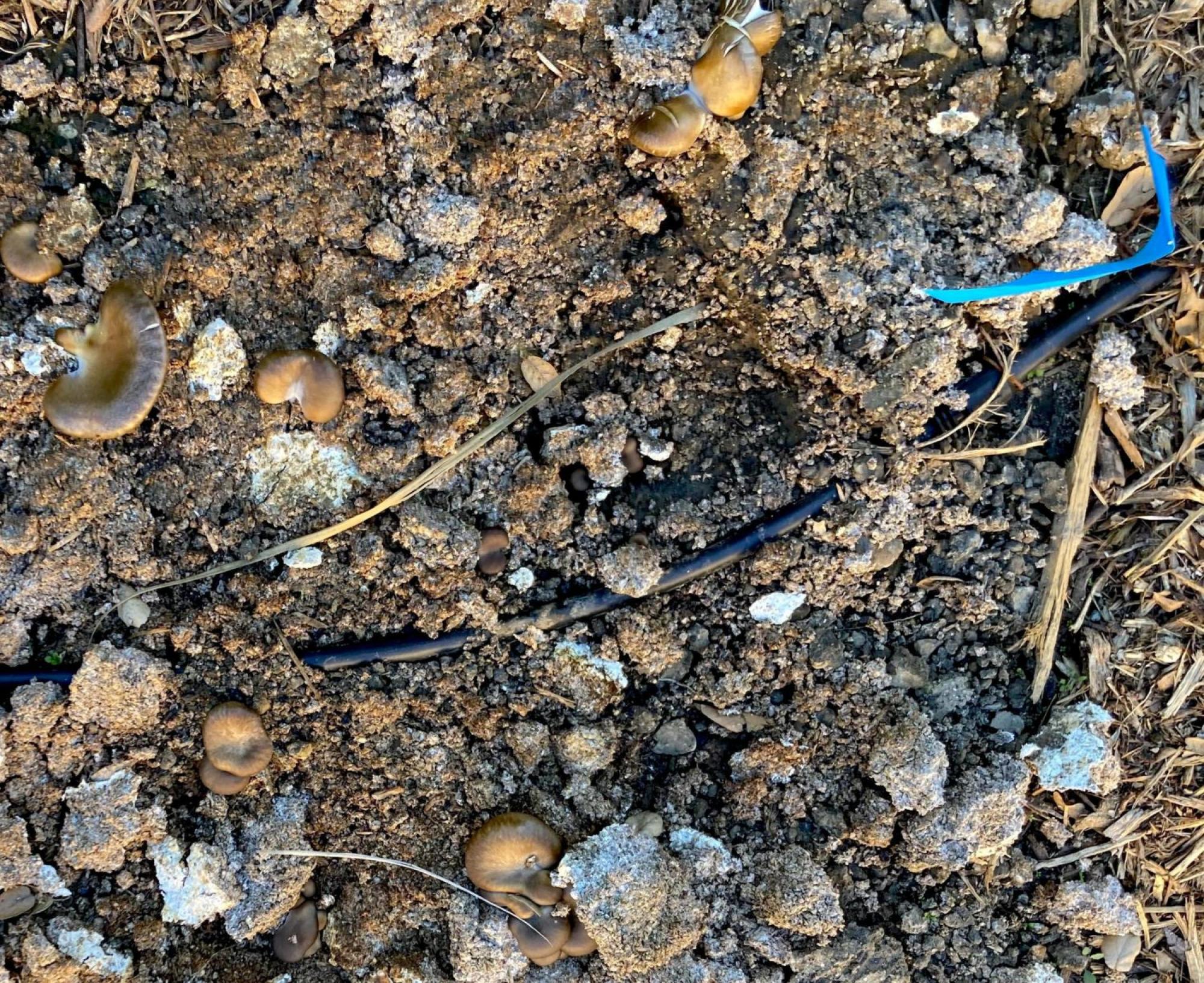
Danielle Stevenson ... has been pioneering a nature-based technique for restoring contaminated land, using fungi and native plants to break down toxins like petroleum, plastics, and pesticides into less toxic chemicals. The usual way of dealing with tainted soil is to dig it up and cart it off to distant landfills. In a recent pilot project funded by the city of Los Angeles, Stevenson ... working with a team of UC Riverside students and other volunteers, significantly reduced petrochemical pollutants and heavy metals at an abandoned railyard and other industrial sites in Los Angeles. Stevenson says she believes her bioremediation methods can be scaled up to clean polluted landscapes worldwide. Decomposer fungi can degrade petrochemicals the same way they would break down a dead tree," [said Stevenson]. "And in doing so, they reduce the toxicity of these petrochemicals and create soil that no longer has these contaminants or has much reduced concentrations of it. They can also eat plastic and other things made out of oil. People who live in a place impacted by pollution need to have a say in how their neighborhood is being cleaned up. We need to empower them with the tools to do this. That's why along with doing these studies and pilot projects, I've been running workforce development programs. Potentially, they could bring economic opportunities and benefits to the community in addition to cleaning up the contaminated site."
Latest
Latest News
Each news summary is created according to strict standards. Here's how we do it.
Each summary is created using a consistent editorial procedure. The target length is approximately 16 lines of 11-point Arial text in a 650-pixel-wide column. Up to 25% of a summary may be set in bold to emphasize the most important ideas. Summaries are composed of verbatim excerpts presented in the same sequence as they appear in the original news source, with very minor editorial additions. Where material has been omitted between excerpts, the omission is indicated with ellipses (...). Any words added by an editor for clarity or context appear in [brackets]. Our original news editor was Fred Burks. Tod Fletcher edited most summaries from 2007 through 2014, and Mark Bailey has served as news editor since 2014.