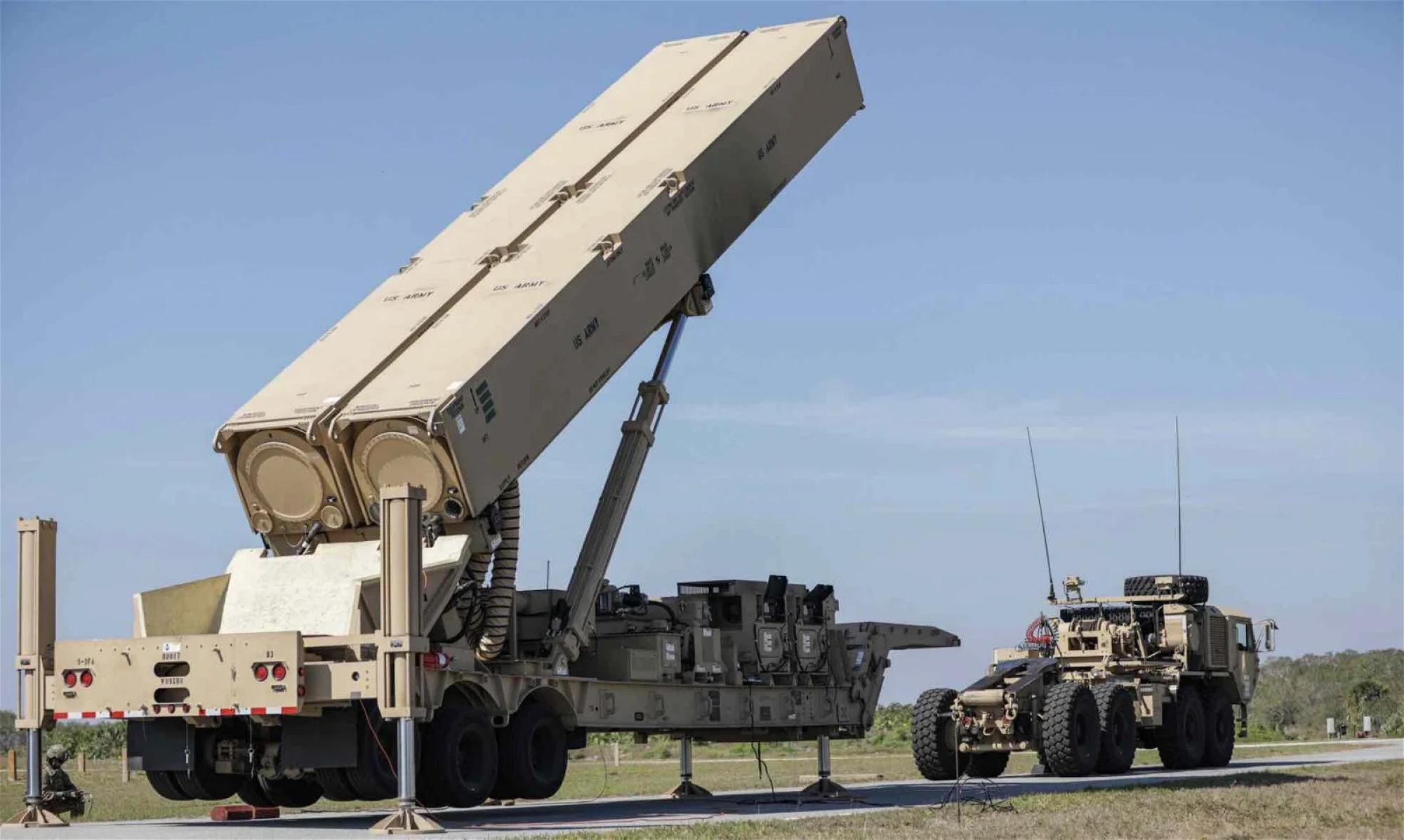
The U.S. Navy is reportedly preparing to test a hypersonic weapon as part of a joint developmental program with the U.S. Army, which aims to unleash the military's Long-Range Hypersonic Weapon (LRHW) capabilities. The forthcoming test will involve the C-HGB, which relies on the Navy's booster rocket motor to propel the weapon to hypersonic speeds. Once the rocket is ejected, the C-HGB can glide at speeds of Mach 5 or greater.Production of the C-HGB for the Army and the Navy has been underway for several years in cooperation with Dynetics ... who was contracted to develop the prototypes. Dynetics' development of the C-HGB prototypes marks the first time that a domestic private sector entity has been tasked with building hypersonic weapons. Known as Dark Eagle, the Army says its LRHW will be capable of reaching targets within a range of 1,725 miles and reportedly traveling at speeds exceeding 3,800 miles per hour. Presently, the U.S. is racing against similar hypersonic developments being undertaken by Russia and China, who have been actively testing similar weapons capabilities for years. Earlier this month, it was revealed that the U.S. Air Force conducted a test with a prototype hypersonic missile in the Marshall Islands. Formally known as the AGM-183, the missile is an air-launched rapid response weapon (ARRW), a type of hypersonic air-to-ground missile that was the result of a $480 million contract granted to Lockheed Martin in 2018.
Latest
Latest News
Each news summary is created according to strict standards. Here's how we do it.
Each summary is created using a consistent editorial procedure. The target length is approximately 16 lines of 11-point Arial text in a 650-pixel-wide column. Up to 25% of a summary may be set in bold to emphasize the most important ideas. Summaries are composed of verbatim excerpts presented in the same sequence as they appear in the original news source, with very minor editorial additions. Where material has been omitted between excerpts, the omission is indicated with ellipses (...). Any words added by an editor for clarity or context appear in [brackets]. Our original news editor was Fred Burks. Tod Fletcher edited most summaries from 2007 through 2014, and Mark Bailey has served as news editor since 2014.