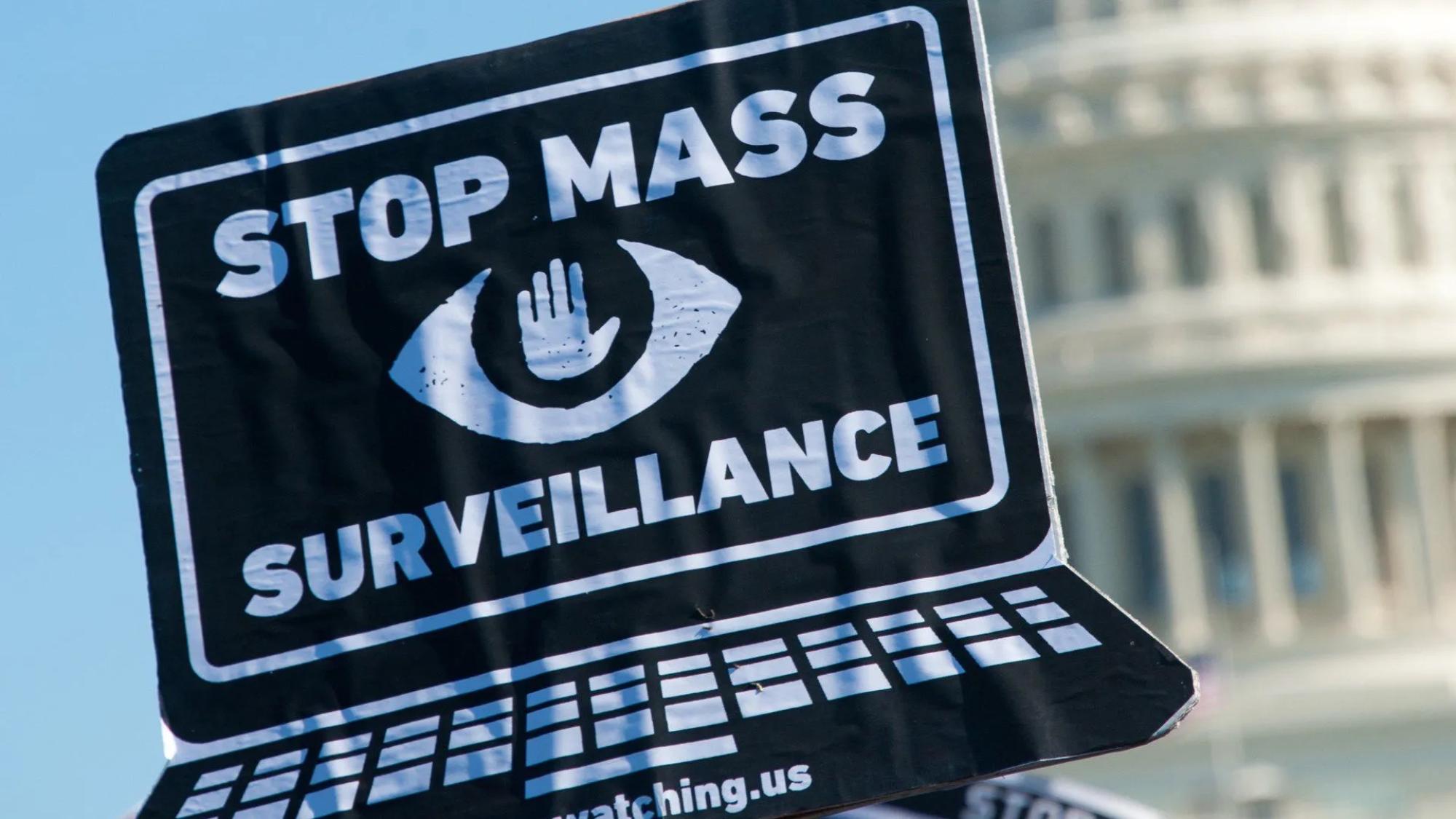
Last year, the Republican chairman of the US House Permanent Select Committee on Intelligence (HPSCI) presented an image of Americans protesting the war in Gaza while implying possible ties between the protesters and Hamas, an allegation that was used to illustrate why surveillance reforms may prove detrimental to national security. In December, as many as 200 Republican staffers gathered behind closed doors to hear a presentation ... aimed at shoring up support for a US surveillance program known as Section 702. Section 702 authorizes the government to surveil foreigners located physically overseas ... but not Americans or individuals on US soil. While eavesdropping on foreigners is permitted, doing so for the explicit purpose of gaining access to an American's communications"a practice commonly referred to as "reverse targeting""is strictly forbidden. "Yes, it's true, you cannot 'target' protesters under 702," one aide, a legislative director for a Republican lawmaker, says. "But that doesn't mean the FBI doesn't still have the power to access those emails or listen to their calls if it wants." Between 2020 and early 2021, the FBI conducted "tens of thousands" of queries related to "civil unrest" in the United States. "Political protest is literally how America was founded. It's in our DNA," says Jason Pye, senior policy analyst at the nonprofit FreedomWorks. "Whether you agree with these protesters or not is irrelevant."
Latest
Latest News
Each news summary is created according to strict standards. Here's how we do it.
Each summary is created using a consistent editorial procedure. The target length is approximately 16 lines of 11-point Arial text in a 650-pixel-wide column. Up to 25% of a summary may be set in bold to emphasize the most important ideas. Summaries are composed of verbatim excerpts presented in the same sequence as they appear in the original news source, with very minor editorial additions. Where material has been omitted between excerpts, the omission is indicated with ellipses (...). Any words added by an editor for clarity or context appear in [brackets]. Our original news editor was Fred Burks. Tod Fletcher edited most summaries from 2007 through 2014, and Mark Bailey has served as news editor since 2014.