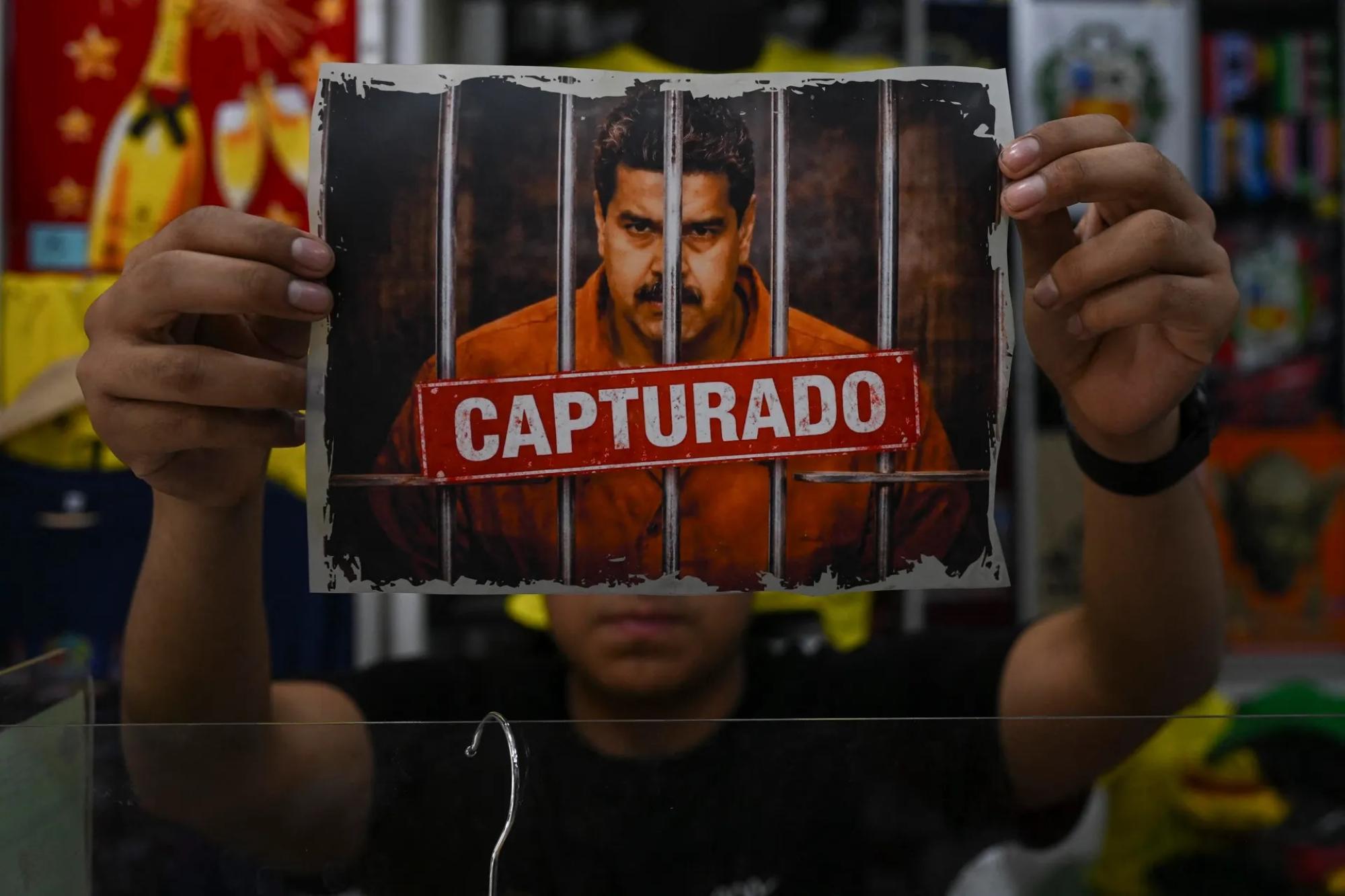
"We had no way to compete with their technology, with their weapons. I swear, I've never seen anything like it," a Venezuelan security guard says in a video widely shared on social media and promoted by the White House. His account tells how U.S. special forces in Venezuela captured then-President Maduro using new technology which incapacitated the entire protective team and allowed two dozen U.S. troops to easily defeat hundreds of defenders. Guard: "At one point, they launched something"I don't know how to describe it... it was like a very intense sound wave. Suddenly I felt like my head was exploding from the inside. We all started bleeding from the nose. Some were vomiting blood. We fell to the ground, unable to move." In the 90's and early 2000s, the Pentagon poured resources into the Joint Non-Lethal Weapons Directorate, now rebranded the Joint Intermedia Force Capabilities Office. Their task was to develop non-lethal, or less-lethal weapons which ... would disable or incapacitate people. The Pentagon worked on a wide variety of concepts, including strobe dazzlers, malodorants and electroshock projectiles. One of the biggest was the millimeter-wave Active Denial System or 'pain beam' which could inflict severe pain and drive back rioters from several hundred meters away. A patented device known as Electromagnetic Personnel Interdiction Control (EPIC) ... uses radio waves "to excite and interrupt the normal process of human hearing and equilibrium."
Latest
Latest News
Each news summary is created according to strict standards. Here's how we do it.
Each summary is created using a consistent editorial procedure. The target length is approximately 16 lines of 11-point Arial text in a 650-pixel-wide column. Up to 25% of a summary may be set in bold to emphasize the most important ideas. Summaries are composed of verbatim excerpts presented in the same sequence as they appear in the original news source, with very minor editorial additions. Where material has been omitted between excerpts, the omission is indicated with ellipses (...). Any words added by an editor for clarity or context appear in [brackets]. Our original news editor was Fred Burks. Tod Fletcher edited most summaries from 2007 through 2014, and Mark Bailey has served as news editor since 2014.