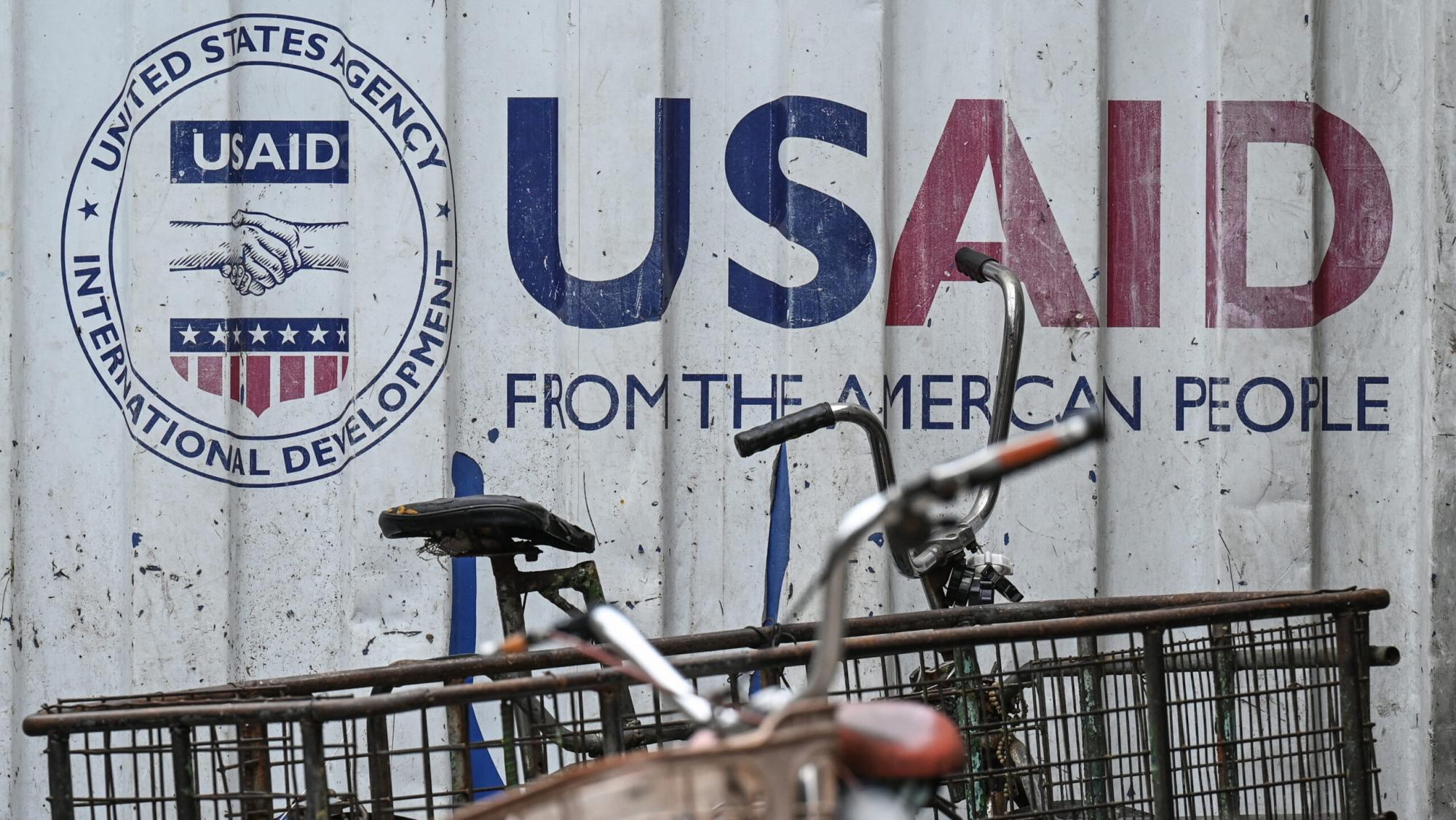
The Trump administration's decision to pause USAID funding has plunged hundreds of so-called "independent media" outlets into crisis, thereby exposing a worldwide network of thousands of journalists, all working to promote U.S. interests in their home countries. USAID spends over a quarter of a billion dollars yearly training and funding a vast, sprawling network of more than 6,200 reporters at nearly 1,000 news outlets. Oksana Romanyuk, the Director of Ukraine's Institute for Mass Information, revealed that almost 90% of the country's media are bankrolled by USAID, including many that have no other source of funding. [Independent media is] defined as any media outlet, no matter how big an empire it is, that is not owned or funded by the state. Some USAID-backed journalists candidly admit that their funding dictates ... what stories they do and do not cover. Leila Bicakcic, CEO of Center for Investigative Reporting (a USAID-supported Bosnian organization), admitted, on camera, that "If you are funded by the U.S. government, there are certain topics that you would simply not go after, because the U.S. government has its interests that are above all others." While the press may be lamenting the demise of USAID-backed media, many heads of state are not. "Take your money with you," said Colombian President Gustavo Petro, "it's poison." Nayib Bukele, President of El Salvador, shared a rare moment of agreement with Petro. "Most governments don't want USAID funds flowing into their countries because they understand where much of that money actually ends up," he wrote, explaining that: "At best, maybe 10% of the money reaches real projects that help people in need (there are such cases), but the rest is used to fuel dissent, finance protests, and undermine administrations that refuse to align with the globalist agenda."
Latest
Latest News
Each news summary is created according to strict standards. Here's how we do it.
Each summary is created using a consistent editorial procedure. The target length is approximately 16 lines of 11-point Arial text in a 650-pixel-wide column. Up to 25% of a summary may be set in bold to emphasize the most important ideas. Summaries are composed of verbatim excerpts presented in the same sequence as they appear in the original news source, with very minor editorial additions. Where material has been omitted between excerpts, the omission is indicated with ellipses (...). Any words added by an editor for clarity or context appear in [brackets]. Our original news editor was Fred Burks. Tod Fletcher edited most summaries from 2007 through 2014, and Mark Bailey has served as news editor since 2014.