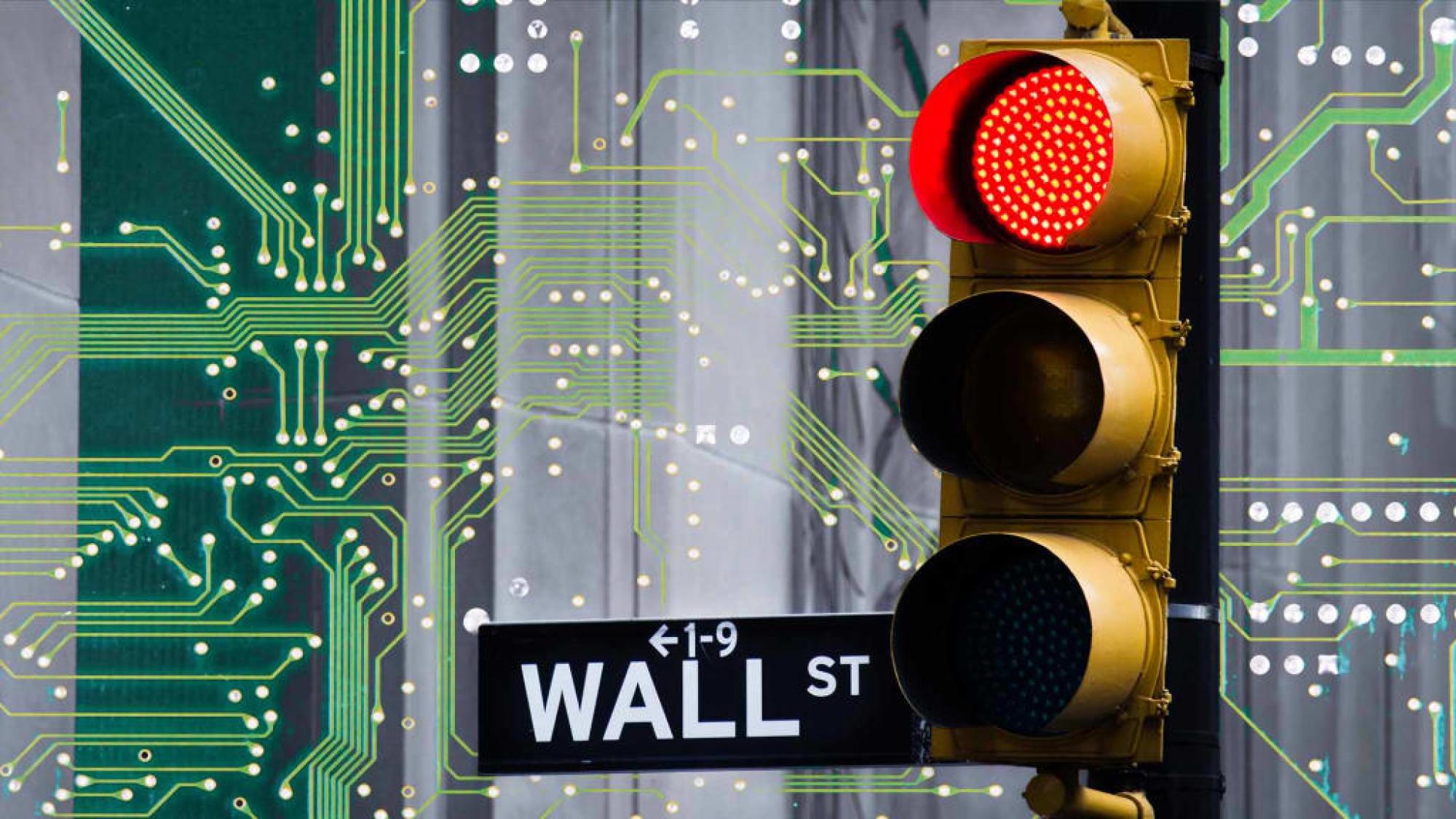
On July 16, the S&P 500 index, one of the most widely cited benchmarks in American capitalism, reached its highest-ever market value: $47 trillion. 1.4 percent of those companies were worth more than $16 trillion, the greatest concentration of capital in the smallest number of companies in the history of the U.S. stock market. The names are familiar: Microsoft, Apple, Amazon, Nvidia, Meta, Alphabet, and Tesla. All of them, too, have made giant bets on artificial intelligence. For all their similarities, these trillion-dollar-plus companies have been grouped together under a single banner: the Magnificent Seven. In the past month, though, these giants of the U.S. economy have been faltering. A recent rout led to a collapse of $2.6 trillion in their market value. Earlier this year, Goldman Sachs issued a deeply skeptical report on the industry, calling it too expensive, too clunky, and just simply not as useful as it has been chalked up to be. "There's not a single thing that this is being used for that's cost-effective at this point," Jim Covello, an influential Goldman analyst, said on a company podcast. AI is not going away, and it will surely become more sophisticated. This explains why, even with the tempering of the AI-investment thesis, these companies are still absolutely massive. When you talk with Silicon Valley CEOs, they love to roll their eyes at their East Coast skeptics. Banks, especially, are too cautious, too concerned with short-term goals, too myopic to imagine another world.
Latest
Latest News
Each news summary is created according to strict standards. Here's how we do it.
Each summary is created using a consistent editorial procedure. The target length is approximately 16 lines of 11-point Arial text in a 650-pixel-wide column. Up to 25% of a summary may be set in bold to emphasize the most important ideas. Summaries are composed of verbatim excerpts presented in the same sequence as they appear in the original news source, with very minor editorial additions. Where material has been omitted between excerpts, the omission is indicated with ellipses (...). Any words added by an editor for clarity or context appear in [brackets]. Our original news editor was Fred Burks. Tod Fletcher edited most summaries from 2007 through 2014, and Mark Bailey has served as news editor since 2014.