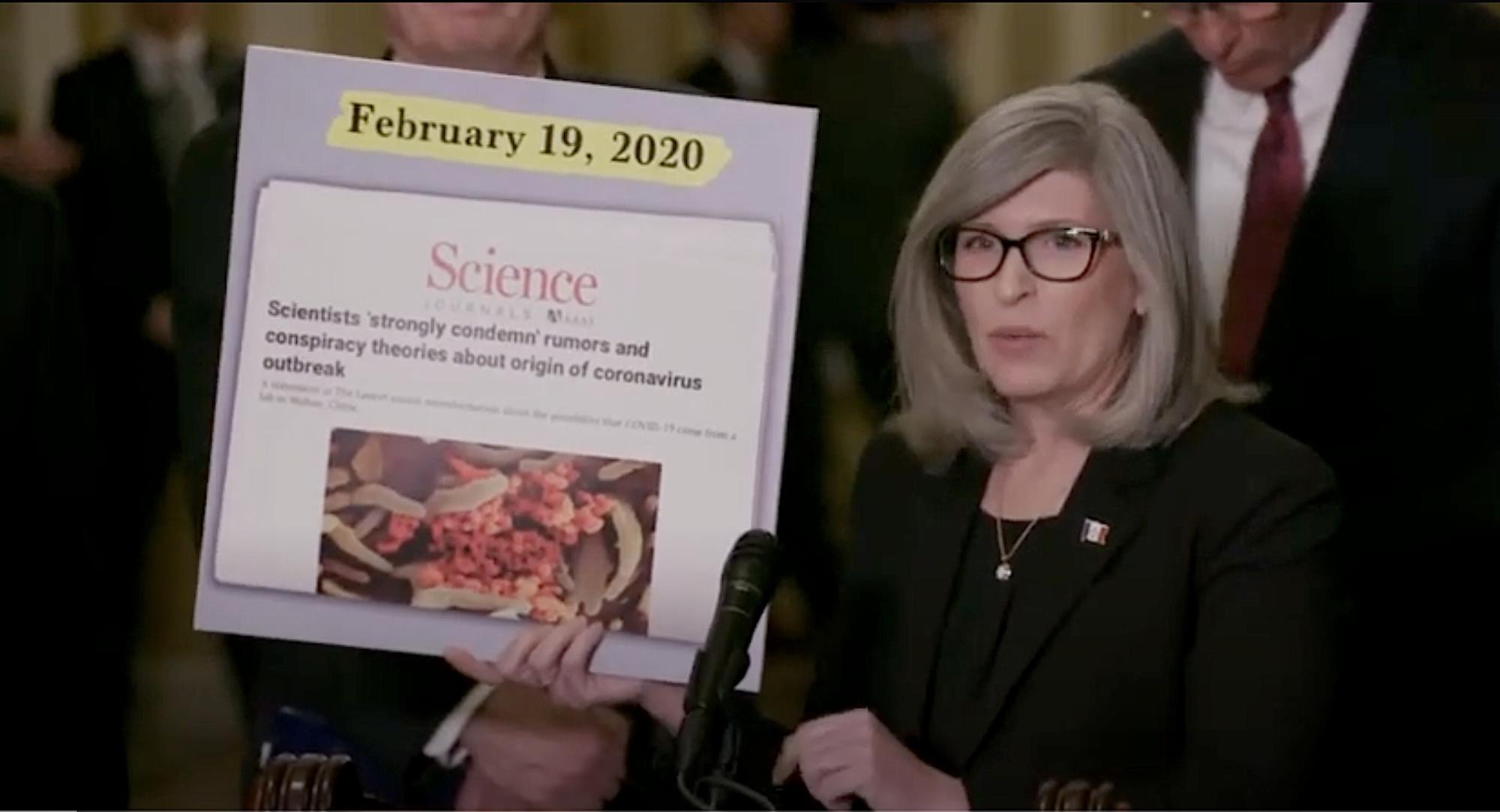
Since scientists began playing around with dangerous pathogens in laboratories, the world has experienced four or five pandemics. Yet in 2020, when people started speculating that a laboratory accident might have been the spark that started the Covid-19 pandemic, they were treated like kooks and cranks. Many public health officials and prominent scientists dismissed the idea as a conspiracy theory, insisting that the virus had emerged from animals in a seafood market in Wuhan, China. Officials and scientists hid or understated crucial facts, misled at least one reporter, orchestrated campaigns of supposedly independent voices and even compared notes about how to hide their communications in order to keep the public from hearing the whole story. A March 2020 paper in the journal Nature Medicine, which was written by five prominent scientists and declared that no "laboratory-based scenario" for the pandemic virus was plausible. But we later learned through congressional subpoenas of their Slack conversations that while the scientists publicly said the scenario was implausible, privately many of its authors considered the scenario to be not just plausible but likely. One of the authors of that paper, the evolutionary biologist Kristian Andersen, wrote in the Slack messages, "The lab escape version of this is so friggin' likely to have happened because they were already doing this type of work and the molecular data is fully consistent with that scenario."
Latest
Latest News
Each news summary is created according to strict standards. Here's how we do it.
Each summary is created using a consistent editorial procedure. The target length is approximately 16 lines of 11-point Arial text in a 650-pixel-wide column. Up to 25% of a summary may be set in bold to emphasize the most important ideas. Summaries are composed of verbatim excerpts presented in the same sequence as they appear in the original news source, with very minor editorial additions. Where material has been omitted between excerpts, the omission is indicated with ellipses (...). Any words added by an editor for clarity or context appear in [brackets]. Our original news editor was Fred Burks. Tod Fletcher edited most summaries from 2007 through 2014, and Mark Bailey has served as news editor since 2014.