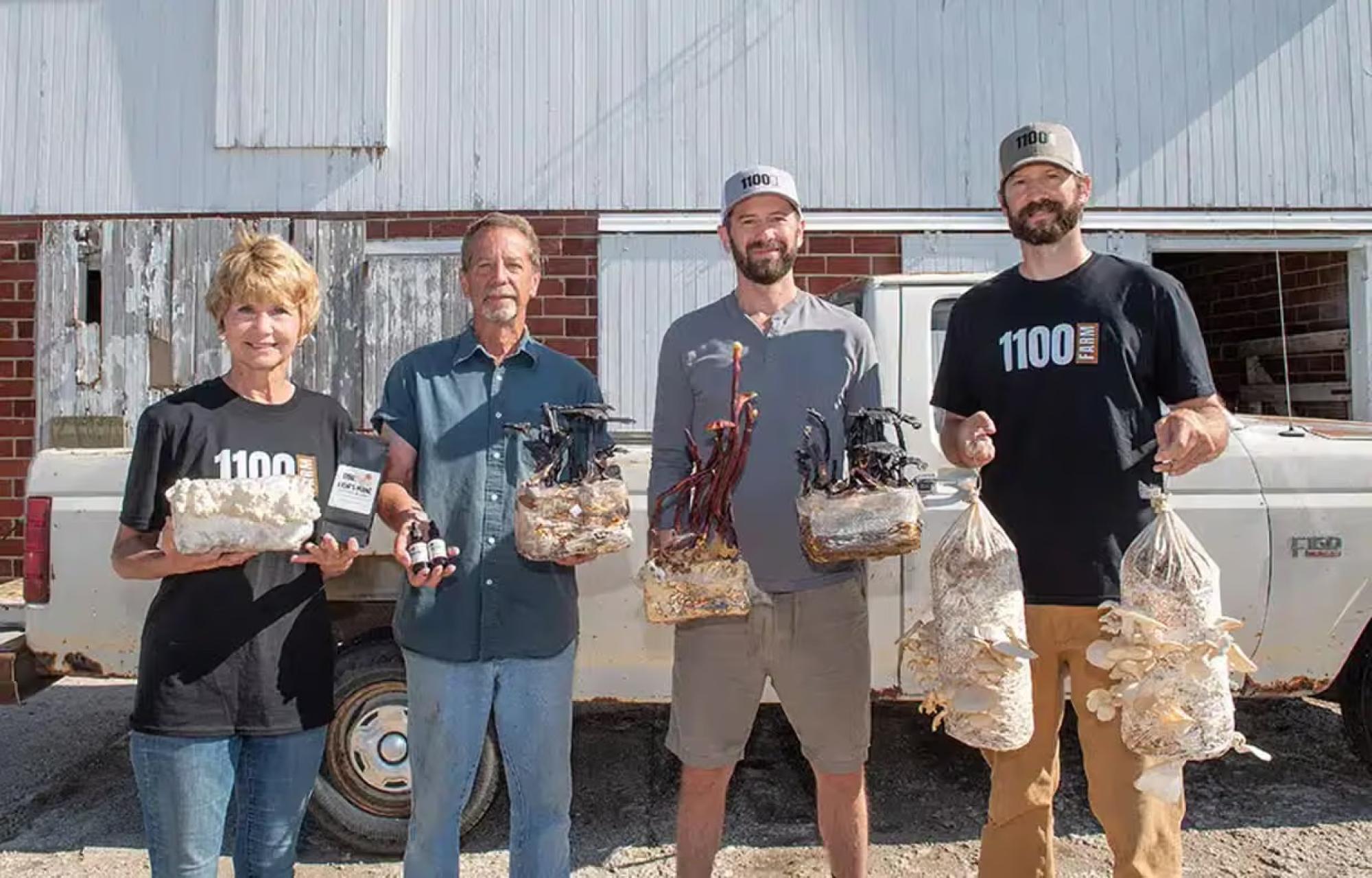
Set up in 2019, the Transfarmation Project works with farms across the US that want to ditch industrial animal agriculture, which is typically done as contract work on behalf of big meat companies, and move toward a sustainable, fully independent business model. They provide guidance on how to repurpose existing infrastructure for different crops, but also business advice on how to find the market, set up a website, establish a brand and sell directly to consumers. They also provide research and innovation grants that can help with the finances. The idea is to move beyond a form of intensive farming that has a hugely detrimental impact on the environment, but also to protect the farmers themselves, many of whom find that the concentrated animal-feeding operation (Cafo) model takes a toll on their mental health. "We used to have all these independent farms," [Iowa farmer Tanner] Faaborg says. "Our family used to have this homesteading lifestyle with some chickens and a big orchard." That changed for the Faaborgs about 30 years ago when someone from one of the big meat companies knocked on their door. "It became more: we have ... to collect this check, to pay the bills and pay back the loan." The Transfarmation Project [shows] that a different model is possible, closer to the autonomy of old. For the Faaborgs, the switch has made them feel excited about their work and its connection to nature. They want others to know that a different future is possible.
Latest
Latest News
Each news summary is created according to strict standards. Here's how we do it.
Each summary is created using a consistent editorial procedure. The target length is approximately 16 lines of 11-point Arial text in a 650-pixel-wide column. Up to 25% of a summary may be set in bold to emphasize the most important ideas. Summaries are composed of verbatim excerpts presented in the same sequence as they appear in the original news source, with very minor editorial additions. Where material has been omitted between excerpts, the omission is indicated with ellipses (...). Any words added by an editor for clarity or context appear in [brackets]. Our original news editor was Fred Burks. Tod Fletcher edited most summaries from 2007 through 2014, and Mark Bailey has served as news editor since 2014.