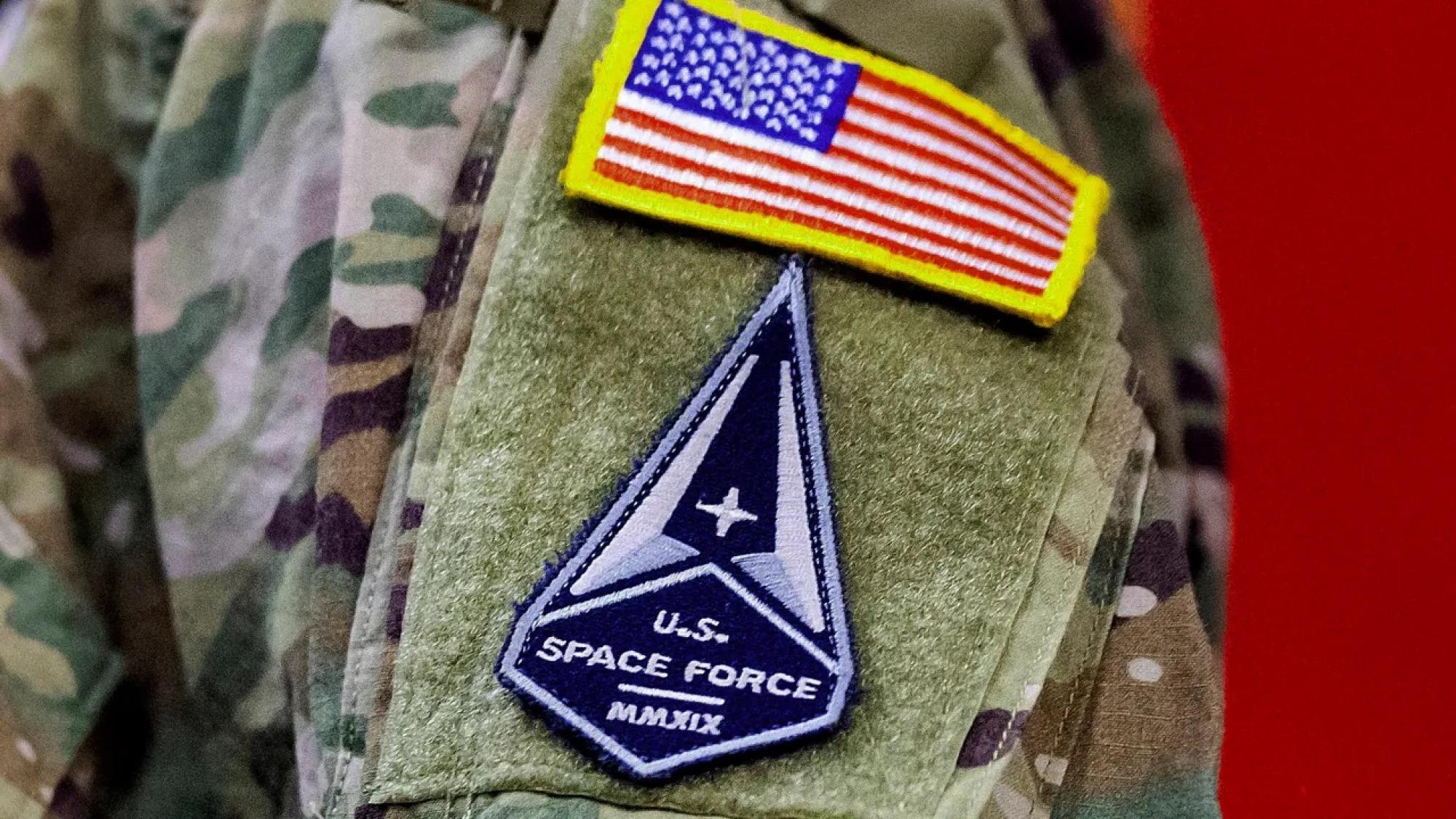
Chief Master Sgt. Ron Lerch of the U.S. Space Force sat down in his office in Los Angeles one morning in September to deliver a briefing known as a threat assessment. The current "threats" in space are less sci-fi than you might expect, but there are a surprising number of them: At least 44,500 space objects now circle Earth, including 9,000 active satellites and 19,000 significant pieces of debris. What's most concerning isn't the swarm of satellites but the types. "We know that there are kinetic kill vehicles," Lerch said for example, a Russian "nesting doll" satellite, in which a big satellite releases a tiny one and the tiny one releases a mechanism that can strike and damage another satellite. China, whose presence in space now far outpaces Russia's, is launching unmanned "space planes" into orbit, testing potentially unbreakable quantum communication links and adding A.I. capabilities to satellites. An intelligence report, Lerch said, predicted the advent, within the next decade, of satellites with radio-frequency jammers, chemical sprayers and lasers that blind and disable the competition. All this would be in addition to the cyberwarfare tools, electromagnetic instruments and "ASAT" antisatellite missiles that already exist. Space Force leaders readily describe their guardians as working toward a state of combat readiness, even as they hope an era of actual conflict never arrives. As space becomes commercialized, it increasingly becomes a geopolitical arena for competition too.
Latest
Latest News
Each news summary is created according to strict standards. Here's how we do it.
Each summary is created using a consistent editorial procedure. The target length is approximately 16 lines of 11-point Arial text in a 650-pixel-wide column. Up to 25% of a summary may be set in bold to emphasize the most important ideas. Summaries are composed of verbatim excerpts presented in the same sequence as they appear in the original news source, with very minor editorial additions. Where material has been omitted between excerpts, the omission is indicated with ellipses (...). Any words added by an editor for clarity or context appear in [brackets]. Our original news editor was Fred Burks. Tod Fletcher edited most summaries from 2007 through 2014, and Mark Bailey has served as news editor since 2014.