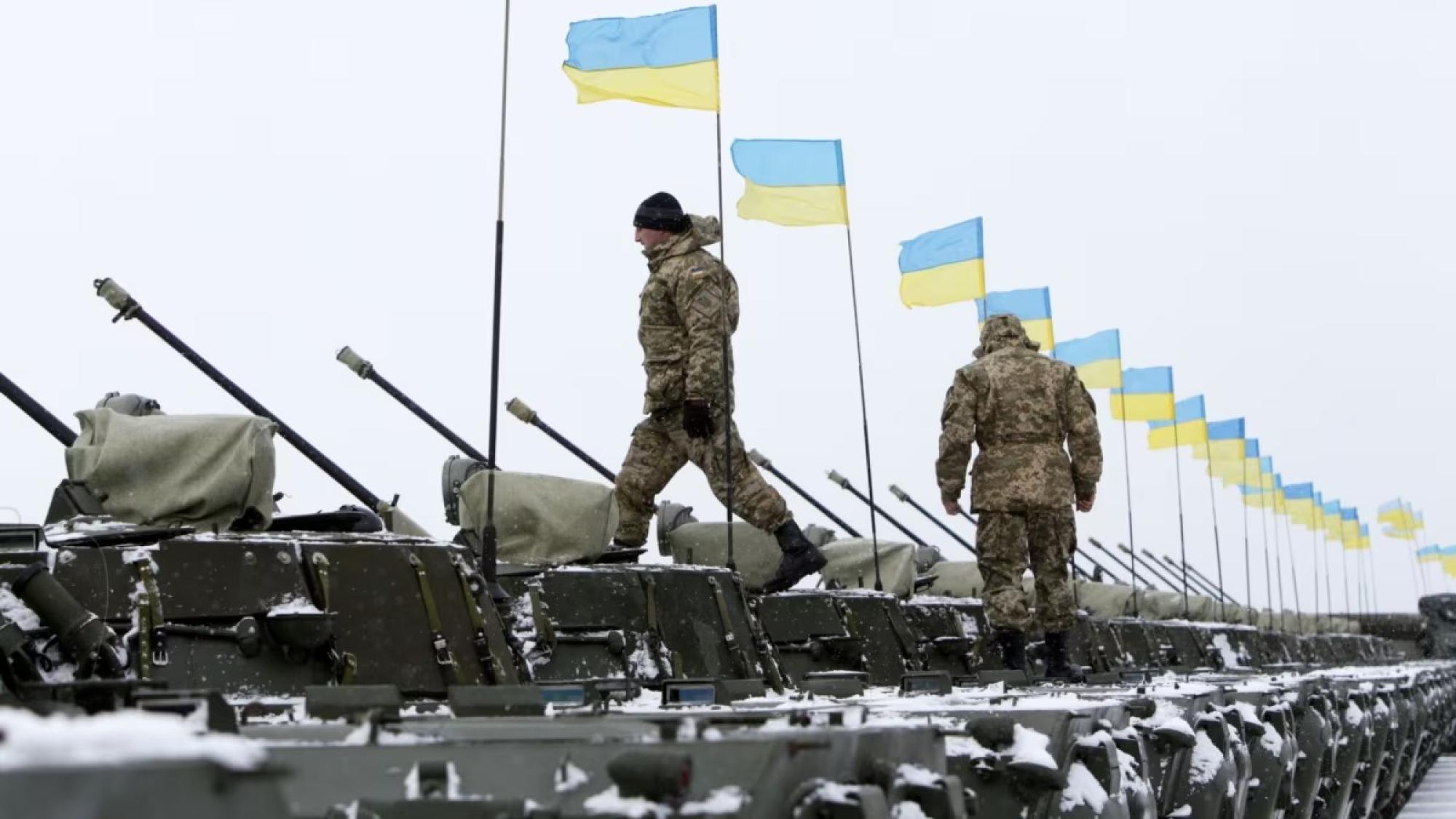
The US has few ways to track the substantial supply of anti-tank, anti-aircraft and other weaponry it has sent across the border into Ukraine, sources tell CNN, a blind spot that's due in large part to ... the easy portability of many of the smaller systems now pouring across the border. In the short term, the US sees the transfer of hundreds of millions of dollars' worth of equipment to be vital to the Ukrainians' ability to hold off Moscow's invasion. But the risk, both current US officials and defense analysts say, is that in the long term, some of those weapons may wind up in the hands of other militaries and militias that the US did not intend to arm. "We have fidelity for a short time, but when it enters the fog of war, we have almost zero," said one source briefed on US intelligence. "It drops into a big black hole." In making the decision to send billions of dollars of weapons and equipment into Ukraine, the Biden administration factored in the risk that some of the shipments may ultimately end up in unexpected places, a defense official said. The Biden administration and NATO countries say they are providing weapons to Ukraine based on what the Ukrainian forces say they need, whether it's portable systems like Javelin and Stinger missiles or the Slovakian S-300 air defense system that was sent over the last week. For decades, the US sent arms into Afghanistan. Inevitably, some weapons ended up on the black market including anti-aircraft Stinger missiles, the same kind the US is now providing to Ukraine.
Latest
Latest News
Each news summary is created according to strict standards. Here's how we do it.
Each summary is created using a consistent editorial procedure. The target length is approximately 16 lines of 11-point Arial text in a 650-pixel-wide column. Up to 25% of a summary may be set in bold to emphasize the most important ideas. Summaries are composed of verbatim excerpts presented in the same sequence as they appear in the original news source, with very minor editorial additions. Where material has been omitted between excerpts, the omission is indicated with ellipses (...). Any words added by an editor for clarity or context appear in [brackets]. Our original news editor was Fred Burks. Tod Fletcher edited most summaries from 2007 through 2014, and Mark Bailey has served as news editor since 2014.