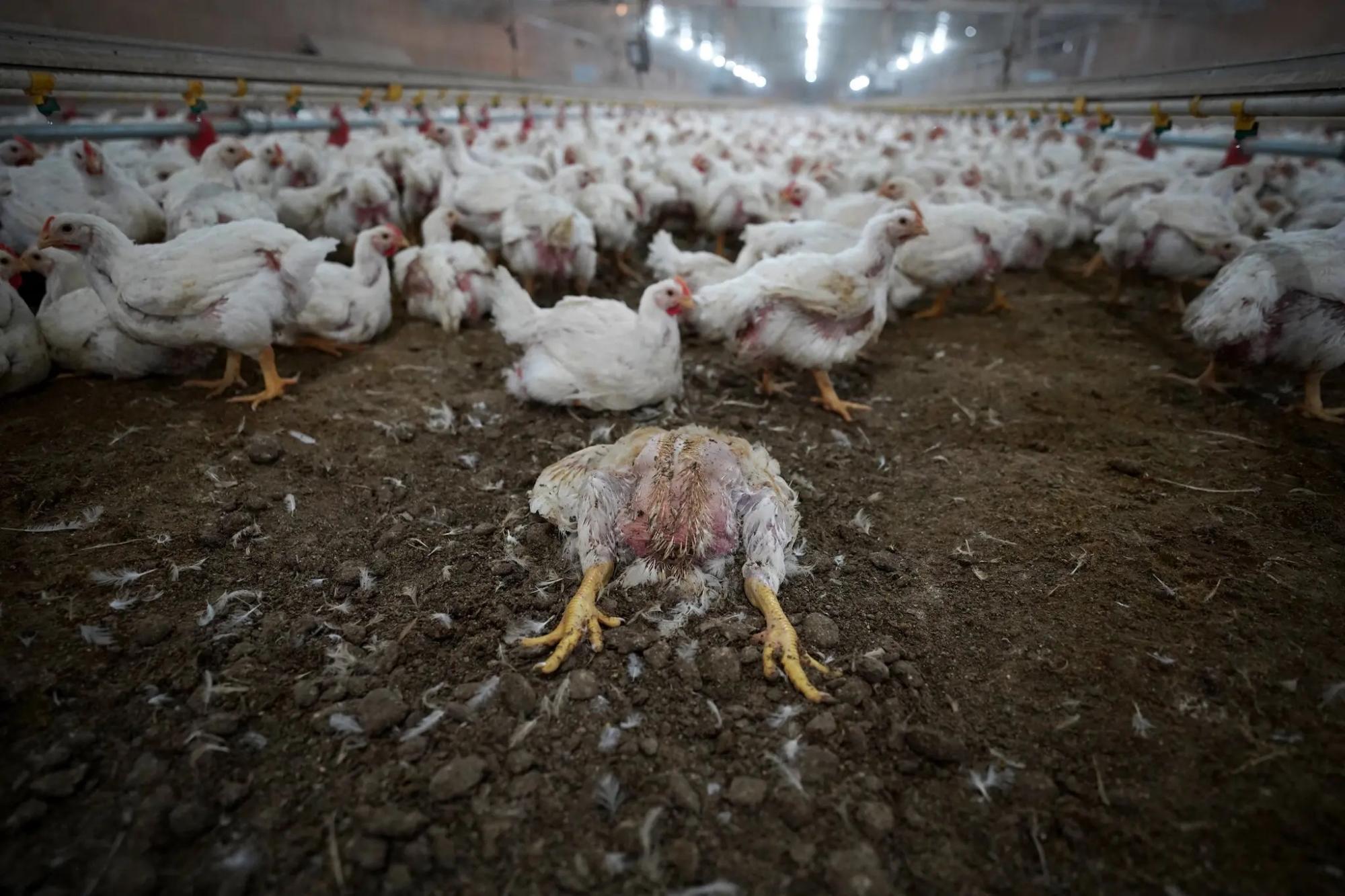
Popular dietary narratives that romanticize meat heavy or so-called ancestral diets collapse when confronted with the realities of modern food production. What may have made sense in ecological contexts defined by pasture, seasonality, and low chemical inputs no longer maps onto an industrial system dependent on genetically engineered feed, pervasive herbicide use, and routine pharmaceutical intervention. The newly released Dietary Guidelines for Americans double down on that disconnect. Rather than grappling with how food is actually produced in the United States today, they reinforce dietary advice that assumes a food system that no longer exists. The guidelines promote increased consumption of meat and dairy while remaining almost entirely silent on how those foods are produced, what they contain, and whether our land, water, animals, and bodies can bear the cost. In the United States today, the overwhelming majority of meat, eggs, and dairy come from highly intensive industrial systems. These systems rely on confinement, routine drug use, chemically saturated feed, and enormous waste burdens. Animals are routinely administered antibiotics, hormones, beta agonists, coccidiostats, and other pharmaceutical agents, many of which accumulate in animal tissues and enter the human food supply. Health policy that ignores these realities is not reform. It is avoidance.
Latest
Latest News
Each news summary is created according to strict standards. Here's how we do it.
Each summary is created using a consistent editorial procedure. The target length is approximately 16 lines of 11-point Arial text in a 650-pixel-wide column. Up to 25% of a summary may be set in bold to emphasize the most important ideas. Summaries are composed of verbatim excerpts presented in the same sequence as they appear in the original news source, with very minor editorial additions. Where material has been omitted between excerpts, the omission is indicated with ellipses (...). Any words added by an editor for clarity or context appear in [brackets]. Our original news editor was Fred Burks. Tod Fletcher edited most summaries from 2007 through 2014, and Mark Bailey has served as news editor since 2014.