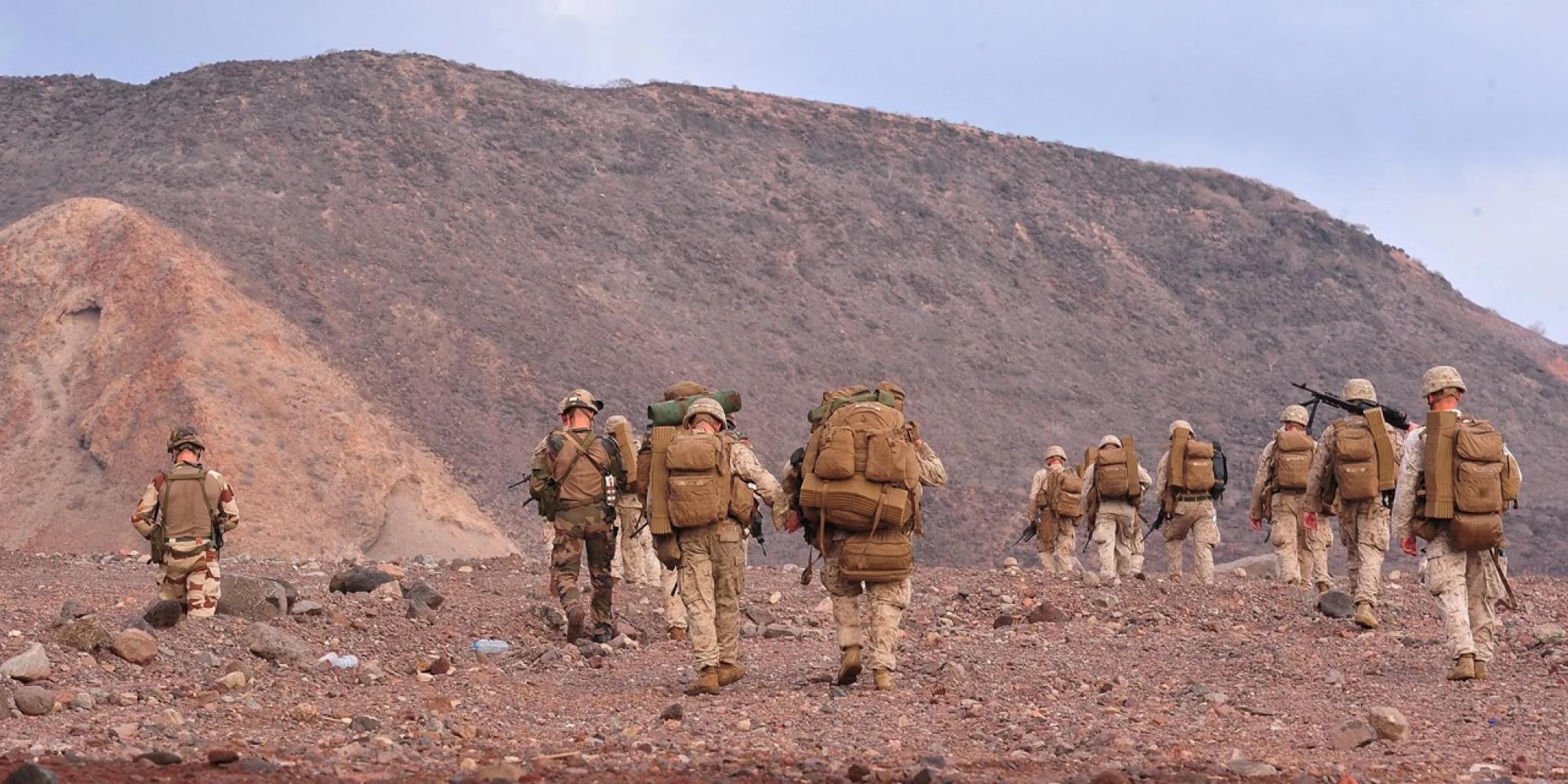
The Pentagon has known of fundamental flaws with U.S. military operations in the Horn of Africa for nearly 20 years but has nonetheless forged ahead, failing to address glaring problems, according to a 2007 study. The 50-page analysis, conducted by the Institute for Defense Analyses, a private think tank that works solely for the U.S. government, is based on anonymized interviews with key U.S. government officials from across various departments and agencies. It found America's nascent war in the Horn of Africa was plagued by a failure to define the parameters of the conflict or its aims; an overemphasis on military measures without a clear definition of the optimal military strategy; and barriers to coordination between the military and other government agencies. In 2007, the year the ... U.S. Africa Command, or AFRICOM, began operations, the U.S. conducted its first declared airstrike in Somalia. Since then, it has carried out more than 280 air attacks and commando raids, aimed primarily at the terrorist group al-Shabab, while the CIA and elite troops created local proxy forces to conduct low-profile operations on behalf of the United States. At the same time, the U.S. has provided Somalia with billions of dollars in counterterrorism assistance. The IDA study lamented the "presence of al-Qaeda" in the Horn of Africa and the "failed state of Somalia." Both remain realities despite two decades of forever war.
Latest
Latest News
Each news summary is created according to strict standards. Here's how we do it.
Each summary is created using a consistent editorial procedure. The target length is approximately 16 lines of 11-point Arial text in a 650-pixel-wide column. Up to 25% of a summary may be set in bold to emphasize the most important ideas. Summaries are composed of verbatim excerpts presented in the same sequence as they appear in the original news source, with very minor editorial additions. Where material has been omitted between excerpts, the omission is indicated with ellipses (...). Any words added by an editor for clarity or context appear in [brackets]. Our original news editor was Fred Burks. Tod Fletcher edited most summaries from 2007 through 2014, and Mark Bailey has served as news editor since 2014.