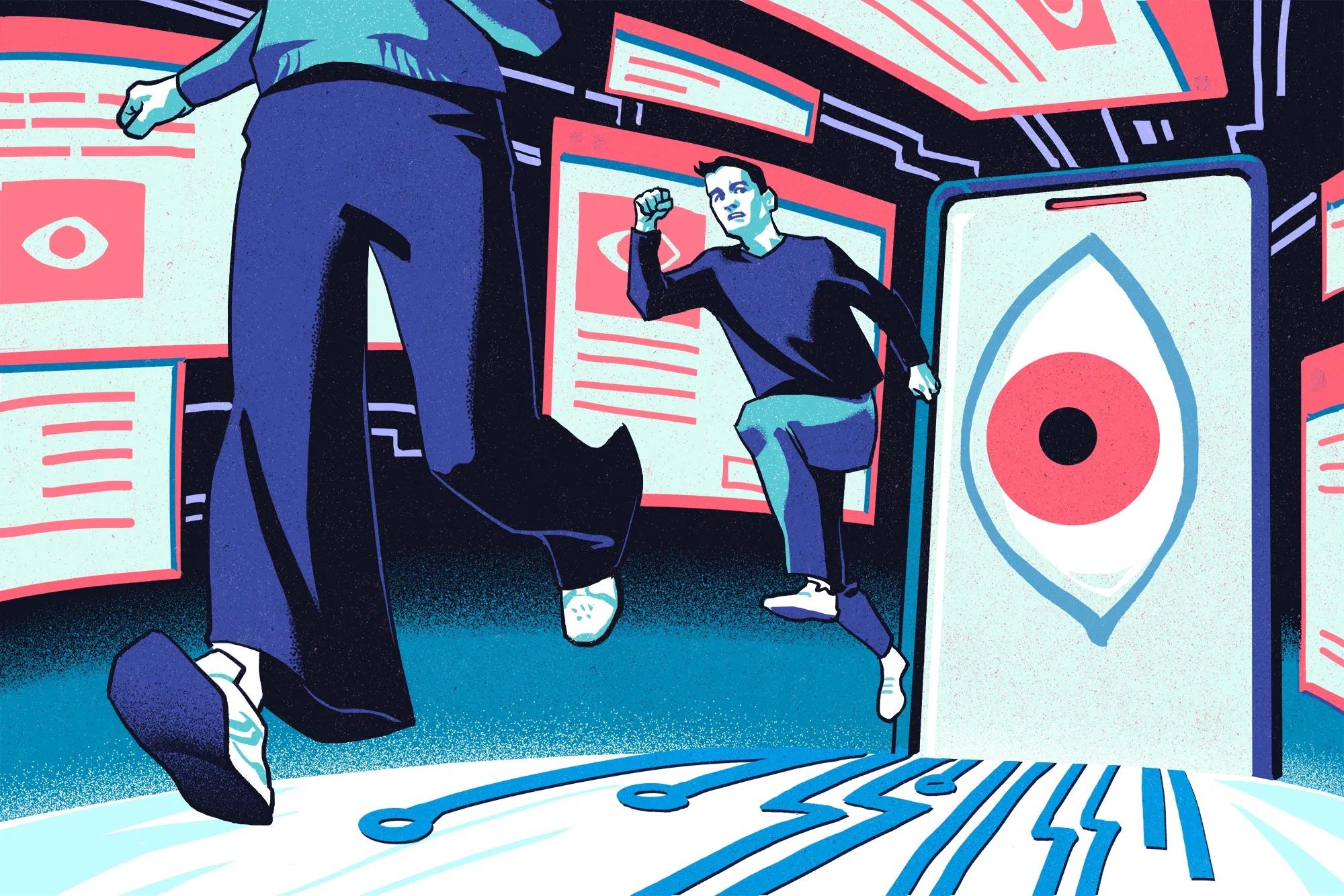
Silicon Valley techies are pretty sanguine about commercial surveillance. But they are much less cool about government spying. Government employees and contractors are pretty cool with state surveillance. But they are far less cool with commercial surveillance. What are they both missing? That American surveillance is a public-private partnership: a symbiosis between a concentrated tech sector that has the means, motive, and opportunity to spy on every person in the world and a state that loves surveillance as much as it hates checks and balances. The tech sector has powerful allies in government: cops and spies. No government agency could ever hope to match the efficiency and scale of commercial surveillance. Meanwhile, the private sector relies on cops and spies to go to bat for them, lobbying against new privacy laws and for lax enforcement of existing ones. Think of Amazon's Ring cameras, which have blanketed entire neighborhoods in CCTV surveillance, which Ring shares with law enforcement agencies, sometimes without the consent or knowledge of the cameras' owners. Ring marketing recruits cops as street teams, showering them with freebies to distribute to local homeowners. Google ... has managed to play both sides of the culture war with its location surveillance, thanks to the "reverse warrants" that cops have used to identify all the participants at both Black Lives Matter protests and the January 6 coup. Distinguishing between state and private surveillance is a fool's errand.
Latest
Latest News
Each news summary is created according to strict standards. Here's how we do it.
Each summary is created using a consistent editorial procedure. The target length is approximately 16 lines of 11-point Arial text in a 650-pixel-wide column. Up to 25% of a summary may be set in bold to emphasize the most important ideas. Summaries are composed of verbatim excerpts presented in the same sequence as they appear in the original news source, with very minor editorial additions. Where material has been omitted between excerpts, the omission is indicated with ellipses (...). Any words added by an editor for clarity or context appear in [brackets]. Our original news editor was Fred Burks. Tod Fletcher edited most summaries from 2007 through 2014, and Mark Bailey has served as news editor since 2014.