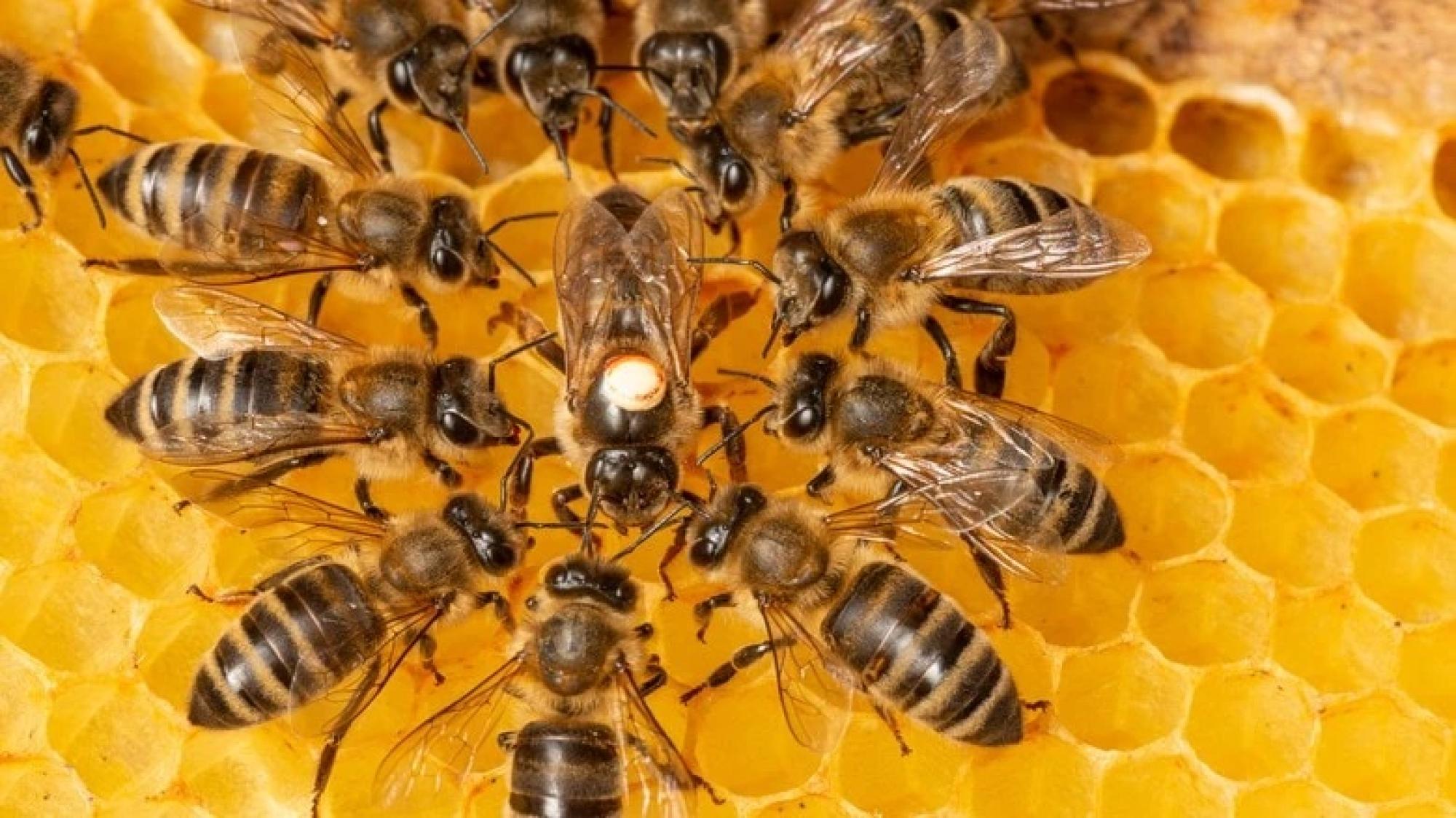
In 2016, the American honey industry faced a crisis: The U.S. Food and Drug Administration had found high levels of glyphosate, an herbicide linked to cancer, in honey samples from Iowa. The National Honey Board (NHB), a honey industry-funded agency of the U.S. Department of Agriculture, did what many businesses under fire have done: They hired a crisis management public relations firm, in this case to downplay the risks of glyphosate in honey. The PR firm, Porter Novelli, later worked with the NHB to deflect concerns about honey containing neonicotinoids. The insect-killing chemicals are tied to the collapse of bee colonies. At the same time, Porter Novelli was working for Bayer, a leading manufacturer of glyphosate and neonicotinoids. The PR firm's work for Bayer included promoting the use of neonicotinoids and opposing regulations that would safeguard honey bees. CropLife America, the pesticide industry lobby group, has also hired Porter Novelli's subsidiary, Paradigm Communications, to "lead the effort to shift how pesticide products were portrayed in search engine results," according to the Intercept. Search terms compiled by CropLife America staff included "neonicotinoid," "pollinators," and "neonics." As other countries responded to the science by banning neonics, in the U.S., "industry dug in, seeking not only to discredit the research but to cast pesticide companies as a solution to the problem." Studies show the insecticides are toxic to the brain and nervous system [of humans].
Latest
Latest News
Each news summary is created according to strict standards. Here's how we do it.
Each summary is created using a consistent editorial procedure. The target length is approximately 16 lines of 11-point Arial text in a 650-pixel-wide column. Up to 25% of a summary may be set in bold to emphasize the most important ideas. Summaries are composed of verbatim excerpts presented in the same sequence as they appear in the original news source, with very minor editorial additions. Where material has been omitted between excerpts, the omission is indicated with ellipses (...). Any words added by an editor for clarity or context appear in [brackets]. Our original news editor was Fred Burks. Tod Fletcher edited most summaries from 2007 through 2014, and Mark Bailey has served as news editor since 2014.