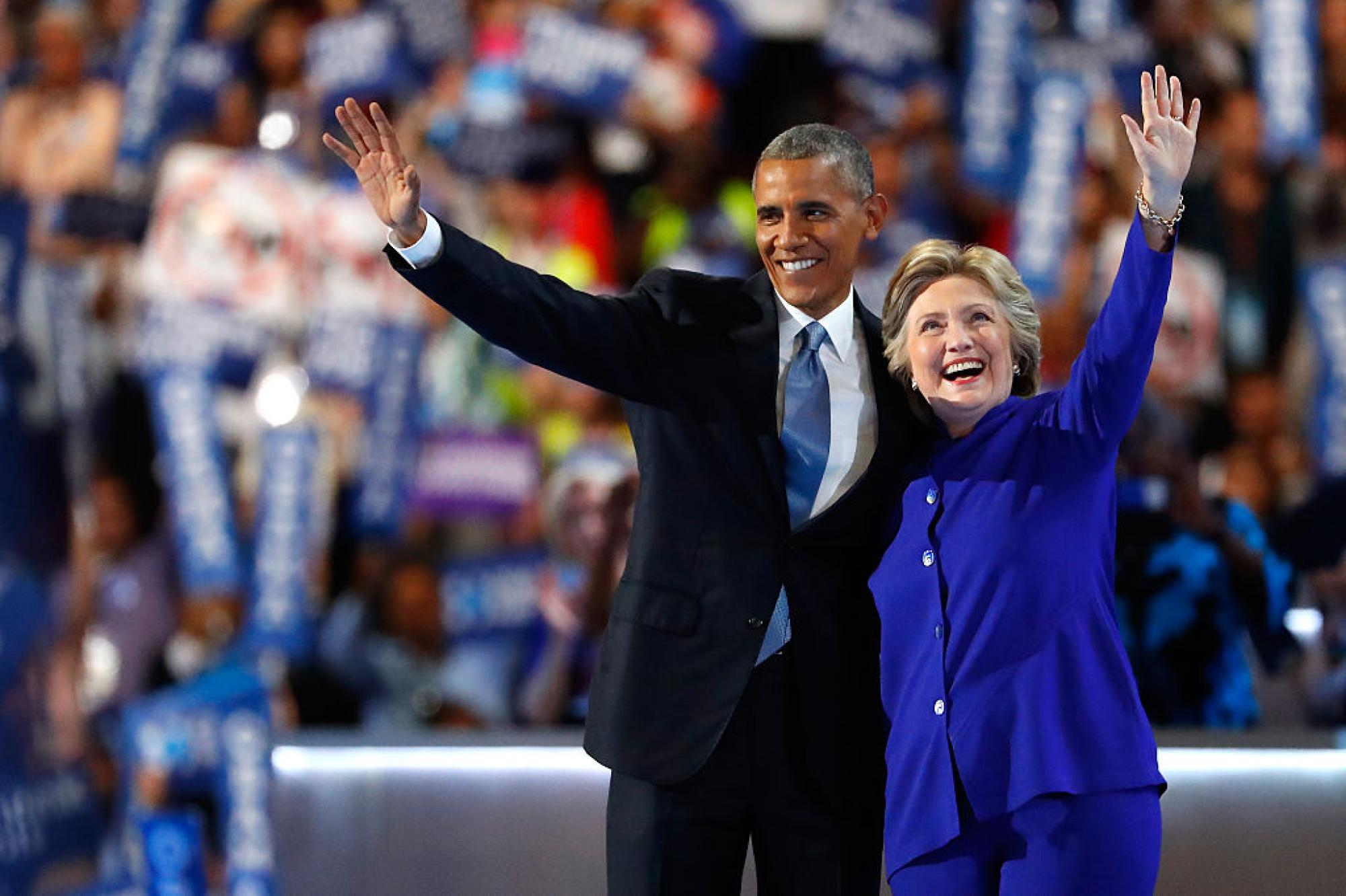
"If we broke up the big banks tomorrow, would that end racism? Would that end sexism?" This quote from one of [Hilary Clinton's] campaign rallies has an unusual durability. The Democratic Party's answer to Bernie Sanders's propagation of economic justice and economic issues was to smear him as somebody who ignored the plight of what they love to call their new term " "marginalized groups," which is people of color, women, trans people, all matters dealing with sexuality. [Hilary Clinton's] victory over Bernie Sanders in the Democratic primary reshaped center-left politics for a decade and established identity politics as a standard tool in the Democratic Party belt. For basically a decade ... you couldn't even criticize [identity politics] without being smeared as a racist, a sexist, whatever term would work to instantly discredit any criticism while shutting down any critical thought of what that criticism represented. There's a huge rise in the number of black elected officials, mayors, congressmen, etc. [They] no longer have any reason to cater to working-class blacks because workers are politically disorganized. The political officials end up captured by the same corporate forces as the white politicians " but they get to have the corner on race talk. To deal with the quality of life and life chances of the vast majority of racial minorities, you have to go beyond disparities and look at the actual availability of social goods, not the current distribution of different races. Identity politics promotes strategies and policies that primarily address the interests of elites rather than the vast majority of working Americans. As long as the American political system is run on money, the basic direction of both parties is going to be set by big money. The way out is not by confining ourselves to increasing representation and combating discrimination, but rather by addressing the quality of the jobs and the availability of basic goods.
Latest
Latest News
Each news summary is created according to strict standards. Here's how we do it.
Each summary is created using a consistent editorial procedure. The target length is approximately 16 lines of 11-point Arial text in a 650-pixel-wide column. Up to 25% of a summary may be set in bold to emphasize the most important ideas. Summaries are composed of verbatim excerpts presented in the same sequence as they appear in the original news source, with very minor editorial additions. Where material has been omitted between excerpts, the omission is indicated with ellipses (...). Any words added by an editor for clarity or context appear in [brackets]. Our original news editor was Fred Burks. Tod Fletcher edited most summaries from 2007 through 2014, and Mark Bailey has served as news editor since 2014.