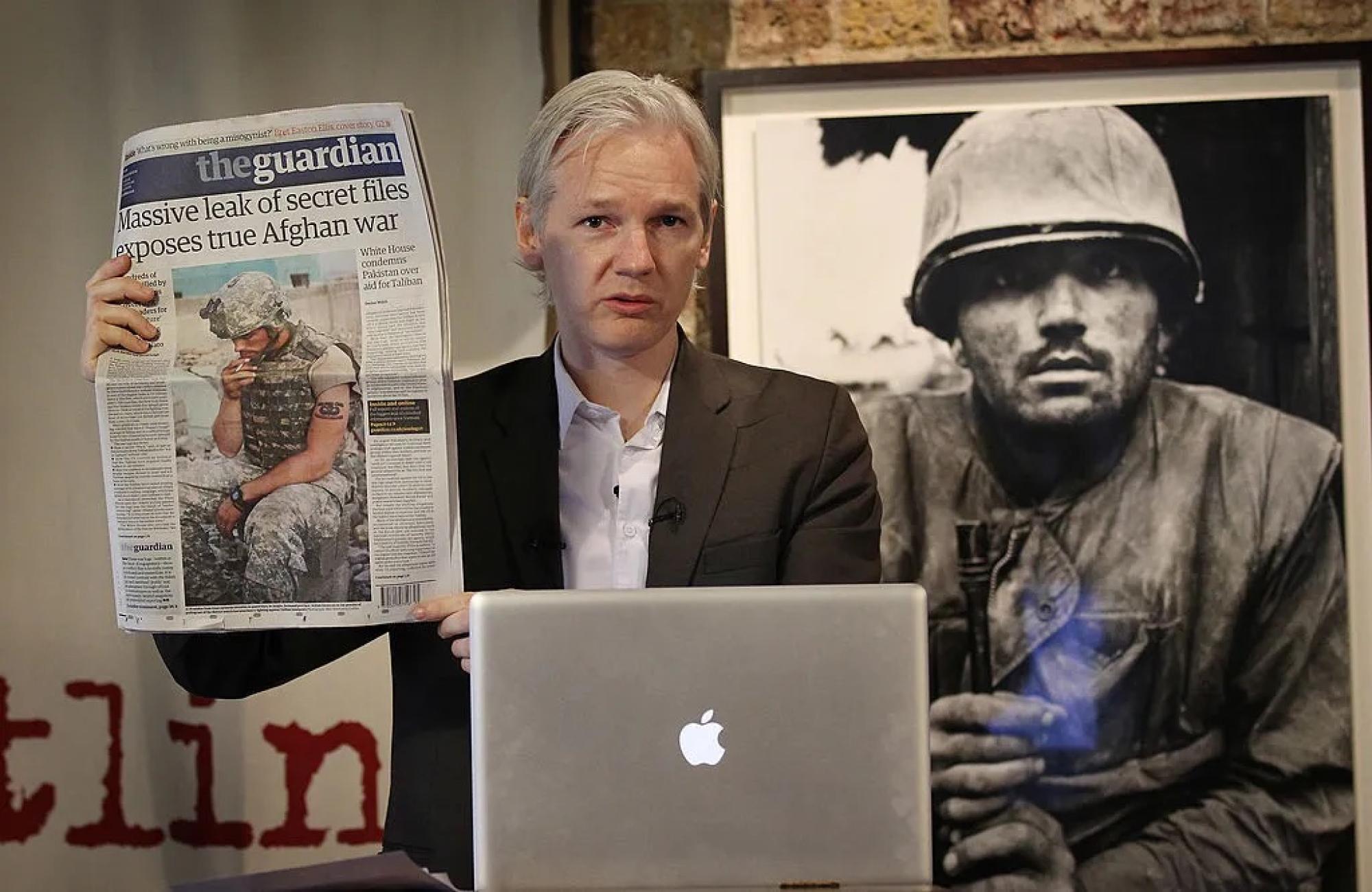
Wikileaks founder Julian Assange, as of this writing, faces a final attempt to appeal his extradition from the U.K. to the U.S. If he fails, he faces Espionage Act charges that could lead to living out the remainder of his life in federal prison. If Assange is extradited and successfully prosecuted for espionage, it would create a dangerous precedent for the government to suppress future reporting. The New York Times has a long and storied record of publishing classified materials going back to the 1971 Pentagon Papers, which showed the true history of the Vietnam War. More recently, the Washington Post and other outlets reported on the Discord intelligence leaks, revealing that Pentagon officials had suspected that the Ukrainian counter-offensive against Russia would fail ... among many other revelations. In 2013, DOJ officials noted that the legal theory used to prosecute Assange would apply almost equally to most major newspapers with a history of reporting on government secrets, such as the many news outlets that covered Edward Snowden's disclosures about warrantless NSA mass surveillance of Americans. It's not hard to see how the U.S. views Assange as an enemy of the state. He has exposed secrets and hypocrisy of American policymakers on the highest level. Diplomatic cables show the extent to which the State Department often acts as an extension of narrow multinational corporate interests. Wikileaks has published many documents that go well beyond the diplomatic cables and Democratic emails. The Afghanistan war documents disclosed by Wikileaks show extensive civilian deaths and Taliban militancy, far beyond what the Pentagon had previously acknowledged.
Latest
Latest News
Each news summary is created according to strict standards. Here's how we do it.
Each summary is created using a consistent editorial procedure. The target length is approximately 16 lines of 11-point Arial text in a 650-pixel-wide column. Up to 25% of a summary may be set in bold to emphasize the most important ideas. Summaries are composed of verbatim excerpts presented in the same sequence as they appear in the original news source, with very minor editorial additions. Where material has been omitted between excerpts, the omission is indicated with ellipses (...). Any words added by an editor for clarity or context appear in [brackets]. Our original news editor was Fred Burks. Tod Fletcher edited most summaries from 2007 through 2014, and Mark Bailey has served as news editor since 2014.