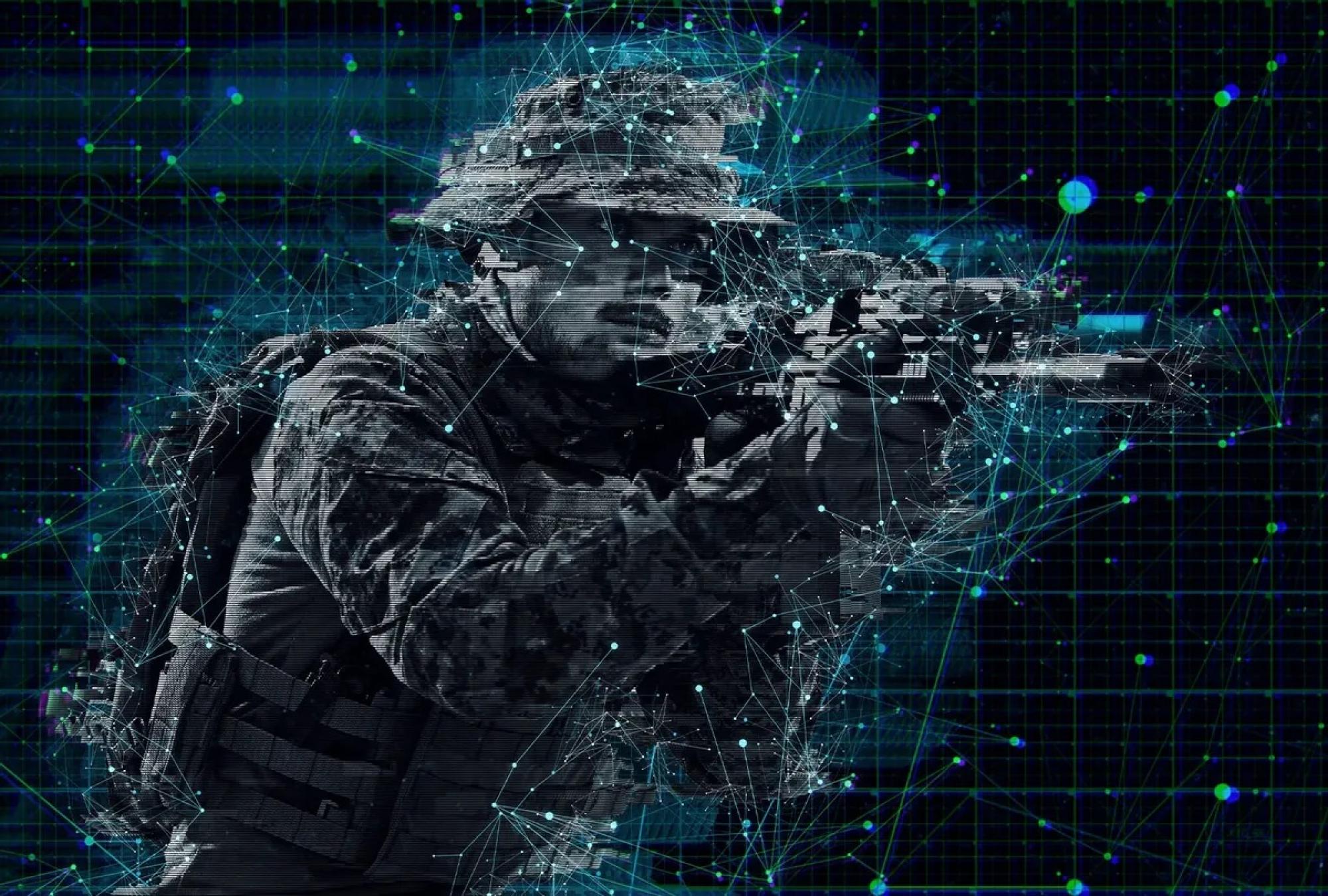
Weapons-grade robots and drones being utilized in combat isn't new. But AI software is, and it's enhancing in some cases, to the extreme " the existing hardware, which has been modernizing warfare for the better part of a decade. Now, experts say, developments in AI have pushed us to a point where global forces now have no choice but to rethink military strategy " from the ground up. "It's realistic to expect that AI will be piloting an F-16 and will not be that far out," Nathan Michael, Chief Technology Officer of Shield AI, a company whose mission is "building the world's best AI pilot," says. We don't truly comprehend what we're creating. There are also fears that a comfortable reliance in the technology's precision and accuracy " referred to as automation bias " may come back to haunt, should the tech fail in a life or death situation. One major worry revolves around AI facial recognition software being used to enhance an autonomous robot or drone during a firefight. Right now, a human being behind the controls has to pull the proverbial trigger. Should that be taken away, militants could be misconstrued for civilians or allies at the hands of a machine. And remember when the fear of our most powerful weapons being turned against us was just something you saw in futuristic action movies? With AI, that's very possible. "There is a concern over cybersecurity in AI and the ability of either foreign governments or an independent actors to take over crucial elements of the military," [filmmaker Jesse Sweet] said.
Latest
Latest News
Each news summary is created according to strict standards. Here's how we do it.
Each summary is created using a consistent editorial procedure. The target length is approximately 16 lines of 11-point Arial text in a 650-pixel-wide column. Up to 25% of a summary may be set in bold to emphasize the most important ideas. Summaries are composed of verbatim excerpts presented in the same sequence as they appear in the original news source, with very minor editorial additions. Where material has been omitted between excerpts, the omission is indicated with ellipses (...). Any words added by an editor for clarity or context appear in [brackets]. Our original news editor was Fred Burks. Tod Fletcher edited most summaries from 2007 through 2014, and Mark Bailey has served as news editor since 2014.