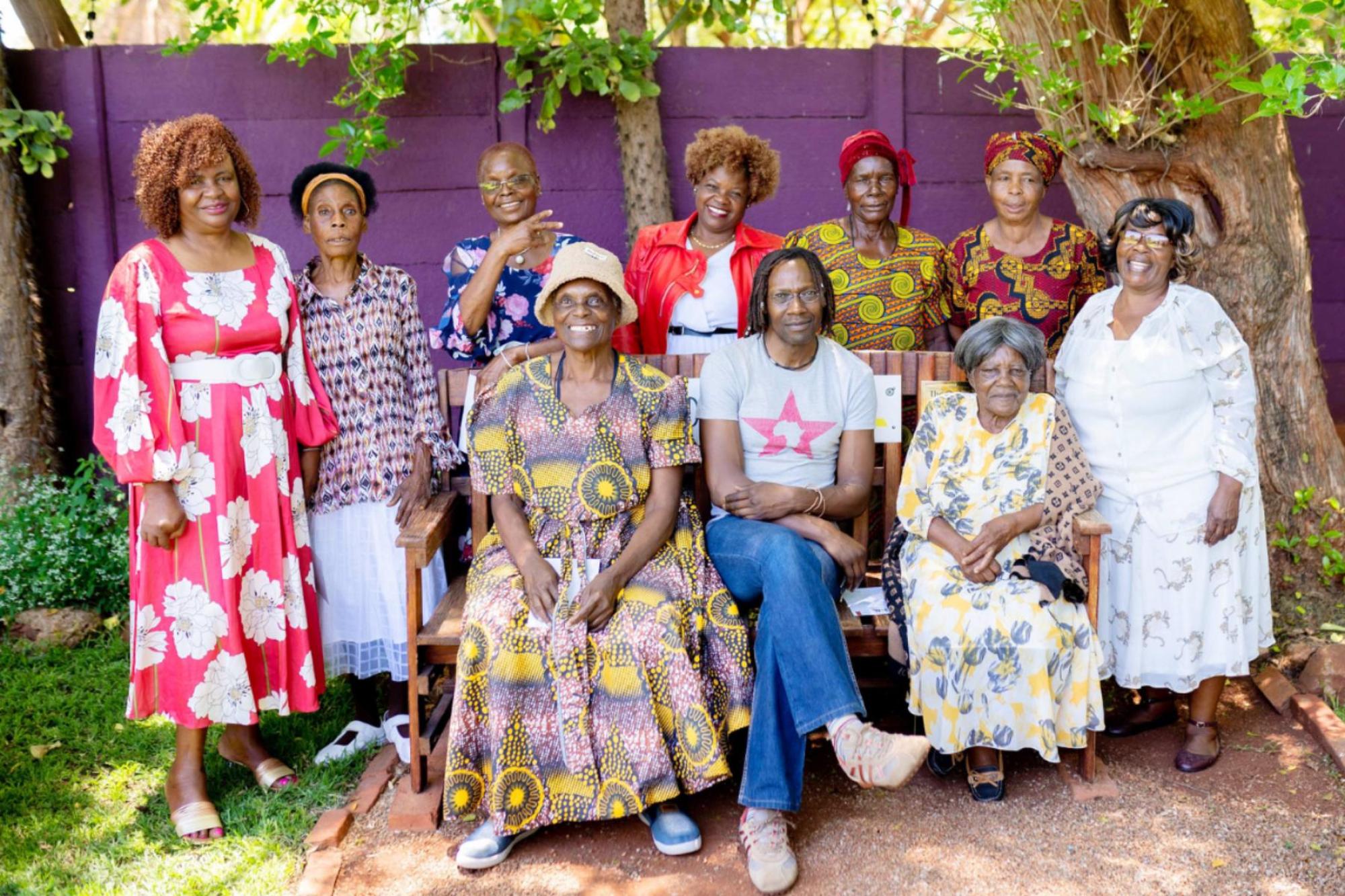
A legacy of poverty, genocide and dictatorship left Zimbabwe struggling with an epidemic of depression, colloquially known as kufungisisa, or 'thinking too much'. Known as 'gogos' (elder women) or 'ambuya utano' (community grannies), these Zimbabwean community health workers (CHWs) have a record in treating mild to moderate anxiety and depression that beats many traditional talking therapies and pharmacological interventions. Meet the Friendship Bench grandmothers of Zimbabwe. Founded in 2007, the Friendship Bench project has treated 280,000 people in its 16 years of existence, in 70 communities across Zimbabwe and at spin-off projects in Malawi, Kenya and most recently Zanzibar and Vietnam. In 2024 it will arrive in London, with a series of Friendship Benches set to be installed in the city's most marginalised communities. "Whether it's London, New York or Zimbabwe, everywhere the issues are similar," Friendship Bench founder, Harare-based psychiatrist Dr Dixon Chibanda tells Positive News. "There are issues related to loneliness, access to care, and to just being able to know that what you're experiencing " whether you call it stress or depression or anxiety " is treatable." Most of the therapists are older women, who are traditionally turned to for counsel in Zimbabwean culture. The women are trained in the basics of cognitive behavioural therapy [CBT] and allocated a park bench in their communities.
Latest
Latest News
Each news summary is created according to strict standards. Here's how we do it.
Each summary is created using a consistent editorial procedure. The target length is approximately 16 lines of 11-point Arial text in a 650-pixel-wide column. Up to 25% of a summary may be set in bold to emphasize the most important ideas. Summaries are composed of verbatim excerpts presented in the same sequence as they appear in the original news source, with very minor editorial additions. Where material has been omitted between excerpts, the omission is indicated with ellipses (...). Any words added by an editor for clarity or context appear in [brackets]. Our original news editor was Fred Burks. Tod Fletcher edited most summaries from 2007 through 2014, and Mark Bailey has served as news editor since 2014.