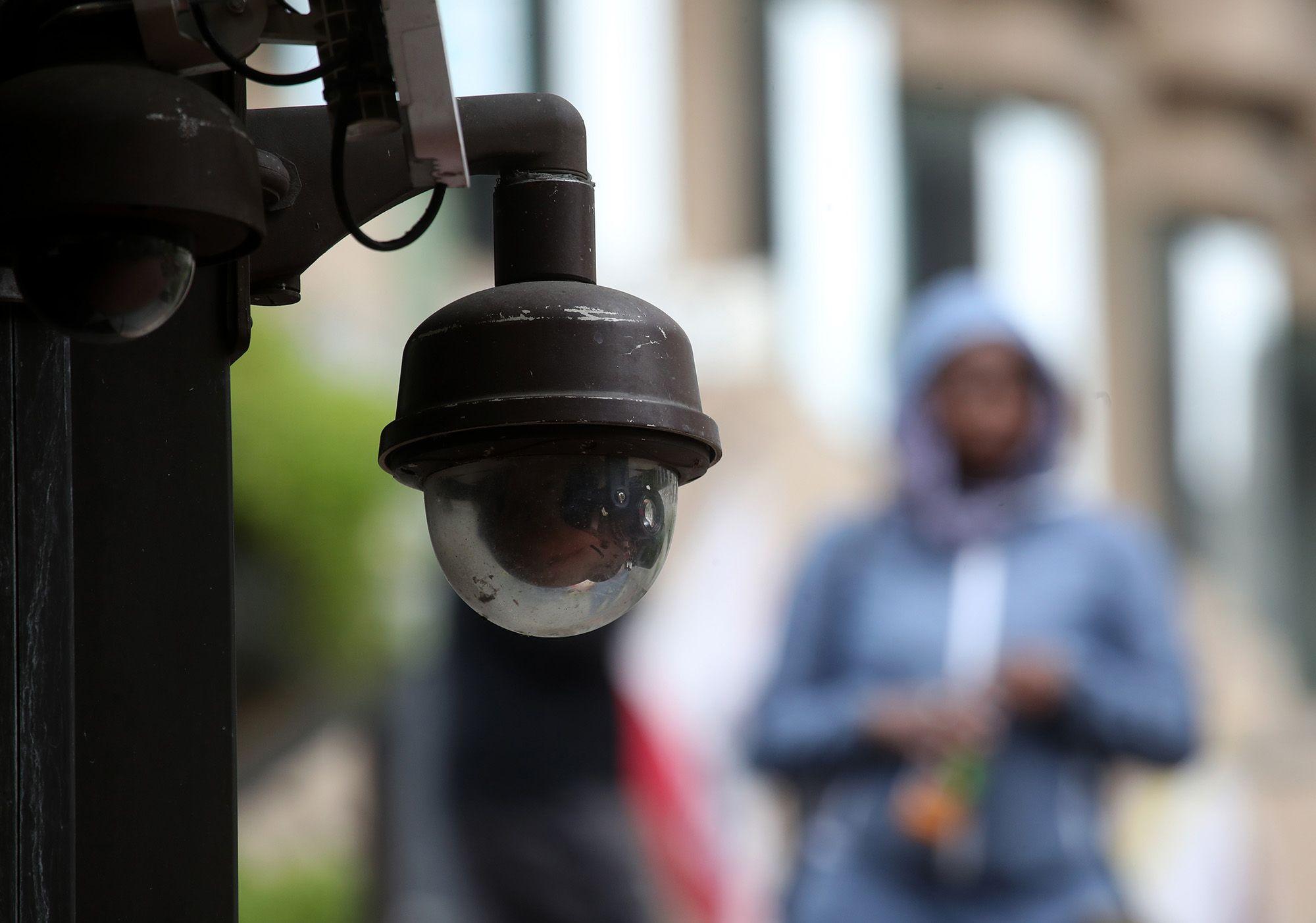
From facial recognition to predictive analytics to the rise of increasingly convincing deepfakes and other synthetic video, new technologies are emerging faster than agencies, lawmakers, or watchdog groups can keep up. Take New Orleans, where, for the past two years, police officers have quietly received real-time alerts from a private network of AI-equipped cameras, flagging the whereabouts of people on wanted lists. In 2022, City Council members attempted to put guardrails on the use of facial recognition. But those guidelines assume it's the police doing the searching. New Orleans police have hundreds of cameras, but the alerts in question came from a separate system: a network of 200 cameras equipped with facial recognition and installed by residents and businesses on private property, feeding video to a nonprofit called Project NOLA. Police officers who downloaded the group's app then received notifications when someone on a wanted list was detected on the camera network, along with a location. That has civil liberties groups and defense attorneys in Louisiana frustrated. "When you make this a private entity, all those guardrails that are supposed to be in place for law enforcement and prosecution are no longer there, and we don't have the tools to ... hold people accountable," Danny Engelberg, New Orleans' chief public defender, [said]. Another way departments can skirt facial recognition rules is to use AI analysis that doesn't technically rely on faces.
Latest
Latest News
Each news summary is created according to strict standards. Here's how we do it.
Each summary is created using a consistent editorial procedure. The target length is approximately 16 lines of 11-point Arial text in a 650-pixel-wide column. Up to 25% of a summary may be set in bold to emphasize the most important ideas. Summaries are composed of verbatim excerpts presented in the same sequence as they appear in the original news source, with very minor editorial additions. Where material has been omitted between excerpts, the omission is indicated with ellipses (...). Any words added by an editor for clarity or context appear in [brackets]. Our original news editor was Fred Burks. Tod Fletcher edited most summaries from 2007 through 2014, and Mark Bailey has served as news editor since 2014.