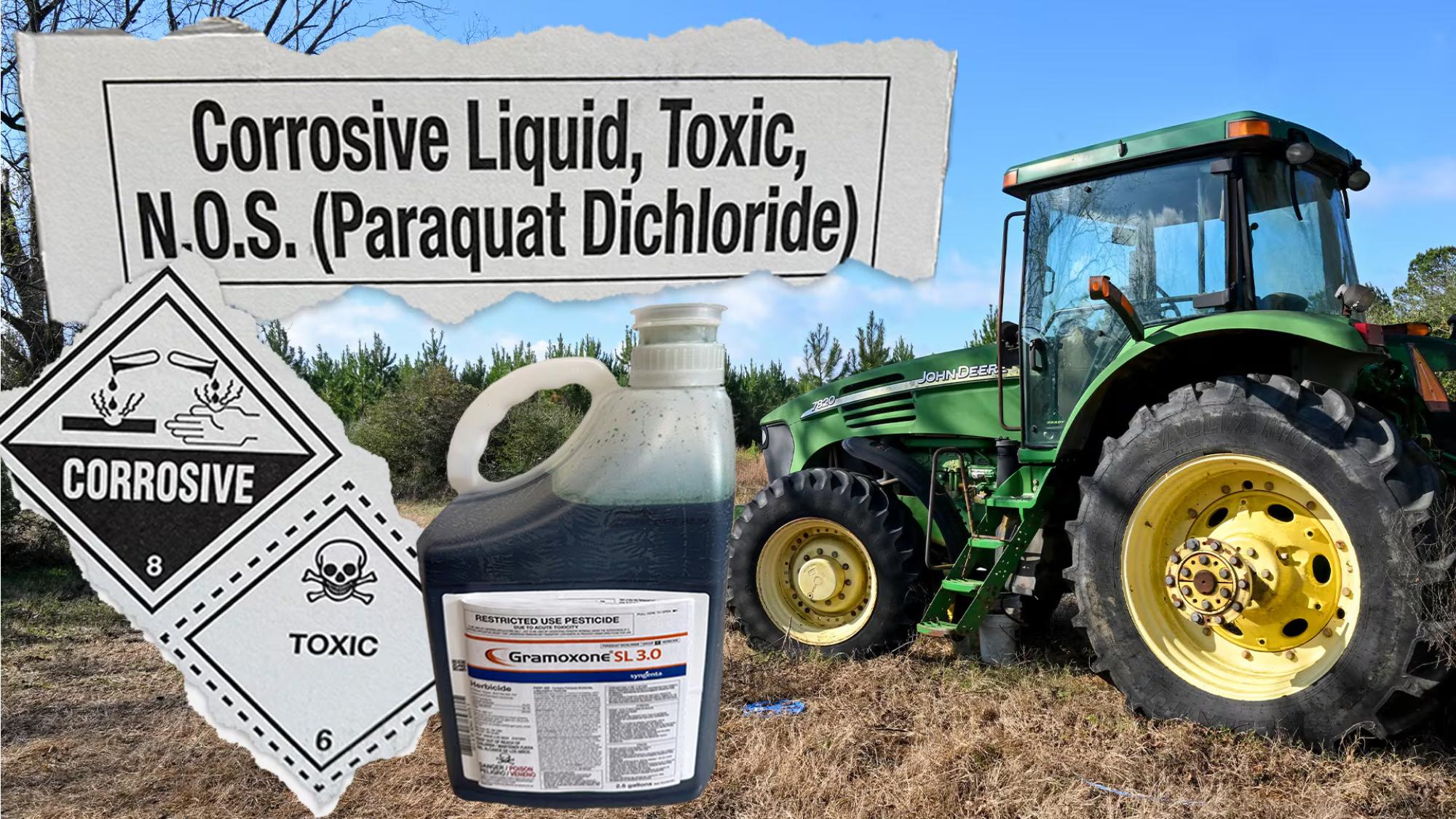
Vermont is the first US state to ban the weedkilling pesticide paraquat, backed by lawmakers who cited concerns about research showing the chemical substantially increases the risk of the incurable brain ailment known as Parkinson's disease. Phil Scott, the governor, signed the legislation on Tuesday. The new law takes effect on 1 November, though it contains a provision allowing state regulators to issue special permits for paraquat use on fruit-producing tree orchards, berries and other "small fruit" crops up until 31 December 2030. Early versions of the law pointed to multiple studies by the National Institutes of Health have demonstrated that paraquat exposure substantially increases the risk of Parkinson's disease in those exposed to the herbicide. Lawmakers also noted that other NIH studies have linked paraquat to non-Hodgkin lymphoma and childhood leukemia. Ray Dorsey, a neurologist who directs research into environmental causes of brain diseases at Atria Health and Research Institute, said Vermont's action was "another step toward preventing this largely man-made disease". He said that many countries had banned paraquat and said it "is long overdue for the US to do the same". Numerous scientific studies have found that paraquat damages cells in the brain in ways that can lead to Parkinson's, and more than 8,000 lawsuits are pending in US courts over the Parkinson's allegations.
Latest
Latest News
Each news summary is created according to strict standards. Here's how we do it.
Each summary is created using a consistent editorial procedure. The target length is approximately 16 lines of 11-point Arial text in a 650-pixel-wide column. Up to 25% of a summary may be set in bold to emphasize the most important ideas. Summaries are composed of verbatim excerpts presented in the same sequence as they appear in the original news source, with very minor editorial additions. Where material has been omitted between excerpts, the omission is indicated with ellipses (...). Any words added by an editor for clarity or context appear in [brackets]. Our original news editor was Fred Burks. Tod Fletcher edited most summaries from 2007 through 2014, and Mark Bailey has served as news editor since 2014.