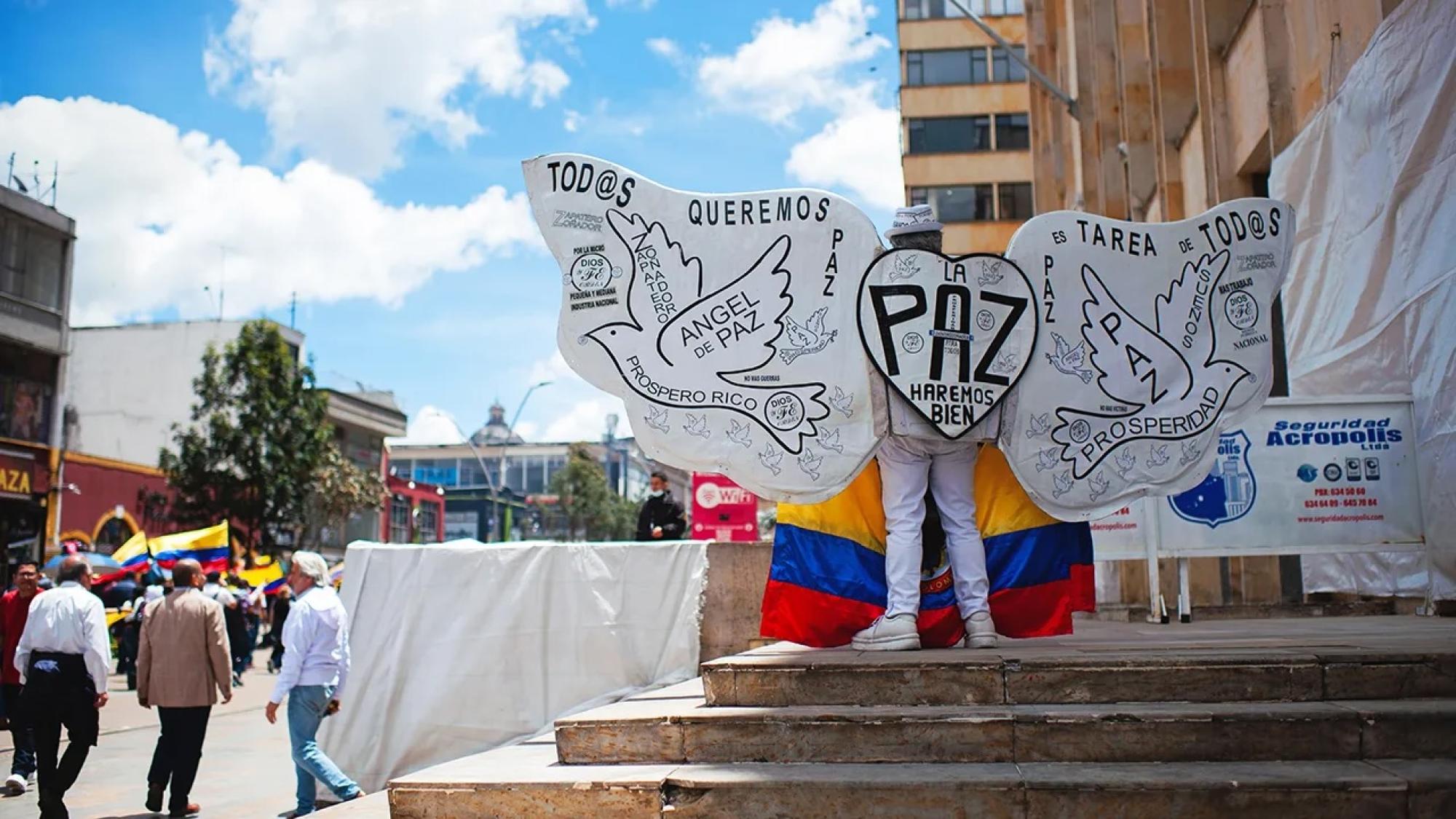
Latin America is the world's most dangerous region due to cartel and gang violence. It has 9% of the global population but one-third of the world's homicides. Kidnapping and extortion are on the rise. The trend is driving a turn toward increasingly militarized solutions. El Salvador, for example, has incarcerated some 75,000 people nearly 2% of its population " in recent years on suspicion of being involved in gangs. In Colombia, by contrast, exchanging the threat of arrest for dialogue is a key part of the government's painstaking strategy of negotiating peace simultaneously with some 20 armed factions to end 60 years of conflict. That process, known as Paz Total ("total peace") and launched less than two years ago by President Gustavo Petro, has been marked by reversals and unintended effects. But a key distinction lies in its emphasis on both empathy and the rule of law. The strategy's first example of "restorative incarceration," launched earlier this month, shows how. In exchange for admitting guilt for violent acts and seeking forgiveness from victims and the families, 48 military and former guerrilla leaders are now serving "sentences" by planting trees and helping heal the communities they once dominated through fear. "We're going to sow life to try to make amends and build peace," [said] Henry Torres, a former army general. As Colombia's new attorney general put it, "our mission will be ... a mission for the dignity and well-being of our people." Peace requires patience, said Juan Manuel Santos, a former president who negotiated a 2016 peace accord with Colombia's main guerrilla faction that still serves as a template for Mr. Petro's broader peace plan. "You need to convince, to persuade, to change people's sentiments, to teach them how to forgive, how to reconcile," he told The Harvard Gazette.
Latest
Latest News
Each news summary is created according to strict standards. Here's how we do it.
Each summary is created using a consistent editorial procedure. The target length is approximately 16 lines of 11-point Arial text in a 650-pixel-wide column. Up to 25% of a summary may be set in bold to emphasize the most important ideas. Summaries are composed of verbatim excerpts presented in the same sequence as they appear in the original news source, with very minor editorial additions. Where material has been omitted between excerpts, the omission is indicated with ellipses (...). Any words added by an editor for clarity or context appear in [brackets]. Our original news editor was Fred Burks. Tod Fletcher edited most summaries from 2007 through 2014, and Mark Bailey has served as news editor since 2014.