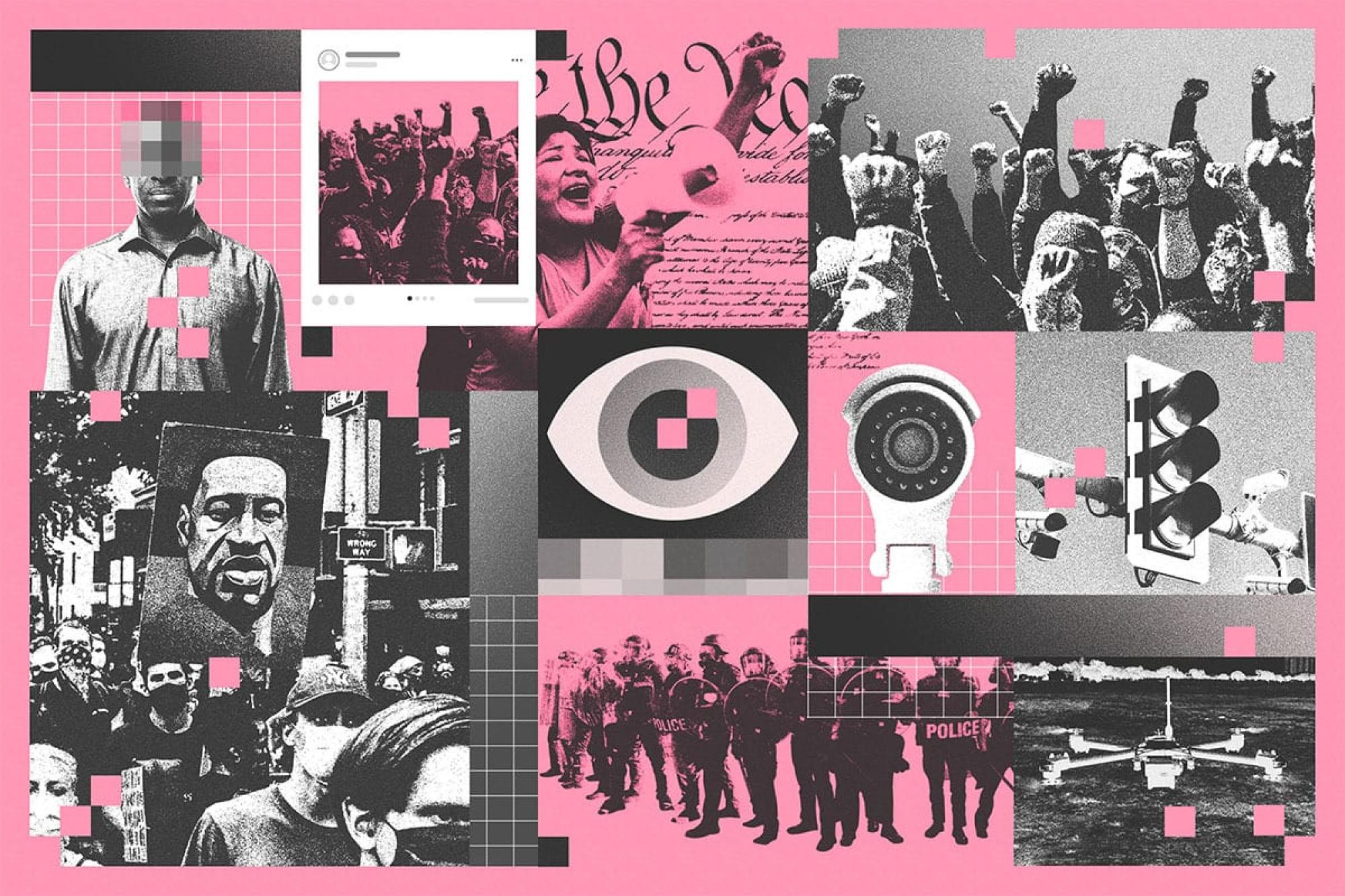
Before the digital age, law enforcement would conduct surveillance through methods like wiretapping phone lines or infiltrating an organization. Now, police surveillance can reach into the most granular aspects of our lives during everyday activities, without our consent or knowledge and without a warrant. Technology like automated license plate readers, drones, facial recognition, and social media monitoring added a uniquely dangerous element to the surveillance that comes with physical intimidation of law enforcement. With greater technological power in the hands of police, surveillance technology is crossing into a variety of new and alarming contexts. Law enforcement partnerships with companies like Clearview AI, which scraped billions of images from the internet for their facial recognition database ... has been used by law enforcement agencies across the country, including within the federal government. When the social networking app on your phone can give police details about where you've been and who you're connected to, or your browsing history can provide law enforcement with insight into your most closely held thoughts, the risks of self-censorship are great. When artificial intelligence tools or facial recognition technology can piece together your life in a way that was previously impossible, it gives the ones with the keys to those tools enormous power to ... maintain a repressive status quo.
Latest
Latest News
Each news summary is created according to strict standards. Here's how we do it.
Each summary is created using a consistent editorial procedure. The target length is approximately 16 lines of 11-point Arial text in a 650-pixel-wide column. Up to 25% of a summary may be set in bold to emphasize the most important ideas. Summaries are composed of verbatim excerpts presented in the same sequence as they appear in the original news source, with very minor editorial additions. Where material has been omitted between excerpts, the omission is indicated with ellipses (...). Any words added by an editor for clarity or context appear in [brackets]. Our original news editor was Fred Burks. Tod Fletcher edited most summaries from 2007 through 2014, and Mark Bailey has served as news editor since 2014.