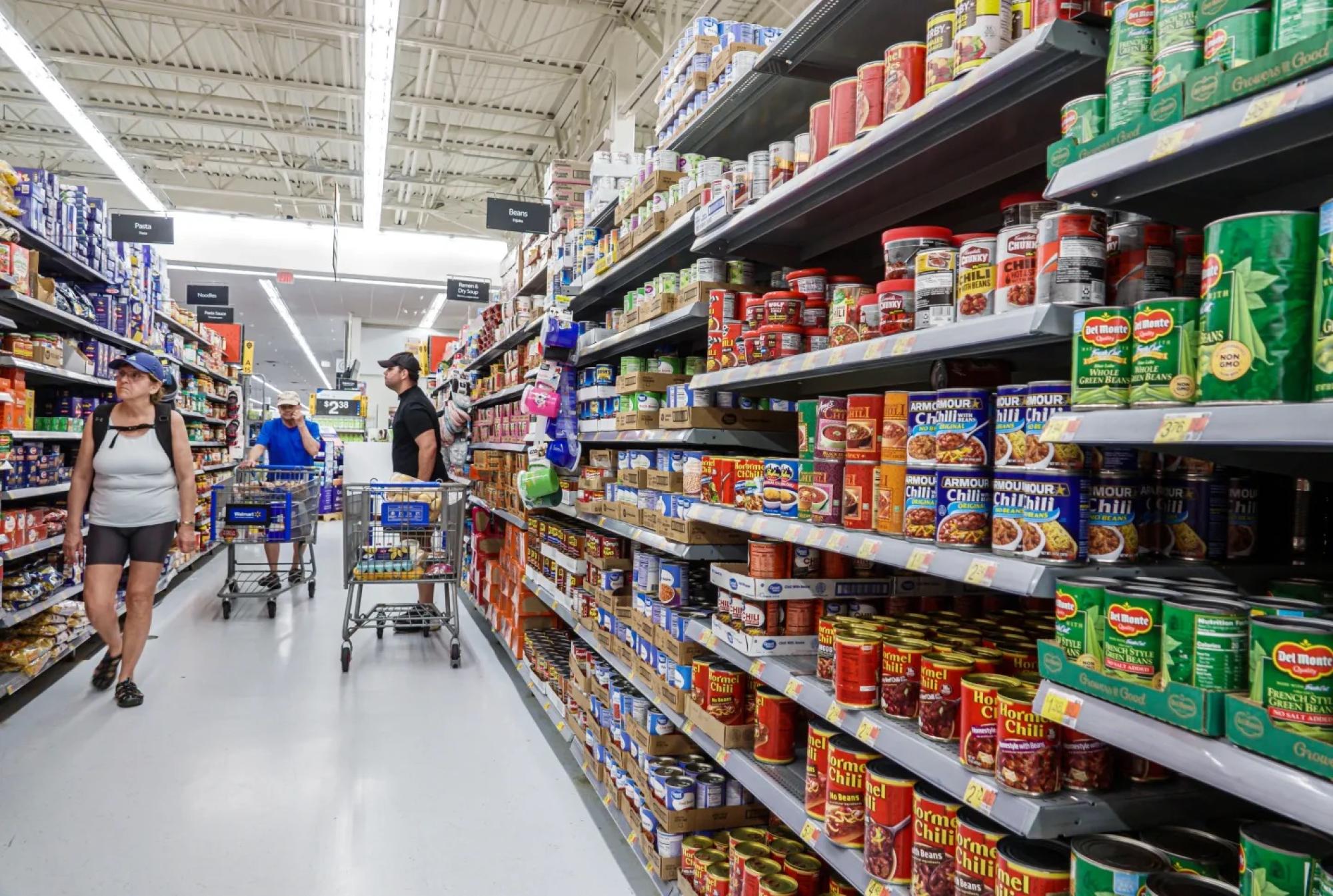
How is America allowed to feed us certain products that are harmful and banned in other countries? What some people may dismiss as a fixation of "granola moms" is actually a legitimate concern, says Melanie Benesh, the vice president of government affairs at the Environmental Working Group. The impact many of these chemicals have is chronic: They accumulate over time, after a lot of tiny exposures. For example, the whitening agent titanium dioxide in soups and dairy products can build up in the body and even damage DNA. European countries take a much more precautionary approach to additives in their food, Benesh says. "If there are doubts about whether a chemical is safe or if there's no data to back up safety, the EU is much more likely to put a restriction on that chemical." California banned four chemicals in 2023: brominated vegetable oil, Red Dye No. 3, propylparaben, and potassium bromate. This year, lawmakers in about a dozen states have introduced legislation banning those same chemicals and, in some states, additional chemicals as well. But federal oversight has been limited. When Congress wrote the food chemical law, they included an exception for things that are generally recognized as safe, or GRAS. This was intended to be a narrow loophole, an exception for ... things like spices or vinegar or flour or table salt. An analysis in 2022 ... found that 99 percent of new food chemicals were exploiting this GRAS loophole.
Latest
Latest News
Each news summary is created according to strict standards. Here's how we do it.
Each summary is created using a consistent editorial procedure. The target length is approximately 16 lines of 11-point Arial text in a 650-pixel-wide column. Up to 25% of a summary may be set in bold to emphasize the most important ideas. Summaries are composed of verbatim excerpts presented in the same sequence as they appear in the original news source, with very minor editorial additions. Where material has been omitted between excerpts, the omission is indicated with ellipses (...). Any words added by an editor for clarity or context appear in [brackets]. Our original news editor was Fred Burks. Tod Fletcher edited most summaries from 2007 through 2014, and Mark Bailey has served as news editor since 2014.