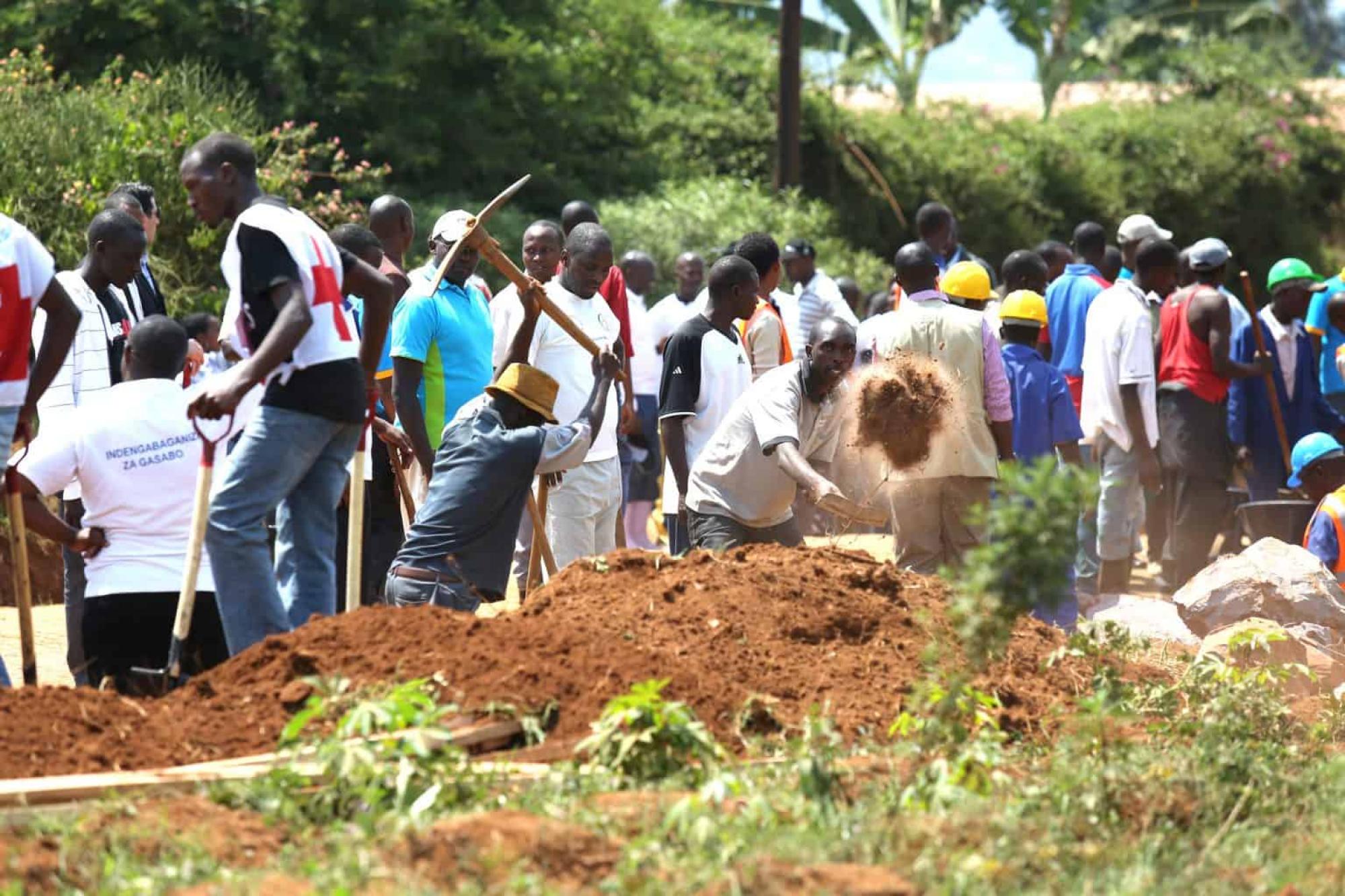
Luc, along with just about every able-bodied Rwandan aged 18 to 65, participates in the monthly activity known as "Umuganda," a Kinyarwanda word that means "coming together in common purpose." On the last Saturday of every month, from 8 to 11 a.m., Rwandans across the country gather together to partake in community improvement projects. In Luc's neighborhood, this has meant trimming back bushes that attract malaria-spreading mosquitoes, and making sure roads are clear. According to Luc, these monthly gatherings have helped his community recover from a long, devastating period of genocide, making it clean, innovative, loving and self-reliant. Across the country ... the tradition of Umuganda has unfolded in similar fashion, helping Rwanda to piece itself back together and recover from ruin. Though Umuganda is a national phenomenon, the mobilization of it takes place at the community level specifically, in "cells" of at least 50 households called Umudugudu. Spearheaded by a community leader, members of a cell often use the mobile messaging service WhatsApp to work out the logistics. This small-scale organizational structure is key to making Umuganda work. Luc thinks Umuganda has value beyond the projects themselves, promoting self-reliance among Rwandans. "When you see something wrong within your surroundings, you do not wait for someone else to come and do it for you, you just go for it and do it," he says. "Do Umuganda. Solve the problem yourselves."
Latest
Latest News
Each news summary is created according to strict standards. Here's how we do it.
Each summary is created using a consistent editorial procedure. The target length is approximately 16 lines of 11-point Arial text in a 650-pixel-wide column. Up to 25% of a summary may be set in bold to emphasize the most important ideas. Summaries are composed of verbatim excerpts presented in the same sequence as they appear in the original news source, with very minor editorial additions. Where material has been omitted between excerpts, the omission is indicated with ellipses (...). Any words added by an editor for clarity or context appear in [brackets]. Our original news editor was Fred Burks. Tod Fletcher edited most summaries from 2007 through 2014, and Mark Bailey has served as news editor since 2014.