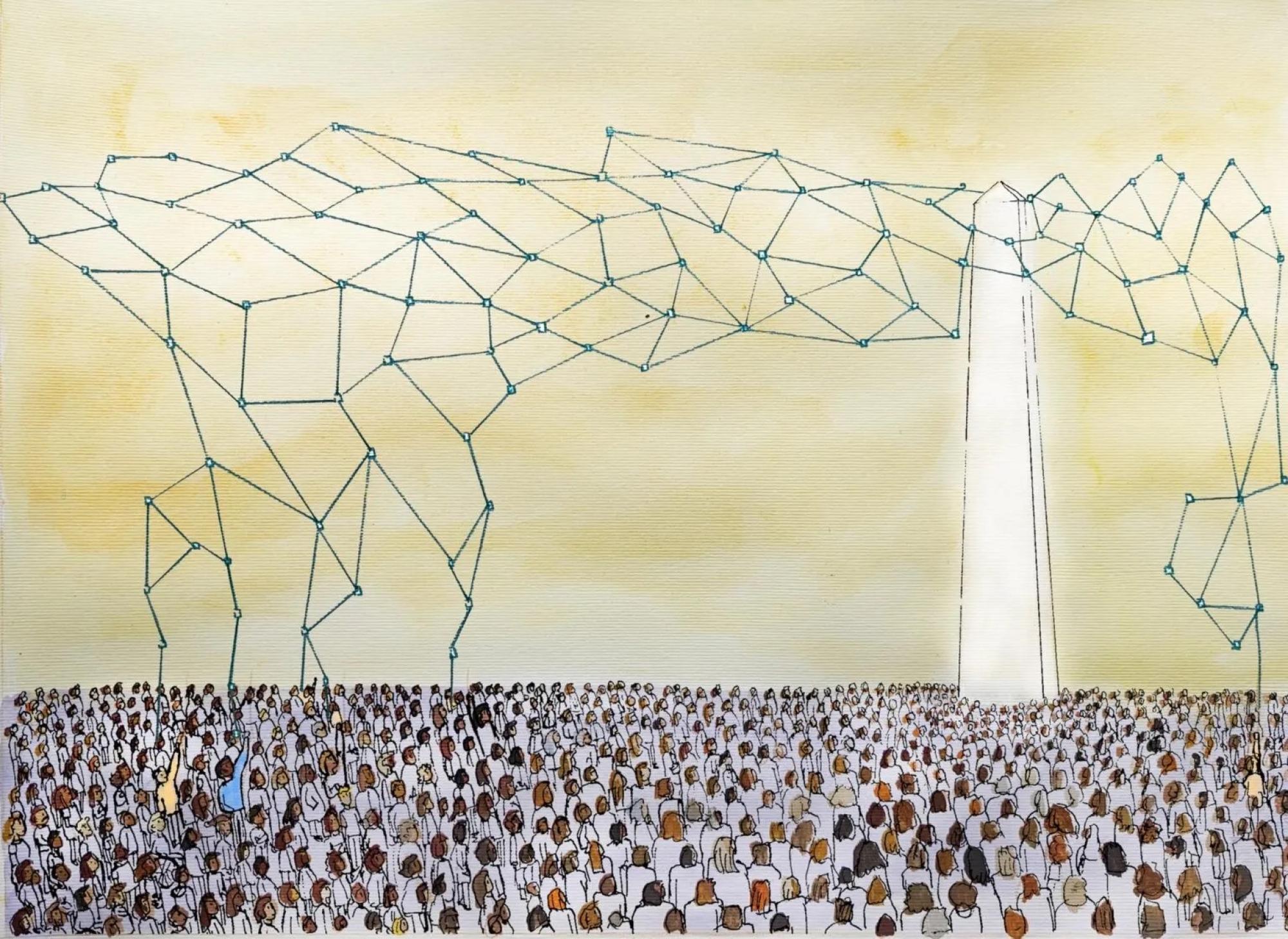
AI's promise of behavior prediction and control fuels a vicious cycle of surveillance which inevitably triggers abuses of power. The problem with using data to make predictions is that the process can be used as a weapon against society, threatening democratic values. As the lines between private and public data are blurred in modern society, many won't realize that their private lives are becoming data points used to make decisions about them. What AI does is make this a surveillance ratchet, a device that only goes in one direction, which goes something like this: To make the inferences I want to make to learn more about you, I must collect more data on you. For my AI tools to run, I need data about a lot of you. And once I've collected this data, I can monetize it by selling it to others who want to use AI to make other inferences about you. AI creates a demand for data but also becomes the result of collecting data. What makes AI prediction both powerful and lucrative is being able to control what happens next. If a bank can claim to predict what people will do with a loan, it can use that to decide whether they should get one. If an admissions officer can claim to predict how students will perform in college, they can use that to decide which students to admit. Amazon's Echo devices have been subject to warrants for the audio recordings made by the device inside our homes"recordings that were made even when the people present weren't talking directly to the device. The desire to surveil is bipartisan. It's about power, not party politics.
Latest
Latest News
Each news summary is created according to strict standards. Here's how we do it.
Each summary is created using a consistent editorial procedure. The target length is approximately 16 lines of 11-point Arial text in a 650-pixel-wide column. Up to 25% of a summary may be set in bold to emphasize the most important ideas. Summaries are composed of verbatim excerpts presented in the same sequence as they appear in the original news source, with very minor editorial additions. Where material has been omitted between excerpts, the omission is indicated with ellipses (...). Any words added by an editor for clarity or context appear in [brackets]. Our original news editor was Fred Burks. Tod Fletcher edited most summaries from 2007 through 2014, and Mark Bailey has served as news editor since 2014.