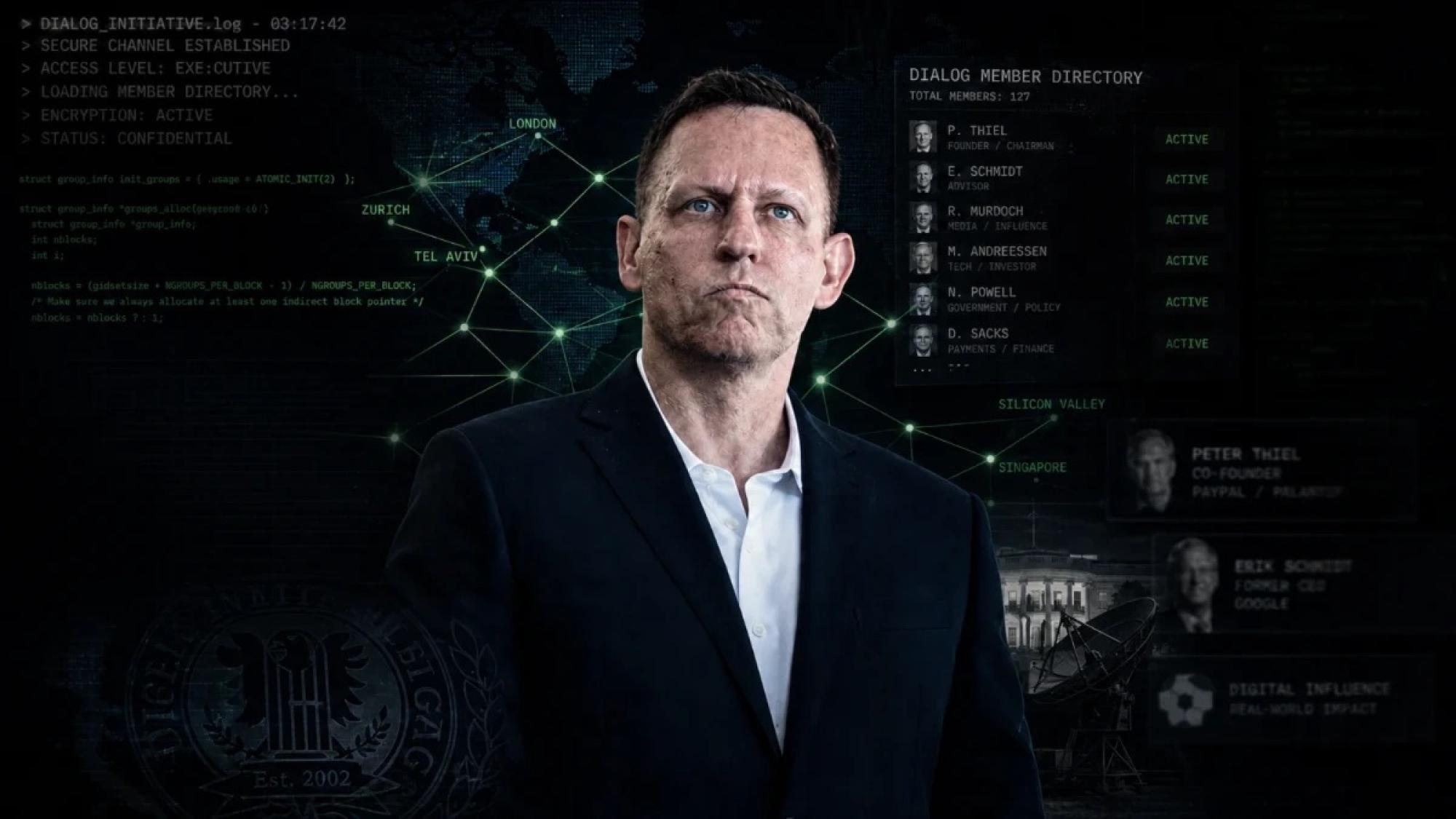
Dialog, the private network cofounded by Peter Thiel, grades its event attendees on a hidden scale, ranking them by wealth and fame, tracking their relationships, and using algorithms to help decide who they should meet, who they should sit with, and who no longer belongs. Founded in 2006 by Thiel and data broker Auren Hoffman, Dialog is a private club that convenes politicians, investors, entrepreneurs, military leaders, executives, academics, and journalists for invitation-only, off-the-record retreats. According to a Dialog document shared by a past participant, it has "over 1,000 paying members," and more than 2,500 people have attended its annual retreats. Dialog assigns people grades before they join. Of the 192 dossiers examined by WIRED, 130 are tagged as members. The rest are prospects with files bearing markings like "First Time Dialoger" or "Warm." Everyonemembers and prospective invitees alike"is assigned a grade of A, B, or C. The "C" grade appears reserved for the most famous and influential; only one in seven received it. Most people"141 of 192"received a "B." The final tier, "A," appears primarily assigned to older, established members whom the graders consider less notable. The leak also points to a built-in matchmaking system that pairs members for both networking and dating. (Roughly 10 percent of respondents opted into a singles pool.) More than three-quarters already have a list of algorithm-suggested matches.
Latest
Latest News
Each news summary is created according to strict standards. Here's how we do it.
Each summary is created using a consistent editorial procedure. The target length is approximately 16 lines of 11-point Arial text in a 650-pixel-wide column. Up to 25% of a summary may be set in bold to emphasize the most important ideas. Summaries are composed of verbatim excerpts presented in the same sequence as they appear in the original news source, with very minor editorial additions. Where material has been omitted between excerpts, the omission is indicated with ellipses (...). Any words added by an editor for clarity or context appear in [brackets]. Our original news editor was Fred Burks. Tod Fletcher edited most summaries from 2007 through 2014, and Mark Bailey has served as news editor since 2014.