























9/11 Cover-up Document
Newsday Website Requires
Payment to View Article
Free Copy Given Below
This is one of the documents on the 9/11 summary for which the media website requires payment. You must pay a small fee by credit card on line in order to be able to download this document from the Newsday website archives. Go to:
http://pqasb.pqarchiver.com/newsday/advancedsearch.html
Click the circle titled "Date range" and select Sep 23, 2001 in both the "From" and "To" dates. In the author box, type "Craig Gordon." We provide a free copy of the article below. The quotes about only seven air bases protecting the nation on 9/11 and the Pentagon not being aware have been highlighted with bold face for your viewing ease.
Air Attack on Pentagon Indicates Weaknesses
By Sylvia Adcock, Brian Donovan and Craig Gordon
STAFF WRITERS
September 23, 2001
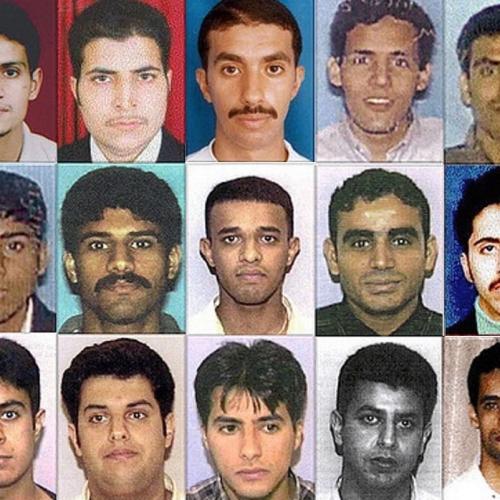
For the terrorist who called himself Khalid Al-Midhar, getting onto the airliner that crashed into the Pentagon was a breeze.
Even though the CIA had alerted other federal agencies 19 days earlier that Al-Midhar posed a threat, even though the FBI was searching for him nationwide, apparently nobody told American Airlines.
So Al-Midhar just did the same things any tourist or business traveler would do. He logged on to American's Web site and made a reservation under that name on Flight 77 from Washington to Los Angeles, using his frequent-flyer number. Six days before the hijacking, he picked up his ticket at a Baltimore airport and paid cash.
On Sept. 11 he walked through airport security at Washington Dulles International and onto the plane without any problems - along with a second hijacker, known as Nawaf Al-Hamzi, who also had been listed since Aug. 23 on the same federal "watch list" of terrorist suspects.
The ease with which the men federal agencies had linked to terrorism boarded Flight 77 illustrates one of several apparent lapses by federal agencies that affected the Sept. 11 crisis.
As new details have emerged about government efforts to deal with the attacks - and with the threat of terrorism in general - some of the information is raising pointed questions about how civilian and military agencies handled their roles during and prior to the crisis.
As the country moves from shock and anger to a search for lessons on how to strengthen national security, such questions are likely to be examined in detail on Capitol Hill, several members of Congress said late last week.
House Minority Leader Richard Gephardt (D-Mo.) said congressional hearings probably will examine shortcomings in how the government dealt with the crisis and new ways to safeguard air travel and protect major potential targets of terrorists. The Sept. 11 suicide hijackings were unlike any previous terrorist incident government officials have had to handle, and senior military officers acknowledge that the armed services hadn't planned for such an attack.
"We want to do better than we did [on Sept. 11]," he said. "And the only way you're going to do better is to understand where we all failed and what can be done to improve our performance, to improve procedures, to improve laws, to improve the performance of everybody who works for all of these agencies that have strong responsibilities."
The story of Flight 77 - pieced together from government records, news reports and interviews with military and civilian officials - suggests that faulty communications among agencies, delays in some key actions and weaknesses in military preparedness all figured in the way the disaster unfolded. Many of the questions center on two phases of the crisis that involved Flight 77:
About 8:55 a.m. Flight 77 was flying west over southern Ohio when it abruptly turned and headed back toward Washington. At this time, the Federal Aviation Administration already had notified the military that two other airliners, the ones that struck the World Trade Center, apparently had been hijacked and had veered from their expected courses.
But the FAA temporarily lost track of Flight 77, after the terrorists turned off its transponder, and about 29 minutes went by before the FAA alerted the military to the new threat from the airliner, which was carrying Al-Midhar, Al-Hamzi and three other hijackers. No attempt was made to evacuate the Pentagon before the plane struck it. The crash killed 125 people in the Pentagon and all 64 people on the plane.
Twice during the crisis, the military launched fighter jets that raced toward the hijacked planes. Two F-15 fighters raced toward New York City; two F-16s sped toward Washington.
But the number of air bases where fighter planes are kept on alert has dwindled sharply in recent years, one of the generals who runs the system told Newsday. And on Sept. 11, they no longer included any bases close to two obvious terrorist targets - Washington, D.C., and New York City.
So the military had to use planes from air bases considerable distances away from the two cities. The fighters dispatched to New York came from Otis Air National Guard Base on Cape Cod, Mass., 153 miles from the World Trade Center.
When the second tower of the World Trade Center was struck by a hijacked airliner, United Airlines Flight 175, at 9:02 a.m., the planes from Cape Cod were still 71 miles away, about eight minutes behind the terrorists.
The fighter jets launched toward Washington took off not from Andrews Air Force Base, 15 miles from the capital, but from Langley Air Force Base near Hampton, Va., 130 miles from Washington. When Flight 77 smashed into the Pentagon at 9:37 a.m., those fighters were still 105 miles from the scene.
At that point, the fourth hijacked plane, United Airlines Flight 93, also had turned around on its way to San Francisco and headed toward Washington. It crashed in Pennsylvania at 10:03 a.m. after passengers reportedly fought with hijackers.
Vice President Dick Cheney has disclosed that President George W. Bush authorized military jets to shoot down "as a last resort" a hijacked airliner, apparently Flight 93, that was heading for Washington. Officials said later that the decision wasn't made until after Flight 77 crashed into the Pentagon.
These are some of the questions about the government's handling of the crisis and the circumstances surrounding them:
Did critical information get from the FAA to the military quickly enough? The record suggests that teenagers on instant-message networks communicate faster than some federal officials did during the crisis. After losing track of Flight 77 for about 10 minutes, the FAA rediscovered the plane heading east over West Virginia, then took about 19 more minutes to alert the military. When Flight 77 hit the Pentagon, the fighter jets from Langley were 12 minutes away, the military says.
Should terrorists be able to shut off an airliner's transponders? That's what happened on Flight 77. Transponders send out a signal giving a plane's position and identity. The simple action of turning them off appears to have given the Flight 77 terrorists about 10 minutes of valuable invisibility as they sped toward Washington. Although officials say transponders need an on-off switch for fire-safety reasons, one aviation expert told Newsday that a simple modification could alert air traffic controllers whenever a specific transponder is shut off. That would alert them that there might be a problem and give them a better chance to continue tracking the plane with radar, he said.
Are federal intelligence and law enforcement agencies doing enough with the information on their "watch lists" of suspected terrorists? Officials say airlines are sometimes warned about specific suspects and sometimes they aren't. Terrorists sometimes use phony names, which muddies the picture. But a computer analysis of one watch list obtained by Newsday suggests a potentially ominous finding: that besides the Sept. 11 hijackers, at least 10 more terrorist suspects, who may still be in the United States, are trained as pilots.
Should the FAA act faster to close the nation's airports in a major crisis? As the air traffic control system faltered while tracking four hijacked planes, the FAA ordered airport closings in a series of stages during the 24 minutes after the second World Trade Center impact. During that period, at least several hundred more airliners, cargo planes and smaller aircraft continued to take off, at a time when no one knew if more hijackers were on board some of them, according to a Newsday analysis of federal Departmen of Transportation flight data.
Why weren't Pentagon leaders alerted and employees evacuated? Although the military's air defense command got word from the FAA about 13 minutes before Flight 77's crash that a hijacked airliner was streaking toward Washington, Defense Secretary Donald Rumsfeld and his top aides remained unaware of any danger up to the moment of impact, officials said. After learning of the World Trade Center attacks, Rumsfeld remained in his office, and Pentagon security officials took no steps to alert or evacuate the building's 20,000 employees. Neither the White House nor Congress were evacuated, either.
The hijacking of four airliners by terrorists planning to crash the planes was unprecedented, and officials say any assessment of government responses has to recognize that agencies had only a short time to deal with a staggering, multifaceted threat that nobody else in history had ever faced. Previous hijackings have been carried out by hijackers who wanted to land safely.
The military has released information on its response times, but an FAA spokesman told Newsday that because the attacks are under investigation, the agency is not discussing the timing of its alerts to the military.
Several members of Congress told Newsday they expect oversight hearings into the crisis. Rep. John McHugh (R-Watertown), an Armed Services Committee member, said: "Our committee will unquestionably look at what the shortcomings were in defense." Rep. John Boehner (R-Ohio), a veteran House member, said: "We'll see a very methodical review about what we did well, and what we could do better."
Problems With Watch Lists
For years, federal intelligence and law-enforcement agencies have compiled watch lists of suspected criminals and possible terrorist figures. They are circulated among agencies that include the FBI, the CIA, the Customs Service and the Immigration and Naturalization Service. The aim is to alert agents who might want to detain or question suspects when they enter the United States.
Two of the Flight 77 hijackers, Al-Midhar and Al-Hamzi, had been on a watch list circulating among agencies since Aug. 23, federal agents said. Agents said the two names had been supplied by the CIA because of a possible link between them and Osama bin Laden, the Saudi-born millionaire suspected of planning and financing many terrorist operations including the Sept. 11 attack.
Officials said the CIA had obtained a videotape of the two men meeting in Malaysia with operatives for bin Laden in January 2000, and that Al-Midhar's name also had emerged in the ongoing investigation into the bombing of the destroyer Cole in Yemen in October 2000.
It isn't known whether the two terrorists had been on any previous watch lists or, if not, why the intelligence information collected about them last year wasn't circulated until Aug. 23. The CIA refused to comment. A U.S. official, who would speak only if his agency wasn't identified, said the CIA had gotten additional information this year, but the official would not say what it was. He said the CIA had "no inkling that these two individuals, or anyone else for that matter, was planning to do something along these lines."
After the INS determined in August that the two men already had entered the United States, the FBI launched a search but couldn't find them before the Sept. 11 attack.
FBI and American Airlines officials have refused to say if their names were given to the airline, but the Los Angeles Times reported last week that they weren't. Generally agencies regard the lists as sensitive intelligence and do not routinely distribute the information among airlines, officials say.
Former U.S. Customs Commissioner Raymond Kelly, now working for the U.S. Transportation Department on ways to improve airline security, told the Los Angeles Times that there have been ongoing problems with "coordination and communication among agencies. I'm not sure all appropriate agencies get the watch list and if it's kept up in a timely fashion."
Other problems exist. The airline industry has no central reservations system for all airlines. There's no single database that could be used to plug in the names of suspected terrorists. Instead, four private companies run reservations systems used by airlines and travel agents. The largest one, Sabre, handles 40 percent of the world's airline reservations.
William Vincent, former FAA security director, told Newsday the watch lists are "not a guarantee that they can keep these people off the planes."
Another problem is that American spellings of Middle Eastern names often vary widely. If a federal agency's version of a name were plugged into a computer and the reservation was made in a different version of the same name, the red flag might not be raised. Vincent also said watch lists don't include photographs that might help prevent suspects from boarding.
Bungles involving watch lists aren't new. Sheik Omar Abdel Rahman, a blind Muslim cleric with ties to Islamic radical groups, was already on a watch list in 1990 when the State Department mistakenly granted him a visa into the United States. One problem, officials said, was that various documents had four versions of his name.
He is serving a life sentence for conspiring to blow up tunnels and other facilities in New York City, and some of his followers were convicted in the 1993 bombing of the World Trade Center.
Off the Screen
Until six minutes before the second airliner hit the World Trade Center, Flight 77 appeared to air traffic controllers in the FAA's Washington Air Route Traffic Center in Leesburg, Va., to be just another flight they were routinely tracking. When the Boeing 757 reached central West Virginia, it was routinely "handed off" by Leesburg to the next air traffic control center, outside Indianapolis.
Flight 77 continued west, appearing on the radar screens with a data block identifying the airline, flight number, altitude and type of plane - information from the plane's transponders, which are signal transmitting devices. The plane inched across the screen, the radar updating every 12 seconds.
Then Flight 77 began to turn slightly - and abruptly disappeared from the radar screens. Suddenly there was no transponder signal.
Federal officials say the terrorists apparently shut down the transponders in all four hijacked airliners as they took control. The air traffic controllers didn't know it, but Flight 77 was making a U-turn and heading east.
Normally, when an aircraft's transponder cuts off, the plane is still visible as what's called a "primary target" or "skinpaint" - a target the radar is picking up but can't identify. The controllers in Indianapolis kept watching for Flight 77 to appear over Kentucky, Ohio or Indiana - but they weren't looking for it to reappear far to the east, over West Virginia where the plane had come from, sources said.
Back in Leesburg, air traffic controllers knew at about 9:05 a.m. that they had a new eastbound plane on their radar, but they didn't know it was Flight 77. The aircraft had entered their airspace with no radio contact and no transponder identification.
During the confusion, rumors circulated that Flight 77 might have exploded in midair. It wasn't until 9:24 a.m. that the FAA alerted the military that the plane was heading for Washington.
FAA spokesman William Shumann said the agency would not comment on its actions during the Sept. 11 crisis. Sources said that in coming weeks, the FAA may release air traffic control tapes that could tell more about what the agency knew and how it responded.
Another response-time question involves American Airlines Flight 11, the first plane to hit the World Trade Center. The New York Times reported that air controllers first knew at about 8:20 a.m. that there had been a probable hijacking of that plane. But the FAA didn't notify the military until 20 minutes later, according to a North American Aerospace Defense Command document.
One aviation expert said a simple change in the way airliner transponders work could have helped significantly on Sept. 11.
Every commercial aircraft has two transponders, one for backup if the first one fails. It's easy to turn the devices off - the cockpit ceiling and walls are lined with knobs that control circuit breakers for all the systems of the plane. The pilot must be able to turn off systems easily to prevent the spread of a fire.
Ken Susko, a Long Island-based aviation consultant and former Navy flight engineer, said aircraft should be modified so that if the transponder is turned off in the cockpit, a signal is generated to the controllers.
"That should trigger a signal, and then you could have a keyword or phrase to ask if a hijacking is in progress," Susko said. "They might have been able to prevent the attack if that safety feature was on it. It's no big engineering feat to do it."
The transponder issue came up briefly at a congressional hearing last week. Transportation Secretary Norman Mineta told legislators that the FAA would be willing to examine the question, but the matter was not discussed in detail.
During the confusing first hour of the Sept. 11 emergency, Mineta had to cope with the unprecedented decision of whether to shut down take-offs from the nation's airports to stop more planes that might have hijackers aboard from getting into the air. It was a decision with a big price tag.
Airlines frequently complain about temporary shutdowns for weather or congestion, called "ground stops," because if planes aren't flying, the airlines aren't making money. The nation's 10 largest airlines alone spend close to $250 million a day, and a majority of those costs continue even if the planes are grounded.
The FAA responded by closing airports completely or stopping take-offs in a series of stages and did not ban all take-offs across the country until 9:26 a.m., 24 minutes after the second impact at the World Trade Center.
Air traffic data for major airports examined by Newsday suggest that at least several hundred additional planes entered the nation's airspace during the crisis before the nationwide shutdown. The total would be higher when take-offs from smaller airports are considered.
Shumann, the FAA spokesman, said he didn't know if there had been any discussion in the agency of whether the airspace should have been closed more quickly.
"If there have been such discussions, we would not be commenting on those discussions," he said. "Decisions like that are part of the investigation into what happened ... how quickly did we, the government, respond."
The Vulnerable Capital
By the time employees inside the Pentagon realized they were the terrorists' next target, it was already over. The sound of Flight 77 slamming into the building - a deafening crash to those nearby, a dull thump elsewhere in the massive structure - was their first alert.
There had been no warning broadcast inside the building that a plane might be approaching, and no orders given to evacuate, even though the FAA had notified air defense commanders that a hijacked airliner was heading toward Washington 13 minutes before it hit the Pentagon.
Even the clear sign of a terrorist attack on U.S. soil - the second plane slamming into the World Trade Center 35 minutes before one hit the Pentagon - barely elevated the state of readiness inside the nation's military headquarters, leaving many of the building's 20,000 workers still sitting at their desks when the plane struck. Some told Newsday they heard the crash but didn't know the plane had hit the Pentagon until they saw it on TV.
To many Americans, it probably seems inconceivable that an unauthorized aircraft could get that close to the nation's military command center on any day, let alone one when the nation was under attack. Yet U.S. continental air defenses, slashed dramatically since the Cold War ended and never designed to thwart an internal threat, were helpless to stop the attacks, leaving the nation's capital and its most populated city exposed.
The nation's sharpest military thinkers simply had never planned for such a massive and well-coordinated assault, one defense official told Newsday.
"I don't think any of us envisioned an internal air threat by big aircraft," he said. "I don't know of anybody that ever thought through that. We're probably all at fault in some way for not thinking through the scope of that."
Despite Andrews Air Force Base's proximity to the capital, fighter jets don't "sit alert" there the way they do at Langley, ready to take to the air in 15 minutes. Until Sept. 11, one defense official said, they didn't have to - fighters at Langley would have plenty of time to intercept any enemy aircraft coming from outside the United States.
On Sept. 11, the Langley jets still were 105 miles away when the Pentagon was struck.
"We normally sit alert looking out and what happened with this is the threat was from within, and we hadn't looked into our own country before," Maj. General Paul A. Weaver Jr., director of the Air National Guard, said shortly after the attacks. "All of a sudden the threat was from within."
Some relatives of Pentagon victims are angry not only a the terrorists but also the federal government.
"Why is it that a plane can get so close to us?" asked Trisha McCants, whose mother is missing. "I'm mad. Once they knew the plane was off course, they should have stopped it."
Others accepted what happened as an unpredictable risk. "It's not my job to second guess," said Army employee Floyd Rasmussen, whose wife, also a Pentagon worker, was killed.
At the height of the Cold War, U.S. warplanes used to stand ready at 90 to 100 sites across the nation, there to intercept a Soviet bomber coming down from Alaska, and later to ward off intercontinental ballistic missile attacks.
When the Soviet Union fell, nearly all of those readiness patrols were eliminated. Before the attack, the number of alert bases had dropped to just seven sites around the country, mostly ringing the coast in the South and West for drug interdiction and other purposes.
In 1993, Colin Powell, then chairman of the military's Joint Chiefs of Staff and now Secretary of State - recommended that the number of bases on alert be sharply reduced or eliminated. More recently, before the attacks, Air Force planners also had considered scaling back the number of alert bases to shift money toward new technologies.
Since the attacks, fighter jets at 26 sites near heavily populated areas have been put on 15-minute alert.
Inside the Pentagon before it was struck, the civilian police force that patrols the building elevated the "force protection level" just one notch, from "normal" to "alpha," after the second World Trade Center tower was struck but did not order an evacuation.
"To call for a general evacuation, at that point, it would have been just guessing," said a Pentagon spokesman, Glenn Flood. "We evacuate when we know something is a real threat to us." Flood and others now say an evacuation could have put more employees at risk by moving them outside the protective walls of the building.
Air Force Lt. Col. Vic Warzinski, another Pentagon spokesman, added: "The Pentagon was simply not aware that this aircraft was coming our way, and I doubt prior to Tuesday's event, anyone would have expected anything like that here. There was no foreshadowing, no particular warning that would have led anyone with any reasonable view of the world to think this was a threat we faced."
Former U.S. Sen. Gary Hart, who co-chaired a homeland security commission that in 1999 predicted a massive terrorist attack on U.S. soil, scoffs at that explanation.
"The Pentagon's been ground zero for 50 years, ever since the Soviets got a missile, so it shouldn't have been a great surprise," said Hart, who believes military planners envisioned nothing more than "a madman in a single-engine Cessna" coming after the Pentagon, in much the way such a plane once landed on the White House lawn.
"A cold war ended 10 years ago but a new one began," Hart said. "If you could drive a bomb into the Twin Towers in 1993, I would think someone at the Pentagon would have said, 'They could do something to us.'"
Staff writers Richard J. Dalton Jr., Elaine S. Povich, Ellen Yan, Eden Laikin and Deborah Barfield contributed to this story.
--Cities where fighter jets were launched from:
1) Washington, D.C., High Altitude Air Traffic Control Center coverage area
2) Indianapolis High Altitude Air Traffic Control Center coverage area
3) Last tracked location of Flight 77 (flight heads back to D.C. and crashes into Pentagon)
Timeline of Events
7:45 a.m. American Airlines Flight 11 leaves Boston for Los Angeles.
7:58 United Airlines Flight 175 leaves Boston for Los Angeles.
8:01 United Airlines Flight 93 leaves Newark for San Francisco.
8:10 American Airlines Flight 77 leaves Washington for Los Angeles.
8:20 Air trafÞc controllers in New England suspect Flight 11 has been hijacked.
8:40 FAA notifies NEADS (Northeast Air Defense Sector) of NORAD, the military's civil defense system, about Flight 11.
8:43 FAA notifies NEADS about Flight 175.
8:46 American Airlines Flight 11 hits the World Trade Center's north tower. Two F-15 fighter jets from Otis Air National Guard Base on Cape Cod, 153 miles from New York City, are ordered to go to New York.
8:52 F-15s become airborne.
8:55 Flight 77 stops flying west and turns east.
8:56 Air traffic controllers in Indianapolis lose radar contact with Flight 77.
9:02 United Flight 175 hits the World Trade Center's south tower.
9:03 Boston Air Route Traffic Control Center halts traffic from its airports to all New York area airspace.
9:05 Flight 77 appears as an unidentified blip on radar over West Virginia.
9:06 Order is expanded to include the entire Northeast from Washington to Cleveland. FAA's air traffic control center outside Washington notifies all air traffic facilities nationwide of the suspected hijacking of Flight 11.
9:08 FAA orders all aircraft to leave New York area airspace and orders all New York-bound planes nationwide to stay on the ground.
9:17 New York City airports shut down.
9:24 FAA notifies NEADS about Flight 77.
9:24 Two F-16 fighter jets from Langley Air Force Base in Hampton, Va., ordered to take off for Washington.
9:26 FAA halts takeoffs nationwide. Airborne international flights told to land in Canada.
9:30 Two F-16s take off from Langley AFB.
9:37 Flight 77 hits the Pentagon.
9:45 FAA orders all planes in the air to land at the nearest airport.
9:48 Capitol and West Wing of White House evacuated.
10:03 United Flight 93 crashes 80 miles southeast of Pittsburgh.
10:15 2,000 planes have landed in the U.S. since 9:45 order was issued.
12:16 All aircraft ordered to land at 9:45 have landed.
SOURCE: Compiled from wire sources, press reports and government records
Copyright © 2003, Newsday, Inc.
FAIR USE NOTICE: This site contains copyrighted material the use of which has not always been specifically authorized by the copyright owner. We are making such material available in our efforts to advance understanding of criminal justice, political, human rights, economic, democracy, scientific, and social justice issues, etc. We believe this constitutes a 'fair use' of any such copyrighted material as provided for in section 107 of the US Copyright Law. In accordance with Title 17 U.S.C. Section 107, the material on this site is distributed without profit to those who have expressed a prior interest in receiving the included information for research and educational purposes. For more information go to: http://www.law.cornell.edu/uscode/17/107.shtml. If you wish to use copyrighted material from this site for purposes of your own that go beyond 'fair use', you must obtain permission from the copyright owner.
- Inform your media and political representatives of this vital information on 9/11. To contact those close to you, click here. Urge them to call for the release of classified documents and videos and to press for a new, impartial investigation.
- Explore the wealth of reliable, verifiable information on 9/11, including several excellent documentaries, in our 9/11 Information Center available here.
- Learn more about 9/11 and the secret societies likely involved in this powerful lesson from the free Insight Course.
- Explore inspiring ideas on building a brighter future by reading this short essay.
- Spread this news to your friends and colleagues, and recommend this article on key social networking websites so that we can fill the role at which the major media is sadly failing. Together, we can make a difference.
See our exceptional archive of revealing news articles.
Please support this important work: Donate here.
www.momentoflove.org - Every person in the world has a heart
www.personalgrowthcourses.net - Dynamic online courses powerfully expand your horizons
www.WantToKnow.info - Reliable, verifiable information on major cover-ups
www.weboflove.org - Strengthening the Web of Love that interconnects us all
Subscribe here to the WantToKnow.info email list (two messages a week)