
















































Non-Lethal Weapons News Stories
Below are key excerpts of revealing news articles on non-lethal weapons from reliable news media sources. If any link fails to function, a paywall blocks full access, or the article is no longer available, try these digital tools.
Learn more about non-lethal weapons in our comprehensive Military-Intelligence Corruption Information Center.

More than 119,000 people have been injured by tear gas and other chemical irritants around the world since 2015 and some 2,000 suffered injuries from “less lethal” impact projectiles, according to a report released Wednesday. Physicians for Human Rights and the International Network of Civil Liberties Organizations, which produced the report, called it “the most comprehensive study on crowd-control weapons to date.” The report on casualties from a largely unregulated industry cites an alarming evolution of crowd-control devices into more powerful and indiscriminate designs and deployment, including dropping tear gas from drones. Some of the injuries were fatal but it was impossible from the data to estimate the total number of deaths, said the report’s lead author, Rohini Haar. The vast majority of the data comes from cases in which a person came to an emergency room with injuries from crowd-control weapons and the attending doctor or hospital staff made the effort to document it, Haar said. Protesters have been blinded and suffered brain damage from beanbag rounds. In November, the city of Portland reached a $250,000 settlement with five demonstrators in a federal lawsuit over police use of tear gas and other crowd-control devices during racial justice protests. But last month, a federal judge threw out an excessive force claim against an unnamed federal agent who fired an impact munition at the forehead of protester Donavan La Bella, fracturing his skull.
Note: For an idea of how common the deployment of nonlethal weapons against protesters has become, see a list of incidents of police violence that took place in the US in 2020. For more along these lines, see concise summaries of deeply revealing news articles on police corruption and non-lethal weapons from reliable major media sources.
People for the Ethical Treatment of Animals on Monday implored the U.S. military to reinstate a ban on the intentional wounding of animals in experiments and to stop radiation testing in an attempt to determine the cause of the mystery ailment popularly known as "Havana syndrome" that has afflicted U.S. government officials posted at diplomatic facilities in Washington, D.C. and several foreign countries. PETA argues that the military's decision to use live animals in testing related to Havana syndrome is "counterproductive" due to biological differences between humans and species subjected to the experiments, as well as the widespread availability of non-wounding research methods and the likelihood that radio frequency waves did not cause the mysterious ailment. The U.S. government has a long history of radiation experiments not only on animals but also on human beings. Scores of institutions, including some of North America's most prominent universities, laboratories, and hospitals hosted government and military experimentation on both volunteers and unwitting test subjects in the MK-ULTRA mind control experiments and other highly unethical and sometimes deadly programs. People suffering from Havana syndrome—so named because it was first identified by U.S. and Canadian diplomats and embassy staff in the Cuban capital—experienced what The Lancet described as "an abrupt onset of unusual clinical symptoms."
Note: For more along these lines, see concise summaries of deeply revealing news articles on military corruption and non-lethal weapons from reliable major media sources.
The recent use of armed, unmanned drones in Afghanistan and Yemen has shown that America's armed forces have become good at applying new weapons technology in the field. [Electromagnetic] weapons are able to destroy electronic systems and temporarily incapacitate people, all without the mess of explosions and gunfire. Using different types of electromagnetic energy (the same stuff as radio waves, X-rays and light) ... they could disrupt a variety of enemy systems, from missile targeting and launch electronics, to command-and-control systems. So-called “active denial” technology (which earns its moniker by actively herding people out of its path) works by using a beam of millimetre-length microwaves to heat up a person's skin. The marines are planning to put a version of the weapon on to a jeep. Range and properties are classified, but military newspapers say it can heat a person's skin to 55°C (130°F) at distances of up to 750 metres. David Fidler, a law professor at Indiana University, says that, because these weapons are most likely to be used on civilians, it is not clear that using them is legal under the international rules governing armed conflict. Steve Goose of Human Rights Watch ... says that too much secrecy still surrounds them. Weapons such as the active denial system could cause severe trauma, or even death, if fired at close range or held on a target for too long. Is it acceptable to shoot or bomb somebody if you have the option only to disable them?
Note: You can read the full article free of charge on this webpage. Did you know that non-lethal weapons have already been developed and used on people, as evidenced in these news articles from the mainstream media? Investigate the series of mysterious attacks on US diplomats in recent years which are likely electromagnetic in nature. To explore even further, read about the history and scope of non-lethal weapons, along with a revealing study of the US Intelligence's use and abuse of these weapons.
The Pentagon is spending more and more research-and-development dollars on weapons that stun, scare, entangle or nauseate — anything but kill. The U.S.'s nonlethal-weapons programs are drawing their own fire, mostly from human-rights activists who contend that the technologies being developed will be deployed to suppress dissent and that they defy international weapons treaties. Imagine a cross between a microwave oven and a Star Trek phaser: a tight, focused beam of energy that flash-heats its target from a distance. Directed energy beams do not burn flesh, but they do create an unbearably painful burning sensation. The Air Force Research Laboratory has already spent $40 million on a humvee-mounted directed-energy weapon. Further out on the horizon, the line between weapons development and science fiction becomes perilously thin. Even their supporters agree that "nonlethal weapons" is a dangerous misnomer. Any of these devices has the potential to injure and kill. A chemical-weapons watchdog organization called the Sunshine Project has obtained evidence that the U.S. is considering some projects that appear to take us beyond the bounds of good sense: bioengineered bacteria designed to eat asphalt, fuel and body armor, or faster-acting, weaponized forms of antidepressants, opiates and so-called "club drugs" that could be rapidly administered to unruly crowds. Such research is illegal under international law and could open up terrifying scenarios for abuse.
Note: For more along these lines, see concise summaries of deeply revealing news articles on non-lethal weapons from reliable major media sources.
For hundreds of years, sci-fi writers have imagined weapons that might use energy waves or pulses to knock out, knock down, or otherwise disable enemies--without necessarily killing them. And for a good 40 years the U.S. military has quietly been pursuing weapons of this sort. Police, too, are keenly interested. Much of this work is still secret. Scientists, aided by government research on the "bioeffects" of beamed energy, are searching the electromagnetic and sonic spectrums for wavelengths that can affect human behavior. Recent advancements in miniaturized electronics, power generation, and beam aiming may finally have put such pulse and beam weapons on the cusp of practicality. Weapons already exist that use lasers, which can temporarily or permanently blind enemy soldiers. So-called acoustic or sonic weapons ... can vibrate the insides of humans to stun them, nauseate them, or even "liquefy their bowels and reduce them to quivering diarrheic messes," according to a Pentagon briefing. Other, stranger effects also have been explored, such as using electromagnetic waves to put human targets to sleep or to heat them up, on the microwave-oven principle. Scientists are also trying to make a sonic cannon that throws a shock wave with enough force to knock down a man. Years ago the world drafted conventions and treaties to attempt to set rules for the use of bullets and bombs in war.
Note: Read lots more about these disturbing weapons which are now in use in concise summaries of deeply revealing news articles on non-lethal weapons from reliable major media sources.
Mysterious episodes that caused brain injuries in spies, diplomats, soldiers and other U.S. personnel overseas starting five years ago now number more than 130 people, far more than previously known, according to current and former officials. The number of cases within the C.I.A., the State Department, the Defense Department and elsewhere spurred broad concern in the Biden administration. The initial publicly confirmed cases were concentrated in China and Cuba and numbered about 60, not including a group of injured C.I.A. officers whose total is not public. Since December, at least three C.I.A. officers have reported serious health effects from episodes overseas. One occurred within the past two weeks, and all have required the officers to undergo outpatient treatment at Walter Reed National Military Medical Center or other facilities. And in one case in 2019 that has not previously been reported, a military officer serving overseas pulled his vehicle into an intersection, then was overcome by nausea and headaches. His 2-year-old son, sitting in the back seat, began crying. After the officer pulled away from the intersection, his nausea stopped, and the child stopped crying. In a report released in December, the National Academy of Sciences said a microwave weapon probably caused the injuries. Some officials believe a microwave or directed-energy device is the most likely cause. The severity of the brain injuries has ranged widely. Some victims have chronic, potentially irreversible symptoms.
Note: Read more about these mysterious attacks on spies and diplomats. Read very little-known, yet astounding information on sophisticated technologies which can project music and clear voices into people's heads in these concise summaries of deeply revealing news articles on non-lethal weapons from reliable major media sources.
Vice President Kamala Harris' trip to Hanoi, Vietnam, was delayed by a few hours after her office was made aware of a "recent possible anomalous health incident" among U.S. officials in Hanoi. "Anomalous health incident" is how the United States government refers to the mysterious "Havana syndrome." First reported in 2016 by United States officials in Cuba, Havana syndrome has afflicted more than 130 U.S. officials over the past five years stationed in several countries overseas. Victims of the syndrome typically report strange experiences, like feelings of pressure or vibration and a screeching sound, and debilitating symptoms, including headaches, nausea, cognitive deficits, and trouble with seeing, hearing, or balancing. The vice president's office said that after "careful consideration," her team opted to continue with her Vietnam trip. A couple hours after the announcement, NBC News reported that a medical evacuation was called for two U.S. officials in Hanoi. The NBC report noted that "strange sounds" were involved in the incidents, and that Vietnam has seen past reports of possible Havana syndrome cases. NBC News reported in June that some U.S. officials believe that unknown adversaries used "devices intended to extract information from cellphones and other personal devices" that emitted electromagnetic waves powerful enough to cause debilitating symptoms. After realizing such devices had that effect, they then "weaponized the tactic to intentionally cause physical harm."
Note: Read more about these mysterious attacks on spies and diplomats. Read very little-known, yet astounding information on sophisticated technologies which can project music and clear voices into people's heads in these concise summaries of deeply revealing news articles on non-lethal weapons from reliable major media sources.
U.S. government suspicions about microwave weapon attacks have apparently spread to the Department of Homeland Security. DHS Deputy Under Secretary for Management Randolph D. Alles sent a memo to department personnel encouraging them to report “unexplained health incidents” to medical officials within DHS or to the State Department. The memo suggests that concerns about “multiple symptoms following an unusual auditory or sensory event,” in the past limited to the State Department and CIA, have spread to DHS, an agency unlike the other two in that its operations are primarily domestic. Claims of mysterious health problems, mostly neurological, first originated among several State Department diplomats in Cuba in 2016 — earning the broad range of symptoms the moniker “Havana Syndrome.” The reported injuries ... are said to have affected over 130 people. The DHS memo itself notes, “The precise nature of the injuries suffered by affected personnel has varied and whether a common cause exists for all individuals, regardless of location, has not yet been established.” A National Academies of Science report last year ... concluded that the symptoms are real, and the most plausible cause is “directed, pulsed radio frequency energy.” Former CIA officials ... broadly agreed on the existence of Havana Syndrome but not on its perpetrator, which has been variously attributed in speculation to the Chinese, Russian, or Cuban governments.
Note: Sound weapons developed for war which are increasingly used against civilian populations are well-documented. For more along these lines, see concise summaries of deeply revealing news articles on non-lethal weapons from reliable major media sources.
The most probable cause of a series of mysterious afflictions that sickened American spies and diplomats abroad in the past several years was radiofrequency energy, a type of radiation that includes microwaves, the National Academies of Sciences, Engineering, and Medicine has concluded in a report. The conclusion by a committee of 19 experts in medicine and other fields cited "directed, pulsed radiofrequency energy" as "the most plausible mechanism" to explain the illness, which came to be known as Havana syndrome. The report, which was commissioned by the State Department, provides the most definitive explanation yet of the illness that struck scores of government employees, first at the U.S. Embassy in Havana in 2016, and then in China and other countries. Many of the officers suffered from dizziness, fatigue, headaches, and loss of hearing, memory and balance, and some were forced into permanent retirement. C.I.A. officers visiting overseas stations also experienced similar symptoms. The new report reveals strong evidence that the incidents were the result of a malicious attack. It attributes the illnesses to "directed" and "pulsed" – rather than "continuous" – energy, implying that the victims' exposure was targeted and not the result of more common sources of microwave energy. It also said the committee found the immediate symptoms that patients reported ... were more consistent with a directed "attack" of radiofrequency energy.
Note: Many have belittled the possibility of directed energy beam weapons being used to cause harm and alter consciousness. We have been reporting on this for many years. For excellent, reliable information on this disturbing trend, see this essay and these news summaries.
In 2016 and 2017, 25 Americans, including CIA agents, who worked in the U.S. Embassy in Cuba suffered serious brain injuries causing impaired vision and memory loss among other persistent problems. At least 15 American officials in China suffered unexplained brain trauma soon after. As we first reported in March, the FBI is now investigating whether these Americans were attacked by a mysterious weapon that leaves no trace. Mark Lenzi is a State Department security officer who worked in the U.S. Consulate in Guangzhou, China. He says that he and his wife began to suffer after hearing strange sounds in their apartment. Mark Lenzi believes he was targeted because of his work. He uses top secret equipment to analyze electronic threats to diplomatic missions. "It was a weapon," [said Lenzi]. "I believe it's RF, radio frequency energy, in the microwave range." A clue that supports that theory was revealed by the National Security Agency in 2014. This NSA statement describes such a weapon as a "high-powered microwave system weapon that may have the ability to weaken, intimidate, or kill an enemy over time without leaving evidence." The statement goes on to say "... this weapon is designed to bathe a target's living quarters in microwaves." The NSA disclosed this in a worker's compensation case filed by former NSA employee Mike Beck. In the 1990's Beck and an NSA co-worker were on assignment overseas. Years later, he says they developed Parkinson's Disease at the same time.
Note: Read more on the mysterious "sonic attacks" in Cuba. For more along these lines, see concise summaries of deeply revealing news articles on non-lethal weapons from reliable major media sources.
Commerce Department trade officer Catherine Werner used to promote American business from the U.S. consulate in Guangzhou, China. Today she says she suffers from bouts of nausea, dizziness, and headaches. Robyn Garfield, also a trade officer with the Commerce Department, was posted in Shanghai. Along with nausea, dizziness, and headaches, he says he has trouble remembering words. State Department security officer Mark Lenzi used to work in the consulate in Guangzhou. When he did, he said the splitting pain in his head was debilitating. The three are among at least 15 American officials in China who say they suffered unexplained brain trauma after being attacked by a mysterious weapon. Previously, 25 Americans who worked in the U.S. embassy in Cuba said they also experienced an attack and have similar symptoms. The government employees weren't the only ones targeted. Their spouses, children, and family pets also exhibited neurological symptoms after hearing strange sounds in their homes. In July, a University of Pennsylvania medical team published a study on the brains of U.S. government personnel who developed neurological symptoms in Cuba. The study used advanced brain imaging and found "significant differences in brain tissue and connectivity" in the diplomats' brains. It is the first scientific evidence showing the diplomats had physical damage to the structure of their brains.
Note: Read more on the mysterious "sonic attacks" in Cuba. For more along these lines, see concise summaries of deeply revealing news articles on non-lethal weapons from reliable major media sources.
Whatever was behind the "sonic attacks" experienced by US government personnel in Havana, Cuba, starting in late 2016 remains a mystery - but a new study published Tuesday looks inside the workers' brains for clues. MRI brain scans from 40 patients - 23 men and 17 women - showed variations in brain structure and functional connectivity ... when compared with 48 other adults. "There were group differences all over the brain," said study author Ragini Verma. "Especially in an area called the cerebellum, which is also implicated in the kind of clinical symptoms that most of these patients were demonstrating, which is balance, eye movement, dizziness, etcetera." Differences in connectivity were also observed in the brain's auditory and visuospatial areas. These patterns don't fit a clear picture of a specific disorder. "It certainly does not resemble the imaging presentation of traumatic brain injury or concussion, although they present with clinical symptoms which are concussion-like," Verma said. "The sounds were often associated with pressurelike or vibratory sensory stimuli," according to the study. One patient reported hearing two 10-second pulses, while others said they could hear the sound for more than 30 minutes. State Department and federal investigators have testified that they were unable to determine the source or cause of the ailments in Havana, stating only that they "were most likely related to trauma from a non-natural source."
Note: Read more on these mysterious "sonic attacks." Sound weapons developed for war and increasingly used against civilian populations are well-documented. For more along these lines, see concise summaries of deeply revealing news articles on non lethal-weapons from reliable major media sources.
Laura Hughes, an Air Force veteran, says her daughter Catherine Werner is struggling with the effects of traumatic brain injury after experiencing strange sounds and sensations at her apartment in Guangzhou [China], where Werner was a foreign trade officer until being medevaced out earlier this year. She's calling on the State Department to do more to solve the mystery that has eluded investigators since U.S. diplomats and spies starting getting sick in Cuba in late 2016. Hughes is coming forward publicly because she says her daughter and the other government workers cannot. Werner is the only U.S. worker in either Cuba or China whose identity is publicly known. For Hughes, the saga started nearly a year ago when she said her daughter's health started declining: nausea, unbearable headaches, and problems with balance, vision and memory. [Then Hughes] started experiencing the sounds and sensations, too. She is concerned that the U.S. is downplaying what happened. She says rather than conducting a transparent investigation, some State Department officials have been "misinforming and they've been suppressing information. Our whole lives are uprooted. And instead of being helped by the State Department, it's an atrocity how they're taking care of this." U.S. officials [say] they're considering the possibility of an electromagnetic weapon, possibly involving microwave technology. Doctors have said many of the Havana diplomats have brain injuries that look like concussions, except with no known blow to the head. Both Hughes and her daughter remain in intensive rehabilitation.
Note: For decades, many countries have been secretly developing highly advanced weapons which, using electromagnetic waves from large distances, can destroy a person's health and even kill them. Sometimes they use them clandestinely against their own citizens who are considered dissidents. Why are the victims being kept from speaking? For more along these lines, see concise summaries of revealing news articles on nonlethal weapons from reliable major media sources. Then explore the excellent, reliable resources provided in our Mind Control Information Center.
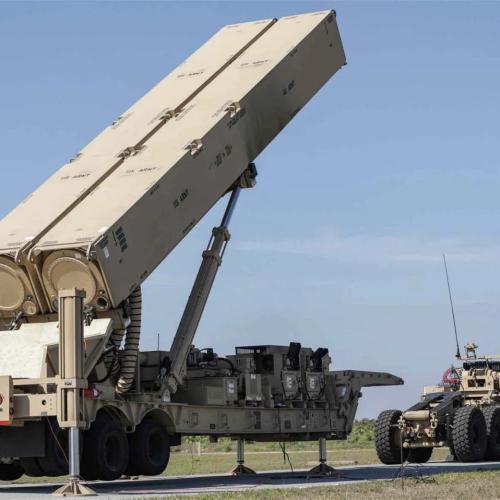
The US should put more emphasis on directed-energy weapons, including concentrating on developing a doctrine for their use, said Brig. Gen. William Whittenberger, assistant to the director of strategic plans at Air Force Special Operations on Command. Our entire integrated air defense can be dismantled through directed-energy efforts, he [said], including both laser and microwave energy. Radar [can be] overloaded, computers and terminals overheated, rendering command and control centers ineffective, guidance capability on missiles blinded or burned, satellites overloaded, cell phone towers destroyed, all by directed-energy systems, those are simple, effective, offensive actions ... with less risk, increased effectiveness, less cost, less collateral damage over todays capabilities, he said. The Senate Appropriations Subcommittee on Defense approved its version of the Fiscal 2019 funding bill ... which included a total of $317 million in directed energy programs. Whittenberger said the US must harden against these threats or become a victim to our own success as these technologies will be pirated by other peer nations, which will also make directed-energy weapon advances of their own. More emphasis also must be placed on doctrine. Currently, he said, work on military use of directed-energy technology is being done from the bottom up. However, he noted, We need to flip that to working doctrinally down and making sure that we have the right requirements in place."
Note: Read more on the exotic weapons being developed for the US military. And even more here. China was recently reported to be working on a new handheld laser weapon designed to set people on fire from half a mile away. For more along these lines, see concise summaries of deeply revealing non-lethal weapons news articles from reliable major media sources.
Woody Norris aims the silvery plate ... demonstrating something called HyperSonic Sound (HSS). I pace out a hundred yards. Norris pelts me with the Handel. The sound is inside my head. Imagine, he says, walking by a soda machine (say, one of the five million in Japan that will soon employ HSS) ... then hearing what you alone hear -- the plink of ice cubes and the invocation, ''Wouldn't a Coke taste great right about now?'' An HSS transmission can travel 450 feet - at practically the same volume all along its path. In past months, Norris and his staff have made a further, key improvement to HSS -- instead of sending out a column of sound, they can now project a single sphere of it, self-contained, like a bubble. [And] there are Defense Department applications. Norris [has] been busy honing something called High Intensity Directed Acoustics (HIDA). Although [it] has been routinely referred to as a "nonlethal weapon," ... in reality, HIDA is both warning and weapon. If used from a battleship, it can ward off stray crafts at 500 yards with a pinpointed verbal warning. Should the offending vessel continue ... the stern warnings are replaced by 120-decibel sounds that are as physically disabling as shrapnel. Certain noises, projected at the right pitch, can incapacitate even a stone-deaf terrorist; the bones in your head are brutalized by a tone's full effect whether you're clutching the sides of your skull in agony or not. "HIDA can instantaneously cause loss of equilibrium, vomiting, migraines - really, we can pretty much pick our ailment," he says brightly. Last month, [Norris' company] A.T.C. cut a five-year, multimillion-dollar licensing agreement with General Dynamics, one of the giants of the military-industrial complex.
Note: This entire article is well worth reading if you want to understand just how advanced these dangerous weapons are. And there is little doubt that this weapon can cause death. Remember the article was written in 2003. Sound weapons developed for war are now routinely used against civilian populations. Explore an excellent, well researched article going into more detail on these weapons. For more along these lines, see concise summaries of deeply revealing non-lethal weapons news articles from reliable major media sources.
Several U.S victims of alleged "health attacks" in Cuba have hired a lawyer out of concern over how the U.S. government will handle their long-term medical treatment. "That's not at all clear," said lawyer Mark Zaid, who represents eight of the at least 24 U.S. diplomats, intelligence officers and relatives affected by the incidents in Havana. "Some already had to spend their own money" on treatment. "Are they being treated or are they being studied? It's not entirely clear what is happening," the lawyer said, adding that some of the victims had problems accessing their medical records at the UPenn treatment center because the records are government property. Zaid added that ... the cases have placed the government in a predicament because of the mystery not just on the so-called attacks but the injuries experienced. For example, federal employees who have been injured by incidents such as explosions, "the wounds have been specific and concrete, not strange brain and neurological damages. It's much more complicated." In a separate case, another Zaid client - Mike Beck, a retired National Security Agency counterintelligence officer - suffered a "potentially similar attack" in the 1990s when he traveled to an unidentified country. Years later, Beck and a companion on the trip were found to be suffering from Parkinson's disease. A confidential report convinced him that his illness was linked to a covert attack with a weapon that used microwaves, Beck told The Washington Post last year.
Note: There is no doubt that the US has electromagnetic weapons that can cause neurological disorders like this. We suspect this was a false flag attack to turn the American public against the recently opened U.S. embassy in Havana. To learn about how electromagnetic weapons can be used to torture anyone without legal recourse, listen to this revealing interview. For more along these lines, see concise summaries of deeply revealing news articles on intelligence agency corruption and non-lethal weapons.
Mike Beck, a National Security Agency counterintelligence officer, could always bang out 60 words a minute. But in early 2006, Beck struggled to move his fingers at their usual typing speed. Soon after, a brain scan showed why: Beck had Parkinson's disease, the second-most-common neurodegenerative disorder in the United States. He was only 46 - unusually young for Parkinson's. No one in his family had ever had it. Then, in an unsettling coincidence, he learned that an NSA colleague a man he'd spent a pivotal week in 1996 with in a hostile country had also just been diagnosed with Parkinson's. Eventually, Beck read a classified intelligence report that convinced him that he and his co-worker on the trip were likely the victims of a covert attack that led to their illnesses - and that has prompted a highly unusual workers' compensation claim. Beck believes that while he and his colleague were sleeping in their hotel rooms, the hostile country, which he cannot name for security reasons, deployed a high-powered microwave weapon against them, damaging their nervous systems. For the last four years, Beck, 57, has been trying to persuade the Labor Department to award him 75 percent of his salary, or about $110,000 a year. But the Labor Department won't approve Beck's request without solid evidence that he was targeted. In Beck's case short of obtaining proof from the hostile nation's spy service he'd need the endorsement of the NSA, which has refused to provide it.
Note: To learn about how electromagnetic weapons can be used to torture anyone without legal recourse, listen to this revealing interview. For more along these lines, see concise summaries of deeply revealing news articles on intelligence agency corruption and non-lethal weapons.
Chinese researchers are working on a new handheld laser weapon capable of burning skin and clothing from up to half a mile away. Boasts about the ... laser rifle's capabilities come amid a diplomatic row between the US and China over the use of blinding lasers on military aircraft. The new laser rifle will be used by anti-terrorism squads in the Chinese Armed Police, the South China Morning Post reports, with prototypes of the device already being tested ... at the Chinese Academy of Sciences. The ZKZM assault rifle causes "instant carbonisation" of human tissue, according to the researchers behind it, and will "burn through clothes in a split second. " The unnamed researcher from the Chinese Academy of Sciences added: "If the fabric is flammable, the whole person will be set on fire." While the gun is not powerful enough to kill someone, the researcher said: "The pain will be beyond endurance." Aerospace and defence giant Lockheed Martin has previously developed laser beam systems that can be attached to planes or ground-based vehicles. In May, the Pentagon made a formal complaint to the Chinese government over Chinese nationals allegedly pointing lasers at US planes in east Africa. While there has been no word on when China's new laser gun might see service, the US Navy recently announced its own $300 million research fund aimed at creating a family of laser weapons for its fleet. In 2016, the US military said it would be deploying laser weapons as early as 2023.
Note: China was reported in 2006 to be using lasers to blind American spy satellites. For more along these lines, see concise summaries of deeply revealing non-lethal weapons news articles from reliable major media sources.
Tasers have been misused or linked to accusations of torture or corporal punishment in U.S. prisons and jails. Reuters identified 104 deaths involving Tasers behind bars, nearly all since 2000 10 percent of a larger universe of more than 1,000 fatal law enforcement encounters in which the weapons were used. Of the 104 inmates who died, just two were armed. A third were in handcuffs or other restraints when stunned. In more than two-thirds of the 70 cases in which Reuters was able to gather full details, the inmate already was immobilized when shocked. Tasers have high potential for abuse behind bars, said U.S. Justice Department consultant Steve Martin, a former general counsel for the Texas Department of Corrections who has inspected more than 500 U.S. prisons and jails. When you inflict pain, serious pain, for the singular purpose of inflicting pain ... it meets the definition of the legal standard of excessive force, but its also torturous. San Bernardino County paid $2.8 million this year to nearly 40 current and former inmates to settle a series of lawsuits that included allegations Tasers were regularly used for torture at the countys West Valley Detention Center. The suits alleged an array of abuses at the 3,347-bed jail ... including guards stunning inmates in the genitals. Inmate John Hanson testified he was shocked nearly five times a day from February to March 2014 in surprise attacks as he delivered meals to inmates. Deputies were truly enjoying the control and affliction of pain, he said.
Note: For lots more, see the entire Reuters series on Tasers on this webpage. For more along these lines, see concise summaries of deeply revealing news articles on prison system corruption and non-lethal weapons.
The U.S. military bankrolled early development of a non-lethal microwave weapon that creates sound inside your head. The project is known as MEDUSA a contrived acronym for Mob Excess Deterrent Using Silent Audio. And it should not be confused with the Long Range Acoustic Device and similar gadgets which simply project sound. This one uses the so-called "microwave auditory effect": a beam of microwaves is turned into sound by the interaction with your head. Nobody else can hear it unless they are in the beam as well. The idea (dubbed "the telepathic ray gun") was mentioned in a 1998 US Army study, which turned up in a recent Freedom of Information Act document dump. Five years later, the Navy decided to put some R&D dollars into the project. Now ... Dr. Lev Sadovnik of the Sierra Nevada Corporation has provided more details. There are health risks, he notes. The biggest issue from the microwave weapon is ... the risk of brain damage from the high-intensity shockwave created by the microwave pulse. A device that delivered a lethal shockwave inside the target's skull might make an effective death ray. Dr. Sadovnik also makes the intriguing suggestion that ... it might be used at low power to produce a whisper that was too quiet to perceive consciously but might be able to subconsciously influence someone. Sadovnik even suggests subliminal advertising, beaming information that is not consciously heard (a notion also spotted on the US Army's voice-to-skull page).
Note: This 20 minute CNN Special Report on electromagnetic frequency weapons from 1985 shows some of what this technology was known to be capable of over 30 years ago. Recent incidents in Cuba and China suggest the possibility that much more advanced forms of acoustic or electromagnetic weapons are currently in use. For more along these lines, see concise summaries of deeply revealing non-lethal weapons news articles from reliable major media sources.
Important Note: Explore our full index to revealing excerpts of key major media news stories on several dozen engaging topics. And don't miss amazing excerpts from 20 of the most revealing news articles ever published.