
























Newsweek: Pentagon Generals Cancel
Travel Plans One Day Before 9/11/01
http://www.newsweek.com/id/76065 - link to full original article
Note: As the key statement is buried in this long article on the Newsweek website, we have copied the article in full here. To make the statement easy to find, bold face has been added to the quote about the Pentagon generals being warned not to fly before 9/11 (bottom of the fifth to the last paragraph, or on the Newsweek website page four at end of second paragraph).
Bush: 'We're At War'
As the deadliest attack on American soil in history opens a scary new kind of conflict, the manhunt begins
By
Evan Thomas and Mark Hosenball
NEWSWEEK
Sept. 24 issue – Such a polite, neat young man. He brought his landlord coffee and cookies. He remembered to use his frequent-flier number when he bought his ticket from Boston to Los Angeles–business class. And a good student, too, reported his flight instructor, though he seemed more interested in turning the plane than landing it. A little standoffish, maybe, but he could knock back a vodka with his buddies. So it was uncharacteristic for Mohamed Atta to be running a little behind when he boarded American Airlines Flight 11 on Tuesday shortly before 8 a.m. One of his bags never made it aboard, but maybe that was intentional, too, for inside was a suicide note.
THE FBI BELIEVES that Atta was in control when Flight 11 crashed into the North Tower of the World Trade Center, but maybe not. The hijackers had an abundance of piloting talent–four of the five terrorists aboard had some flight training. Indeed, there were enough hijackers with piloting skills to fly four airliners–two for New York, and two for Washington.
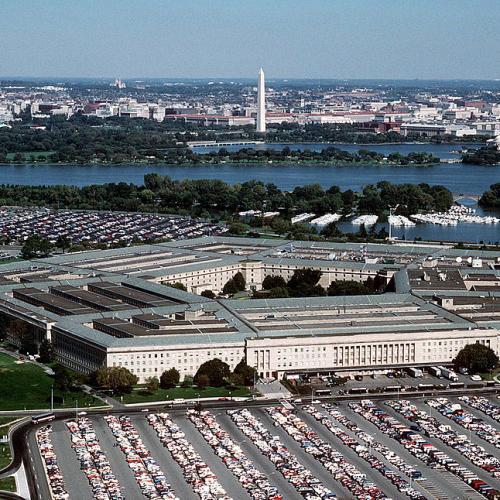
At the White House on that beautiful, clear morning, the occupants were running for their lives. Vice President Dick Cheney had already been hustled into a bunker designed to withstand the shock of a nuclear blast when, at about 9:30 a.m., Secret Service men told staffers leaving the West Wing to run, not walk, as far away as possible. "There's a plane overhead, don't look back!" shouted a policeman. Agents were yelling at women to shed their high-heeled shoes so they could run faster. Several staffers saw a civilian airliner, reflecting white in the bright sunlight, appearing to circle nearby. Perhaps unable to spot the White House, the hijackers at the control of American Airlines Flight 77 dive-bombed the Pentagon instead.
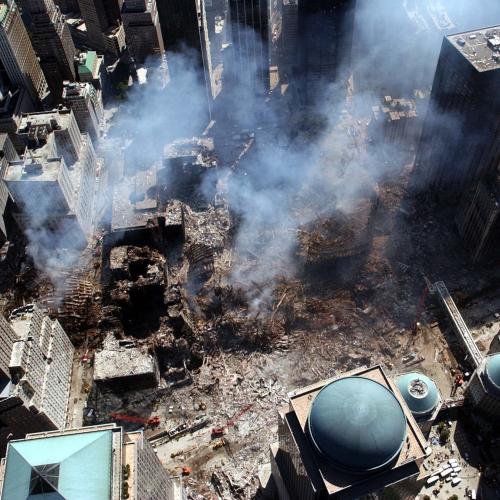
How could a small band of religious zealots knock down the World Trade Center, the most visible symbol of capitalism, killing thousands in lower Manhattan, and come so close to destroying the executive mansion of the most powerful nation on earth? Part of the answer is that few U.S. government officials really believed they could. Consider the dazed reaction of top officials of the Federal Aviation Administration, the agency charged with safely controlling the nation's airways.
Although a couple of aircraft had been behaving erratically on the radar screens of flight controllers for at least 15 minutes, officials at FAA headquarters did not suspect that a hijacking had occurred until the second plane, United Airlines Flight 175, rammed the South Tower of the World Trade Center at 9:05. A half hour later, when the third plane, American Flight 77, hit the Pentagon, the FAA officials responded in classic bureaucratic fashion. "Get out your security manuals," ordered one top official. The officials dutifully began reading their manuals to determine who among them were deemed "essential" and should stay and work, and who should go home for the day.
U.S. Air Force fighter planes did not arrive to protect the nation's capital for another 15 minutes. Pentagon officials had watched helplessly as the suicide airliner bore in on the nation's military command center. In the chaotic aftermath, the plane at the greatest risk of getting shot down was the one flying the attorney general of the United States. At least that's the way it seemed to the pilot, David Clemmer, a Vietnam combat veteran who received a warning as he flew the nation's chief law-enforcement officer, John Ashcroft, back to Washington from an aborted speaking engagement in the Midwest.
Land your plane immediately, Clemmer was instructed by an air-traffic controller, or risk getting shot down by the U.S. Air Force. Clemmer turned to an FBI agent assigned to guard Ashcroft and said, "Well, Larry, we're in deep kimchi here, and basically, all the rules you and I know are out the window." The pilot notified air-traffic controllers that he was carrying the attorney general–but was worried that the message wouldn't get through to military commanders controlling the airspace around Washington. "Thinking out of the box," as Clemmer put it, he asked for–and got–a fighter escort into Washington. His plane, guarded by an F-16, was one of the last to land on the East Coast that day.
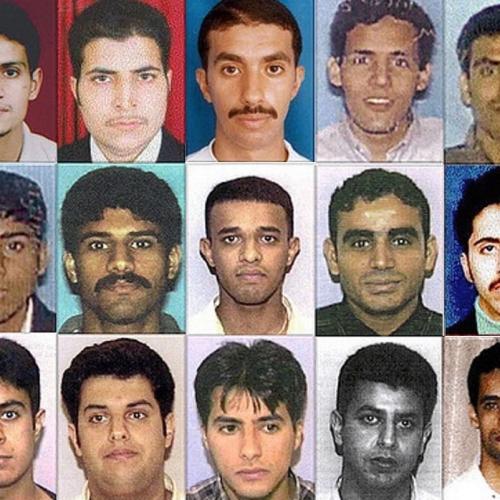
Within a day or two, the haplessness, the confusion, the mentality of "it can't happen here" had been wiped away, perhaps forever. An aircraft carrier patrolled off New York Harbor, past the skyline so horrifically sundered by the destruction of the World Trade Center. Washington was an armed camp on hair-trigger alert. "We're at war," declared President George W. Bush. "We will not only deal with those who dare attack America, we will deal with those who harbor them and feed them and house them." The FBI had launched the largest manhunt in history, code-named PENTTBOM (for Pentagon and Twin Towers), tracking the suspected 19 suicide bombers and their backers around the nation and abroad.
Intelligence officials told NEWSWEEK that they feared that between 30 and 50 teams of terrorists were still on the loose. It was hard to tell if the threat was real, or if America was gripped with the sort of frenzy that seized the nation after the Japanese bombed Pearl Harbor–and many citizens assumed that Japanese troops would soon be marching on Chicago. Northwest Airlines confirmed that flight attendants were staying away from work in droves. And bomb scares became routine. By Saturday, FBI agents had detained 25 people wanted for questioning on immigration violations and issued arrest warrants for two other "material witnesses."
Congress will no doubt hold hearings to assign the fault for a massive failure of intelligence. At the CIA, NEWSWEEK has learned, officials looked at the Justice Department's list of dead hijackers aboard American Flight 77, the plane that hit the Pentagon, and recognized three of them as terrorism suspects. ("Oh s–t," exclaimed one official.) In late August, the agency had asked the FBI to find two of the men, one of whom was believed to be connected to a suspect in the October 2000 bombing of the destroyer the USS Cole. But the FBI was still looking when the hijackers struck.
The blame game will go on. But the finger-pointing may miss a darker and more troubling truth about the shocking attack. It is very difficult for a free and open society to defend against terrorists who are at once patient, smart and willing to die. The operatives run by Al Qaeda, the terrorist organization that reports to bin Laden, appear to be all three. As the PENTTBOM investigation exposes the sophisticated and long-conceived suicide plot, a portrait of evil genius emerges.
It is often said that Islamic extremists wish to turn back history. They want to destroy the Western modernity that threatens to eclipse their fantasy of an 11th-century theocracy. But, like a judo expert who leverages his opponent's superior weight and mass against him, Islamic terrorists have found a diabolically clever way to flip the Great Satan on his back. Blending into American society for months and even years, quietly awaiting the signal to move, bin Laden's operatives have learned how to turn two of America's greatest strengths–openness and technology–into weapons against the American people. Armed with pocket knives, they transformed U.S. airliners into guided missiles, flying bombs packed with 60,000 gallons of explosive fuel. That feat, while awesome, could be just the beginning. Talking on cell phones and by encrypted e-mail, operatives in bin Laden's far-flung network can communicate from Afghanistan to Miami with little risk of immediate detection. It is chilling to think what they could accomplish if they get their hands on the acme of Western military science, the nuclear bomb. Without doubt, they are trying.
"The ability to take our expertise and turn it on us is exhilarating to them," says Sen. Ron Wyden, a member of the Senate intelligence committee. "They stay at it and stay at it to learn how to defeat our technological systems. It's like rattling doors through the neighborhood, looking for one to break in. That's what they're doing with our technology." The lock to America's rickety, overburdened air-control system was especially easy to pick. But America's water and electrical supplies aren't much better safeguarded. And teenage computer hackers have already demonstrated how to use the wide-open Internet to wreck cyberhavoc on American businesses and homes.
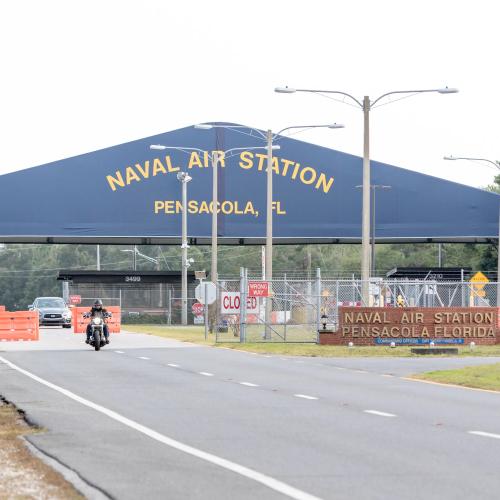
For all their professed devotion to medieval religiosity, the terrorists themselves appear to have comfortably blended into American culture. They do not appear to be poor, or desperate or down on their luck, like the stereotype of a young Arab man drawn to the false promise of entering Paradise through martyrdom. At least one of the 19 had a family, and all apparently lived comfortable middle-class lives, with enough money to rent cars, go to school and violate the Quran's ban on alcohol by visiting the occasional bar. A senior European intelligence official told NEWSWEEK that some of the hijackers may have had Swiss bank accounts, which have now been frozen by Swiss authorities. Two of the alleged hijackers aboard Flight 93, Ahmed Alhaznawi and Ziad Jarrahi, drove a Ford Ranger and lived in a quiet neighborhood in Lauderdale-by-the-Sea, Fla. In front of the house was a wooden wind chime carrying the message THIS HOUSE IS FULL OF LOVE. NEWSWEEK has learned that the Pentagon has referred to the FBI reports that three of the hijackers may have received help from Uncle Sam–as trainees at Pensacola Naval Air Station in Florida; two others may have studied at Air Force facilities.
Osama bin Laden, their spiritual leader and financier, comes from a
privileged background himself. One of more than 50 children of Yemeni
billionaire parents who got rich off construction contracts in Saudi
Arabia, bin Laden, for a time, made money on those most Western of
beverages, Coke and Pepsi. During the early '90s, while he lived in Sudan,
he owned part of a company that produced gum arabic, an essential
ingredient of many soft drinks. Bin Laden may not have a vast personal
fortune, at least not the $300 million ascribed to him, but he is able to
secure funds from nefarious sources. According to intelligence sources, his
agents are involved in drug running and he receives "blood money" payment
from frightened Arab regimes that want to buy protection from his zealotry.
According to U.S. intelligence sources, bin Laden is able to pay pensions
to the families of suicide bombers.
Mohamed Atta was, according to investigators, the perfect soldier in bin Laden's army. He was a citizen of the world. Traveling on a passport from the United Arab Emirates, he lived in Germany for a time, studying at the Technical University in Hamburg. He frequented a nightspot named Sharky's Billiard Bar ("the Bar With Mega-Possibilities"), wore black jeans, and rented–but failed to return–a video of John Carpenter's "Vampire." At the same time, he requested and received a prayer room at the university for himself and about 20 other Muslim students. In the last two years, he began to wear Muslim dress.
Atta, 33, may have had a shadowy past. According to German authorities, he is suspected in the bombing of an Israeli bus in 1986, when he was only 18 or 19 years old. If true, he should have been denied immigration visas. Instead, he was able to move freely between Germany and the United States. He was clearly preparing for some sort of terrorist action for months. According to law-enforcement authorities, he may have begun casing Logan Airport in Boston more than six months ago. And, NEWSWEEK has learned, he was seen last winter in Norfolk, Va., where, the FBI believes, he may have been surveying the giant U.S. Navy base as a target. Already, say investigators, there are important links between the hijackers who attacked American targets last week and the plotters who tried to sink the USS Cole in Yemen last October.
Atta had plenty of cash. He wrote a $10,000 check to take flight lessons at one of Florida's many flight schools. (Because of its year-round good weather and proximity to the beach, Florida attracts many international flight students, especially from the Middle East; background checks are said to be minimal.) Last December, he and another man paid $1,500 for six hours in a Boeing 727 simulator. "Looking back at it, it was a little strange that all they wanted to do was turns," Henry George, who runs SimCenter, Inc., at Opa-Locka Airport, told The Miami Herald. "Most people who come here want to do takeoffs and landings."
At the time, Atta aroused no suspicion. When he turned in his rent-a-car in Pompano Beach, Fla., on Sept. 9, before heading north on his suicide mission, he reminded the dealer, Brad Warrick, that the car needed to be serviced. "The only thing out of the ordinary," Warrick recalled, "was that he was nice enough to let me know the car needed an oil change." Atta and several friends were regulars at a Venice bar called the 44th Aero Squadron, decorated in the motif of a bomber-squadron bunker, complete with sandbags. "I never had any problems with them," said the owner, Ken Schortzmann. They didn't want to be bothered, but didn't drink heavily and flirt with the waitresses, like some of the other flight students. Atta seemed to be the leader. "He had a fanny pack with a big roll of cash in it," said Schortzmann.
Last week Atta and two of his buddies seem to have gone out for a farewell bender at a seafood bar called Shuckums. Atta drank five Stoli-and-fruit-juices, while one of the others drank rum and Coke. For once, Atta and his friends became agitated, shouting curse words in Arabic, reportedly including a particularly blasphemous one that roughly translates as "F–k God." There was a squabble when the waitress tried to collect the $48 bill (her shift was ending and she wanted her tip). One of the Arabs became indignant. "I work for American Airlines. I'm a pilot," he said. "What makes you think I'd have a problem paying the bill?"
Although investigators now suspect that Atta may been the leader of his cell, it is not clear if and when he was, in effect, "triggered." The pattern of bin Laden's terrorism is to insert operatives into a country where they are "sleepers," burrowed deep into the local culture, leading normal lives while awaiting orders. Intelligence sources believe that one or two control agents run by bin Laden's Qaeda may have slipped into the United States in the last couple of weeks to activate the airliner plot. The idea of using suicide pilots may have been germinating for a very long time. One of the other pilot-hijackers on Flight 11, Waleed Alshehri, attended flight school in Florida in 1997. Last week FBI Director Robert Mueller told a news conference, "The fact that they received flight training in the U.S. is news." But maybe it shouldn't have been. Only last September an Orlando, Fla., cabdriver named Ihab Ali was indicted for refusing to answer questions about his ties to the bin Laden organization, including his "pilot training in Oklahoma," according to court papers. Indeed, the records of the terrorism trial in New York for the August 1998 bombings of two U.S. embassies in Africa offer a wealth of information about bin Laden's use of U.S.-trained pilots. One of them, Essam Al-Ridi, who had been trained at a Texas flight school, was a key government witness, testifying that bin Laden's associates used him to try to buy a private jet to transport Stinger ground-to-air missiles from Pakistan to Sudan.
It is not known exactly how many of bin Laden's operatives are still on the loose. One of the most intriguing suspects may be Amer Mohammed Kamfar, 41. Last winter or fall, he showed up in Florida and took flight lessons at FlightSafety Academy. He rented a house in Vero Beach, where he had a wife, who dressed in the traditional chador, and several children. Kamfar, who called himself "John," "shopped at Wal-Mart and ate a lot of pizza," according to a neighbor. Two weeks ago he packed up his family and left the area. Last week Florida cops put out an all-points bulletin, warning that Kamfar may be toting an AK-47.
Two of the suicide bombers may have just slipped out of the federal government's grasp. According to intelligence sources, on Aug. 21 the CIA passed along information to the Immigration and Naturalization Service on a man who belonged on the watch list for terror suspects. The man, Khalid al-Midhar, had been videotaped in Kuala Lumpur talking to one of the suspected terrorists in the Cole bombing (the man is now in jail in Yemen). When the INS ran its database, it found that al-Midhar was already inside the United States. The CIA asked the FBI to find him and an associate, Salem Alhamzi. But the bureau didn't have much to go on. They listed their U.S. residence as "the Marriott Hotel in New York." There are 10 Marriott-run hotels in New York. The bureau checked all of them and found nothing. Al-Midhar and Alhamzi were listed among the five hijackers of American Airlines Flight 77.
Ever since the Customs Service foiled an apparent bomb plot on the eve of the millennium, U.S. intelligence has been very edgy about an attack on America. The man caught crossing between British Columbia and Seattle with explosives and timers in his car, Ahmed Ressam, later confessed that he planned to blow up Los Angeles International Airport. Ressam allegedly worked for a shadowy group of Algerian terrorists with ties to bin Laden. Twice a week, the "Threat Committee," a group of top intelligence officials and diplomats, meets in the White House complex to review dozens of terrorist threats at home and abroad. In late June the CIA warned of possible terrorist action against U.S. targets, including those in the United States, for the Fourth of July. Nothing happened, but then in July the agency again warned about possible attacks overseas. The threat seemed grave enough to force U.S. ships in Middle Eastern ports to head for sea. Three weeks ago there was another warning that a terrorist strike might be imminent. But there was no mention of where. On Sept. 10, NEWSWEEK has learned, a group of top Pentagon officials suddenly canceled travel plans for the next morning, apparently because of security concerns.
But no one even dreamed that four airliners would be hijacked and plunged into targets in New York and Washington. Some officials complain that the intelligence community has been too focused on terrorists obtaining weapons of mass destruction–biological, chemical and nuclear–while overlooking low-tech threats–like the use of penknives and box cutters to hijack a plane.
The Threat Committee has every reason to worry about bin Laden's trying to get hold of a nuke. During the New York trial of the men accused of bombing the embassies in Africa, one bin Laden associate testified that the boss had hatched a 1993 plan to spend $1.5 million to buy black-market uranium. He apparently failed–that time.
Now the Bush administration and Congress seemed primed to do just about anything to foil future attacks. Justice Department lawyers have been told to take a fresh look at "everything," one official said. Perhaps the most startling idea under examination would be a new presidential order authorizing secret military tribunals to try accused terrorists. The idea first occurred to former attorney general William Barr after the bombing of Pan Am Flight 103 over Lockerbie, Scotland, in 1988. Barr, at the time chief of the Justice Department's Office of Legal Counsel, got the idea after learning that his office was used during World War II to try–in secret–German saboteurs who were later hanged. The idea was rejected, but it's being revived on the theory that terrorists are de facto military "combatants" who don't deserve the full run of constitutional rights.
Civil libertarians may balk, but never underestimate the desire for revenge. Consider some statistics: more people were killed by the suicide hijackers last week than the number of American soldiers killed in the entire American Revolution. Or at Antietam, the bloodiest one-day battle of the Civil War. Or at Pearl Harbor. Or on D-Day. And those were soldiers. War had become more and more remote and sterile to Americans who experienced combat as a phenomenon that occurred on TV, either in movies or occasionally by watching cruise missiles light up Baghdad on the evening news. Now those same American civilians are in a war. Not as spectators, but as targets.
With Michael Isikoff, Dan Klaidman, Martha Brant, Debra Rosenberg, Weston Kosova, Andy Murr, George Wehrfritz, Catharine Skipp and John Lantigua
FAIR USE NOTICE: This site contains copyrighted material the use of which has not always been specifically authorized by the copyright owner. We are making such material available in our efforts to advance understanding of criminal justice, political, human rights, economic, democracy, scientific, and social justice issues, etc. We believe this constitutes a 'fair use' of any such copyrighted material as provided for in section 107 of the US Copyright Law. In accordance with Title 17 U.S.C. Section 107, the material on this site is distributed without profit to those who have expressed a prior interest in receiving the included information for research and educational purposes. For more information go to: http://www.law.cornell.edu/uscode/17/107.shtml. If you wish to use copyrighted material from this site for purposes of your own that go beyond 'fair use', you must obtain permission from the copyright owner.
- Inform your media and political representatives of this vital information on 9/11. To contact those close to you, click here. Urge them to call for the release of classified documents and videos and to press for a new, impartial investigation.
- Explore the wealth of reliable, verifiable information on 9/11, including several excellent documentaries, in our 9/11 Information Center available here.
- Learn more about 9/11 and the secret societies likely involved in this powerful lesson from the free Insight Course.
- Explore inspiring ideas on building a brighter future by reading this short essay.
- Spread this news to your friends and colleagues, and recommend this article on key social networking websites so that we can fill the role at which the major media is sadly failing. Together, we can make a difference.
See our exceptional archive of revealing news articles.
Please support this important work: Donate here.
www.momentoflove.org - Every person in the world has a heart
www.personalgrowthcourses.net - Dynamic online courses powerfully expand your horizons
www.WantToKnow.info - Reliable, verifiable information on major cover-ups
www.weboflove.org - Strengthening the Web of Love that interconnects us all
Subscribe here to the WantToKnow.info email list (two messages a week)