

































Bin Laden Room, FBI and CIA Efforts to Capture Him
http://www.newsweek.com/id/75524 - link to full original article
Note: As this article is quite long, we include it in full here with 9/11 summary statements highlighted in bold face.
The target: In 1998, President Clinton signed a "lethal finding" which, in effect, gave the CIA permission to kill Osama bin Laden in a covert operation
The Road to Sept. 11
For a decade, America's been fighting a losing secret war against terror. A NEWSWEEK investigation into the missed clues and missteps
NEWSWEEK
Oct. 1 issue –
He was more than a little suspicious. At the Airman Flight School in Norman,
Okla., the stocky aspiring pilot with the heavy French accent acted oddly. He
was abrupt and argumentative, refusing to pay the whole $4,995 fee upfront (he
shelled out $2,500 in cash instead). He had been dodgy in his e-mails. “E
is not secure,” explained Zacarias Moussaoui, 33, who preferred to use
his Internet alias, “zuluman tangotango.” A poor flier, he suddenly
quit in mid-May, before showing up at another flight school in Eagan, Minn.
At Pam Am Flying Academy, he acknowledged that the biggest plane he’d
ever flown was a single-engine Cessna. But he asked to be trained on a 747 flight
simulator. He wanted to concentrate only on the midair turns, not the takeoffs
and landings. It was all too fishy to one of the instructors, who tipped off
the Feds. Incarcerated because his visa had expired, Moussaoui was sitting in
the Sherburne County Jail when some other pilot trainees drove their hijacked
airliners into the World Trade Center and the Pentagon.
It’s not that the U.S. government was asleep. America’s open borders
make tracking terrorists a daunting exercise. NEWSWEEK has learned that the
FBI has privately estimated that more than 1,000 individuals—most of them
foreign nationals—with suspected terrorist ties are currently living in
the United States. “The American people would be surprised to learn how
many of these people there are,” says a top U.S. official. Moussaoui almost
exactly fits the profile of the suicide hijackers, but he may or may not have
been part of the plot. After Moussaoui’s arrest on Aug. 17, U.S. immigration
authorities dutifully notified the French (he was a passport holder), who responded
10 days later that Moussaoui was a suspected terrorist who had allegedly traveled
to Osama bin Laden’s training camps in Afghanistan. Ten days may seem like
a leisurely pace for investigators racing against time to foil terrorist plots,
but in the real world of international cooperation, 10 days “c’est
rapide,” a French official told NEWSWEEK. Fast but, in the new age of terror,
not fast enough.
As officials at the CIA and FBI sift through intelligence reports, they are berating themselves for missing warning signs on the road to Sept. 11. Those reports include intercepted messages with phrases like "There is a big thing coming," "They're going to pay the price" and "We're ready to go." Unfortunately, many of those messages, intercepted before the attack, did not reach the desks of intelligence analysts until afterward. In the bureaucracy of spying, 24-hour or 48-hour time lags are not unusual. None of the intercepted traffic mentioned the Pentagon or the World Trade Center. Some hinted at a target somewhere on the Pacific Rim. Nonetheless, an intelligence official told NEWSWEEK: "A lot of people feel guilty and think of what they could have done."
CROP-DUSTER MANUALS
All across the world last week, intelligence services were scrambling to catch the terrorists before they struck again. The scale of the roundup was breathtaking: in Yemen, a viper's nest of terror, authorities hauled in "dozens" of suspected bin Laden followers. In Germany, police were searching for a pair of men believed to be directly involved in the hijacking plot. In France, more than half a dozen were being held for questioning, while in Britain, Belgium and the Netherlands-and Peru and Paraguay-police raided suspected terror hideouts. In the United States, where the FBI has launched the greatest manhunt in history, authorities detained about 90 people. Most of them were being held for minor immigration charges, but investigators were looking for mass murderers. The gumshoes swept up pieces of chilling evidence, like two box cutters stuffed into the seat of a Sept. 11 flight out of Boston-another hijacking target? Boston was jittery over threats of an attack last Saturday. An Arab in a bar was overheard to say that blood would flow in Boston on Sept. 22, and U.S. intelligence intercepted a conversation between Algerian diplomats talking about "the upcoming Boston tea party on Sept. 22." It turned out that some women really were holding a tea party that day. Some federal officials were spooked when manuals describing crop-duster equipment-to spray deadly germs?-were found among Moussaoui's possessions. But a top U.S. official told NEWSWEEK, "I'm not getting into the bunker and putting on a gas mask. We're used to seeing these threats." (Nonetheless, crop-dusters were barred from flying near cities.)
The vast dragnet was heartening, unless one considers that after two American embassies were bombed in 1998, a similar crackdown swept up a hundred potential suspects from Europe to the Middle East to Latin America-and bin Laden's men were still able to regroup to launch far more devastating attacks. Catching foot soldiers and lieutenants will not be enough to stop even greater cataclysms. Last week the authorities were searching for a single man who might have triggered the assault on Washington and New York. In past attacks by bin Laden's Qaeda organization, "sleeper" agents have burrowed into the target country to await their orders. FBI officials now believe that the mastermind was Mohamed Atta, the intense Egyptian who apparently piloted the first plane, American Airlines Flight 11, into the North Tower of the World Trade Center. ("Did he ever learn to fly?" Atta's father, Mohamed al-Amir Atta, said to NEWSWEEK. "Never. He never even had a kite. My daughter, who is a doctor, used to get him medicine before every journey, to make him combat the cramps and vomiting he feels every time he gets on a plane.") Though intelligence officials believe they have spotted the operation's paymaster, identified to NEWSWEEK as Mustafa Ahmed, in the United Arab Emirates, Atta was the one hijacker who appeared to have the most contacts with conspirators on other aircraft prior to the attacks, and he was the one who left a last testament. According to a top government source, it included this prayer: "Be prepared to meet your God. Be ready for this moment." Atta's role "doesn't fit the usual pattern," said one official. "It looks like the ringleader went down with the plane."
The ultimate ringleader may be somewhere in the mountains of Afghanistan, hiding from U.S. bombs and commandos-but also no doubt plotting his next atrocity. In history's long list of villains, bin Laden will find a special place. He has no throne, no armies, not even any real territory, aside from the rocky wastes of Afghanistan. But he has the power to make men willingly go to their deaths for the sole purpose of indiscriminately killing Americans-men, women and children. He is an unusual combination in the annals of hate, at once mystical and fanatical-and deliberate and efficient. Now he has stirred America's wrath and may soon see America's vengeance. But the slow business of mopping up the poison spread by bin Laden through the Islamic world was almost pitifully underscored after the attack by a plea from FBI Director Robert Mueller. The nation's top G-man said the FBI was looking for more Arabic speakers. A reasonable request, but perhaps a little late in the game. It's hard to know your enemy when you can't even speak his language.
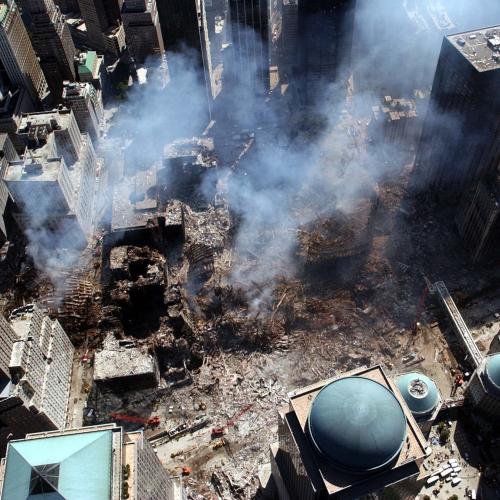
For most Americans, life was instantly and forever changed on Sept. 11, 2001. But the terror war that led up to the attack had been simmering, and sometimes boiling over, for more than 10 years. It can be recalled as a tedious bureaucratic struggle-all those reports on "Homeland Defense" piling up unread on the shelves of congressmen, droning government officials trying to fatten their budgets with scare stories relegated to the back pages of the newspaper. Or it can be relived-as it truly was-as a race to the Gates of Hell. Before the world finds out what horrors lie beyond, it's worthwhile retracing a decadelong trail of terror to see how America stumbled.
The enemy has clearly learned from experience. In December 1994, the Armed Islamic Group (GIA), an Algerian-based terrorist band that would go on to play a prominent role in bin Laden's global army, hijacked an Air France Airbus with 171 passengers aboard. The plan: to plunge into the Eiffel Tower. The problem: none of the hijackers could fly. The Air France pilot landed instead in Marseilles, where French police stormed the plane. It was not too long afterward that the first terrorists began quietly enrolling in flight schools in Florida.
THE BIN LADEN ROOM
The United States has been a little slower on the uptake. Money has not really been the obstacle. The counterterrorism budget jumped from $2 billion to $12 billion over a decade. The United States spends $30 billion a year gathering intelligence. Nor has bin Laden been in any way ignored. For the past five years, analysts have been working through the night in a chamber, deep in the bowels of CIA headquarters, known as the Bin Laden Room. Some experts argued that the CIA was too focused on bin Laden-that, in an effort to put a face on faceless terror, the gaunt guerrilla fighter had been elevated to the role of international bogeyman, to the neglect of shadowy others who did the real killing. Now, as the Washington blame game escalates-along with the cries for revenge-intelligence officials are cautioning that terror cells, clannish and secretive, are extremely difficult to penetrate; that for every snake beheaded two more will crawl out of the swamp; that swamps can never be drained in land that drips with the blood of martyrs; that even the most persuasive interrogations may not crack a suspect who is willing to die.
All true. But the inability of the government to even guess that 19 suicidal terrorists might turn four jetliners into guided missiles aimed at national icons was more than a failure of intelligence. It was a failure of imagination. The United States is so strong, the American people seemed so secure, that the concept of Homeland Defense seemed abstract, almost foreign, the sort of thing tiny island nations worried about. Terrorists were regarded by most people as criminals, wicked and frightening, but not as mortal enemies of the state. There was a kind of collective denial, an unwillingness to see how monstrous the threat of Islamic extremism could be.
In part, that may be because the government of the United States helped create it. In the 1980s, the CIA secretly backed the mujahedin, the Islamic freedom fighters rebelling against the Soviet occupation of Afghanistan. Arming and training the "Mooj" was one of the most successful covert actions ever mounted by the CIA. It turned the tide against the Soviet invaders. But there is a word used by old CIA hands to describe covert actions that backfire: "blowback." In the coming weeks, if and when American Special Forces helicopters try to land in the mountains of Afghanistan to flush out bin Laden, they risk being shot down by Stinger surface-to-air missiles provided to the Afghan rebels by the CIA. Such an awful case of blowback would be a mere coda to a long and twisted tragedy of unanticipated consequences. The tale begins more than 10 years ago, when the veterans of the Mooj's holy war against the Soviets began arriving in the United States-many with passports arranged by the CIA.
Bonded by combat, full of religious zeal, the diaspora of young Arab men willing to die for Allah congregated at the Al-Kifah Refugee Center in Brooklyn, N.Y., a dreary inner-city building that doubled as a recruiting post for the CIA seeking to steer fresh troops to the mujahedin. The dominant figures at the center in the late '80s were a gloomy New York City engineer named El Sayyid Nosair, who took Prozac for his blues, and his sidekick, Mahmud Abouhalima, who had been a human minesweeper in the Afghan war (his only tool was a thin reed, which he used as a crude probe). The new immigrants were filled not with gratitude toward their new nation, but by implacable hatred toward America, symbol of Western modernity that threatened to engulf Muslim fundamentalism in a tide of blue jeans and Hollywood videos. Half a world away, people who understood the ferocity of Islamic extremism could see the coming storm. In the late '80s, Pakistan's then head of state, Benazir Bhutto, told the first President George Bush, "You are creating a Frankenstein." But the warnings never quite filtered down to the cops and G-men on the streets of New York.
The international jihad arrived in America on the rainy night of Nov. 5, 1990, when Nosair walked into a crowded ballroom at the New York Marriott on 49th Street and shot and killed Rabbi Meir Kahane, a mindless hater who wanted to rid Israel of "Arab dogs" ("Every Jew a .22" was a Kahane slogan). The escape plan was amateur hour: Nosair's buddy Abouhalima was supposed to drive the getaway car, a taxicab, but the overexcited Nosair jumped in the wrong cab and was apprehended
With a room full of witnesses and a smoking gun, the case against Nosair should have been a lay-down. But the New York police bungled the evidence, and Nosair got off with a gun rap. At that moment, Nosair and Abouhalima may have had an epiphany: back home in Egypt, suspected terrorists are dragged in and tortured. In America, they can hire a good lawyer and beat the system. The New York City police hardly noticed any grander scheme. A search of Nosair's apartment turned up instructions for building bombs and photos of targets-including the Empire State Building and the World Trade Center. The police never bothered to inventory most of the evidence, nor were the documents translated-that is, until a van with a 1,500-pound bomb blew up in the underground garage of the World Trade Center on Feb. 26, 1993. The (first) World Trade Center bombing, which killed six people and injured more than 1,000, might have been a powerful warning, especially when investigators discovered that the plotters had meant to topple the towers and packed the truck bomb with cyanide (in an effort to create a crude chemical weapon). But the cyanide was harmlessly burned up in the blast, the buildings didn't fall and the bombers seemed to be hapless. One of them went back to get his security deposit from the truck rental.
The plotters were quickly exposed as disciples of Sheik Omar Abdel-Rahman, the "Blind Sheik" who ranted against the infidels from a run-down mosque in Jersey City. The Blind Sheik's shady past should have been of great interest to the Feds-he had been linked to the plot to assassinate Egyptian President Anwar Sadat in 1981. But the sheik had slipped into the United States with the protection of the CIA, which saw the revered cleric as a valuable recruiting agent for the Mooj. Investigators trying to track down the Blind Sheik "had zero cooperation from the intelligence community, zero," recalled a federal investigator in New York.
DEVIL'S DUO
One World Trade Center plotter who did attract attention from the Feds was Ramzi Yousef. Operating under a dozen aliases, Yousef was a frightening new figure, seemingly stateless and sinister, a global avenging angel. Though he talked to Iraqi intelligence and stayed in a safe house that was later linked to bin Laden, Yousef at the time appeared to be a kind of terror freelancer. Yousef's luck ran out when the apartment of an old childhood friend, Abdul Hakim Murad, burst into flames. Plotting with Yousef, Murad had been at work making bombs to assassinate the pope and blow up no fewer than 11 U.S. airliners. Murad's arrest in January 1995 led investigators to capture Yousef in Pakistan, where he was hiding out. Murad and Yousef were a duo sent by the Devil: Murad had taken pilot lessons, and the two talked about flying a plane filled with explosives into the CIA headquarters or a nuclear facility. At the time, FBI officials thought the plans were grandiose and farfetched. Now they look like blueprints.
The capture of Yousef was regarded as a stirring victory in the war against terrorism, which was just then gearing up in Washington. But Yousef's arrest illustrates the difficulties of cracking terrorism even when a prize suspect is caught. At his sentencing, Yousef declared, "Yes, I am a terrorist, and I am proud of it." He has never cooperated with authorities. Instead, he spent his days chatting about movies with his fellow inmates in a federal maximum-security prison, Unabomber Ted Kaczynski and, until he was executed, the Oklahoma City bomber Timothy McVeigh.
By the mid-'90s, counterterror experts at the FBI and CIA had begun to focus on Osama bin Laden, the son of a Saudi billionaire who had joined the Mooj in Afghanistan and become a hero as a battlefield commander. Bin Laden was said to be bitter because the Saudi royal family had rebuffed his offer to rally freedom fighters to protect the kingdom against the threat of Saddam Hussein after the Iraqi strongman invaded Kuwait in 1990. Instead, the Saudi rulers chose to be defended by the armed forces of the United States. To bin Laden, corrupt princes were welcoming infidels to desecrate holy ground. Bin Laden devoted himself to expelling America, not just from Saudi Arabia, but-as his messianic madness grew-from Islam, indeed all the world.
Tony Lake, President Bill Clinton's national-security adviser, does not recall one single defining moment when bin Laden became Public Enemy No. 1. It was increasingly clear to intelligence analysts that extremists all over the Middle East viewed bin Laden as a modern-day Saladin, the Islamic warrior who drove out the Crusaders a millennium ago. Setting up a sort of Terror Central of spiritual, financial and logistical support-Al Qaeda (the Base)-bin Laden went public, in 1996 telling every Muslim that their duty was to kill Americans (at first the fatwa was limited to U.S. soldiers, then broadened in 1998 to all Americans). From his home in Sudan, bin Laden seemed to be inspiring and helping to fund a broad if shadowy network of terrorist cells. On the rationale that no nation should be allowed to harbor terrorists, the State Department in the mid-'90s pressured the government of Sudan to kick out bin Laden. In retrospect, that may have been a mistake. At least in Sudan, it was easier to keep an eye on bin Laden's activities. Instead, he vanished into the mountains of Afghanistan, where he would be welcomed by extremist Taliban rulers and enabled to set up training bases for terrorists. These camps-crude collections of mud huts-appear to have provided a sort of Iron John bonding experience for thousands of aspiring martyrs who came for a course of brainwashing and bombmaking.
With the cold war over, the Mafia in retreat and the drug war unwinnable, the CIA and FBI were eager to have a new foe to fight. The two agencies established a Counter Terrorism Center in a bland, windowless warren of offices on the ground floor of CIA headquarters at Langley, Va. Historical rivals, the spies and G-men were finally learning to work together. But they didn't necessarily share secrets with the alphabet soup of other enforcement and intelligence agencies, like Customs and the Immigration and Naturalization Service, and they remained aloof from the Pentagon. And no amount of good will or money could bridge a fundamental divide between intelligence and law enforcement. Spies prefer to watch and wait; cops want to get their man. At the White House, a bright national-security staffer, Richard Clarke, tried to play counterterror coordinator, but he was given about as much real clout as the toothless "czars" sent out to fight the war on drugs. There was no central figure high in the administration to knock heads, demand performance and make sure everyone was on the same page. Lake now regrets that he did not try harder to create one. At the time, Clinton's national-security adviser was too preoccupied with U.S. involvement in Bosnia to do battle with fiefdoms in the intelligence community. "Bosnia was easier than changing the bureaucracy," Lake told NEWSWEEK.
TRUCK BOMBS
An empire builder with a messianic streak of his own, FBI Director Louis Freeh was eager to throw G-men at the terrorist threat all over the world. When a truck bomb blew up the Khobar Towers, a U.S. military barracks in Saudi Arabia, Freeh made a personal quest of bringing the bombers to justice. As Freeh left office last summer, a grand jury in New York was about to indict several conspirators behind the bombing. But, safely secluded in Iran, the suspects will probably never stand trial. The Khobar Towers investigation shows the limits of treating terrorism as a crime. It also reveals some of the difficulties of working with foreign intelligence services that don't share the same values (or rules) as Americans. Freeh's gumshoes got a feel for Saudi justice when they asked to interview some suspects seized in an earlier bombing attack against a U.S.-run military compound in Riyadh. Before the FBI could ask any questions, the suspects were beheaded. An attempt by the FBI to play the role of Good Cop to the Saudis' Bad Cop was thwarted by American sensitivities. After the bombing, FBI agents managed to corner Hani al-Sayegh, a key suspect in Canada. Cooperate with us, the gumshoes threatened, or we'll send you back to Saudi Arabia, where a sword awaits. No fool, the suspect hired an American lawyer. The State Department was convinced that sending the man back to Saudi Arabia would violate international laws banning torture. Their leverage gone, the Feds were unable to make the suspect talk.
The CIA did have some luck in working with foreign security services to roll up terror networks. In 1997 and 1998, the agency collaborated with the Egyptians-whose security service is particularly ruthless-to root out cells of bin Laden's men from their hiding places in Albania. But just as the spooks were congratulating themselves, another bin Laden cell struck in a carefully coordinated, long-planned attack. Within minutes of each other, truck bombs blew up the U.S. embassies in Tanzania and Kenya, killing more than 220. The failure of intelligence in the August 1998 embassy bombings is a case study in the difficulty of penetrating bin Laden's network.
For some of the time that bin Laden's men were plotting to blow up the two embassies, U.S. intelligence was tapping their phones. According to Justice Department documents, the spooks tapped five telephone numbers used by bin Laden's men living in Kenya in 1996 and '97. But the plotters did not give themselves away. Bin Laden uses couriers to communicate with his agents face to face. His Qaeda organization is also technologically sophisticated, sometimes embedding coded messages in innocuous-seeming Web sites. Intelligence experts have worried for some time that the supersecret-code breakers at the National Security Agency are going deaf, overwhelmed by the sheer volume of telecommunications and encryption software that any consumer can buy at a computer store.
If high-tech espionage won't do the job, say the experts, then the CIA needs more human spies. It has become rote to say that in order to crack secretive terrorist cells the CIA needs to hire more Arabic-speaking case officers who can in turn recruit deep-penetration agents-HUMINT (human intelligence) in spy jargon. Actually, the CIA had a sometime informer among the embassy bombers. Ali Mohamed was a former Egyptian Army officer who enlisted in the U.S. Army and was sent to Fort Bragg, N.C., in the early 1980s to lecture U.S. Special Forces on Islamic terrorism. In his free time, he was a double agent. On the weekends he visited the Al-Kifah Refugee Center in Brooklyn, where he stayed with none other than El Sayyid Nosair, the man who struck the first blow in the holy war by murdering Rabbi Kahane. Ali Mohamed went to Afghanistan to fight with the Mooj, but after the 1993 World Trade Center bombing, he flipped back, telling the Feds about bin Laden's connection to some of the bombers. He described how the Islamic terrorist used "sleepers" who live normal lives for years and then are activated for operations. What he did not tell the spooks was that he was helping plan to bomb the U.S. embassies in Africa. Only after he had pleaded guilty to conspiracy in 1999 did he disclose that he had personally met with bin Laden about the plot. He described how bin Laden, looking at a photo of the U.S. Embassy in Nairobi, "pointed to where the truck could go as a suicide bomber."
The story of Ali Mohamed suggests that the calls by some politicians for more and better informants may be easier to preach than practice. The CIA's skills in the dark arts of running agents have atrophied over the years. The agency was purged of some of its best spy handlers after the 1975 Church Committee investigation exposed some harebrained agency plots, like hiring the Mafia to poison Fidel Castro. During the Reagan years, the agency was beefed up, but a series of scandals in the late '80s and the '90s once more sapped its esprit. America's spies were once proud to engage in "morally hazardous duty," said Carleton Swift, the CIA's Baghdad station chief in the late 1950s. "Now the CIA has become a standard government bureaucracy instead of a bunch of special guys."
A number of lawmakers are calling to, in effect, unleash the CIA. They want to do away with rules that restrict the agency from hiring agents and informers with a record of crimes or abusing human rights. Actually, case officers in the field can still hire sleazy or dangerous characters by asking permission from their bosses in Langley. "We almost never turn them down," said one high-ranking official. But that answer may gloss over a more significant point-that case officers, made cautious by scandal, no longer dare to launch operations that could get them hauled before a congressional inquisition.
DIRTY TRICKS
The weaknesses of the CIA's Directorate of Operations, once called "the Department of Dirty Tricks," can be overstated. When the CIA suspected that the Sudanese government was helping bin Laden obtain chemical weapons, a CIA agent was able to obtain soil samples outside the Al Shifa pharmaceutical plant that showed traces of EMPTA-a precursor chemical used in deadly VX gas. The evidence was used to justify a cruise-missile attack on the factory in retaliation for the embassy bombings. At the same time, 70 cruise missiles rained down on a bin Laden training camp in Afghanistan.
The Clinton administration was later mocked for this showy but meaningless response. Clinton's credibility was not high: he was accused of trying to divert attention from the Monica Lewinsky scandal. In classic American fashion, the owner of the pharmaceutical plant in Sudan hired a top Washington lobbying firm to heap scorn on the notion that his plant was being used for chemical weapons. But Clinton's national-security adviser at the time, Sandy Berger, still "swears by" the evidence, and insists that the cruise missiles aimed at bin Laden's training camps missed bin Laden and his top advisers by only a few hours.
The Clinton administration never stopped trying to kill bin Laden. Although a 1976 executive order bans assassinations of foreign leaders, there is no prohibition on killing terrorists-or, for that matter, from killing a head of state in time of war. In 1998, President Clinton signed a "lethal finding," in effect holding the CIA harmless if bin Laden was killed in a covert operation. The agency tried for at least two years to hunt down bin Laden, working with Afghan rebels opposed to the Taliban regime. These rebels once fired a bazooka at bin Laden's convoy but hit the wrong vehicle. "There were a few points when the pulse quickened, when we thought we were close," recalled Berger.
By the final year of the Clinton administration, top officials were very worried about the terrorist threat. Berger says he lay awake at night, wondering if his phone would ring with news of another attack. Administration officials were routinely trooping up to Capitol Hill to sound warnings. CIA Director George Tenet raised the specter of bin Laden so many times that some lawmakers suspected he was just trying to scare them into coughing up more money for intelligence. The Clinton Cassandras emphasized the growing risk that terrorists would obtain weapons of mass destruction-chemical, biological or nuclear. But the threat was not deemed to be imminent. Bin Laden was generally believed to be aiming at "soft" targets in the Middle East and Europe, like another embassy. The experts said that a few bin Laden lieutenants were probably operating in the United States, but no one seriously expected a major attack, at least right away.
The millennium plots should have been a wakeup call. Shortly before the 2000 New Year, an obscure Algerian refugee named Ahmed Ressam was caught by a wary U.S. Customs inspector trying to slip into the United States from Canada with the makings of a bomb. Ressam was a storm trooper in what may have been a much bigger plot to attack the Los Angeles airport and possibly other targets with a high symbolic value. A petty criminal who lived by credit-card fraud and stealing laptop computers, Ressam was part of a dangerous terrorist organization-GIA, the same group that hijacked the Air France jet in 1994 and tried, but failed, to plunge it into the Eiffel Tower. A particularly vicious group that staged a series of rush-hour subway bombings in Paris in the mid-'90s, GIA is a planet in Al Qaeda's solar system. Ressam later told investigators that he had just returned from one of bin Laden's Afghan training camps, where he learned such skills as feeding poison gas through the air vents of office buildings. Some of Ressam's confederates in the millennium plots were never picked up and are still at large. The Canadian Security Intelligence Service is believed to have fat files on the GIA, but like many secret services, the CSIS does not share its secrets readily with other services, at home or abroad. Some U.S. investigators believe that bin Laden was using Canada as a safe base for assaults on the United States. U.S. border authorities now believe that several of the suicide hijackers came across the border via a ferry from Nova Scotia in the days before the attack on the World Trade Center.
In hindsight, the Ressam case offered clues to another bin Laden trademark: the ability of Al Qaeda-trained operatives to hide their tracks. While renting buildings in Vancouver, Ressam and his confederates frequently changed the names on the leases, apparently to lay a confusing paper trail. A kind of terrorist's how-to manual ("Military Studies in the Jihad Against the Tyrants") found at the home of a bin Laden associate in England last year instructs operatives to deflect suspicion by shaving beards, avoiding mosques and refraining from traditional Islamic greetings. Intelligence officials now suspect that bin Laden used all manner of feints and bluffs to throw investigators off the trail of the suicide hijackers. Decoy terrorist teams and disinformation kept the CIA frantically guessing about an attack somewhere in the Middle East, Asia or Europe all last summer. Embassies were shuttered, warships were sent to sea, troops were put on the highest state of alert in the Persian Gulf. The Threat Committee of national-security specialists that meets twice a week in the White House complex to monitor alerts sent out so many warnings that they began to blur together. One plot seemed particularly concrete and menacing. At the end of July, authorities picked up an alleged bin Laden lieutenant named Djamel Begal in Dubai. He began singing-a little too fast, perhaps-about a plan to bomb the American Embassy in Paris. Was the threat real-or a diversion?
The United States is heavily dependent on foreign intelligence services to roll up terror networks in their own countries. But typically, intelligence services prefer to keep an eye on suspected terrorists rather than prosecute them.
To persuade a foreign government to turn over information on a terrorist suspect, much less arrest him, requires heavy doses of diplomacy. The task is not made easier if different branches of the American government squabble with each other. Last October, the USS Cole, a destroyer making a refueling stop in the Yemeni port of Aden, was nearly sunk by suicide bombers in a small boat. (An earlier attempt, against a different American warship docking in Yemen, fizzled when the suicide boat, overloaded with explosives, sank as it was leaving the dock. Bin Laden, nothing if not persistent, apparently ordered his hit men to try again.) FBI investigators immediately rushed to the scene, where they were coolly received by the Yemeni government. The G-men became apprehensive about their own security and demanded that they be allowed to carry assault rifles. The U.S. ambassador, Barbara Bodine, who regarded the FBI men as heavy-handed and undiplomatic, refused. After an awkward standoff between the G-men and embassy security officials in the embassy compound, the entire FBI team left the country-for three months. They did not return until just recently.
It now appears that the same men who masterminded the Cole bombing may be tied to the devastating Sept. 11 assault on the United States. Since January 2000 the CIA has been aware of a man named Tawfiq bin Atash, better known in terrorist circles by his nom de guerre "Khallad." A Yemeni-born former freedom fighter in Afghanistan, Khallad assumed control of bin Laden's bodyguards and became a kind of capo in Al Qaeda. According to intelligence sources, Khallad helped coordinate the attack on the Cole. These same sources tell NEWSWEEK that in December 1999, Khallad was photographed by the Malaysian security service (which was working with the CIA to track terrorists) at a hotel in Kuala Lumpur. There, Khallad met with several bin Laden operatives. One was Fahad al-Quso, who, it later turned out, was assigned to videotape the suicide attack on the Cole (not all of Al Qaeda's men are James Bond: al-Quso botched the job when he overslept). Another was Khalid al-Midhar, who was traveling with an associate, Nawaf al-Hazmi, on a trip arranged by an organization known to U.S. intelligence as a "logistical center" and "base of support" for Al Qaeda.
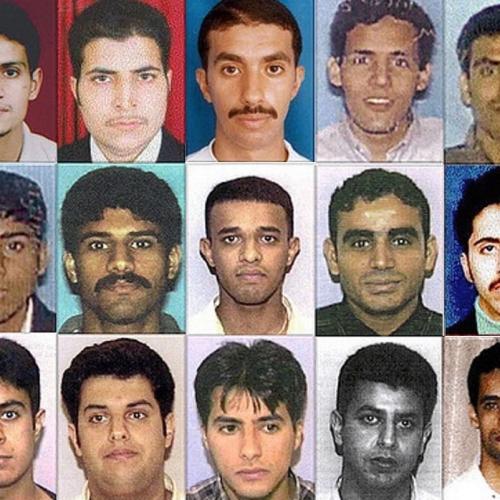
Those two names-al-Midhar and al-Hazmi-would resonate with intelligence officials on Sept. 11. Both men were listed among the hijackers of American Airlines Flight 77, the airliner that dive-bombed the Pentagon. Indeed, when one intelligence official saw the names on the list of suspects, he uttered an expletive. Just three weeks earlier, on Aug. 21, the CIA asked the INS to keep a watch out for al-Midhar. The INS reported that the man was already in the country; his only declared address was "Marriott Hotel" in New York. The CIA sent the FBI to find al-Midhar and his associate. The gumshoes were still looking on Sept. 11.
DISTURBING CLUES
At least one other name from the list of hijackers had shown up in the files of Western intelligence services: Mohamed Atta. He is an intriguing figure, both because of his role as the apparent senior man among the suicide hijackers, and because his background offers some disturbing clues about the high quality of bin Laden's recruits. The stereotype of an Islamic suicide bomber is that of a young man or teenage boy who has no job, no education, no prospects and no hope. He has been gulled into believing that if he straps a few sticks of dynamite around his waist and presses a button, he will stroll through the Gates of Paradise, where he will be bedded by virgins. Atta in no way matches that pathetic creature. He did not come from a poor or desperate fundamentalist family. His father, Mohamed, described himself to NEWSWEEK as "one of the most important lawyers in Cairo." The Atta family has a vacation home on the Mediterranean coast. Their Cairo apartment, with a sweeping view of downtown, is filled with ornate furniture and decorated with paintings of flamingos and women in head scarves.
If anything, Atta seemed like a prodigy of Western modernism. His two sisters are university professors with Ph.D.s. Atta won a bachelor's degree in Cairo in 1990 and went to Germany for graduate work in urban studies.
His thesis adviser in Hamburg, where he studied at the Technical University, called Atta "a dear human being." Only in retrospect does it appear ominous that in his thesis dedication he wrote "my life and my death belong to Allah, master of all worlds." Atta went to bars and rented videos ("Ace Ventura," "Storm of the Century"), but he also grew a beard and began to dress more in Islamic style. He spoke often of Egypt's "humiliation" by the West. While polite, he also could be haughty. He scorned women, refusing to shake their hands.
That was the only worry of Atta's proud father. "I started reminding him to get married," Atta senior recounted to NEWSWEEK, as he chain-smoked cigarettes ("American blend"). "Many times I asked him to marry a woman of any nationality-Turkish, German, Syrian-because he did not have a girlfriend like his colleagues. But he insisted he would marry an Egyptian. He was never touching woman, so how can he live?" In October 1999, "we found him a bride who was nice and delicate, the daughter of a former ambassador," said Atta senior. But Atta junior said he had to go back to Germany to finish his Ph.D. Actually, he was going to Florida to enroll in flight school.
During his years as a student in Hamburg, Atta would disappear for long periods of time-possibly, to meet with his handlers. U.S. intelligence believes that Atta met in Europe this year with a midlevel Iraqi intelligence official. The report immediately raised the question of Saddam Hussein's possible role in the Sept. 11 atrocity, but intelligence officials cautioned against reading too much into the link. Atta was in close communication with his superiors. On Sept. 4, one week before the bombing, he sent a package from a Kinko's in Hollywood, Fla., to a man named Mustafa Ahmed in the United Arab Emirates. "We don't know for sure what was in the package," said a senior U.S. official. "But Mustafa could be the key to bin Laden's finances. We're taking a hard look at him." (Several of the hijackers also wired money to Ahmed.) There are indications that Atta prepared very carefully for the attack, casing the airport in Boston and flying coast to coast on airliners. He may have had a backup plan: NEWSWEEK has learned that Atta had round-trip reservations between Baltimore and San Francisco in mid-October.
Atta's father refuses to accept his son's role as a suicide bomber. "It's impossible my son would participate in this attack," he said, claiming that he was a victim of a plot by Israeli intelligence to provoke the United States against Islam. "The Mossad kidnapped my son," said Atta. "He is the easiest person to kidnap, very surrendering, no physical power, no money for bodyguards. They used his name and identity... Then they killed him. This was done by the Mossad, using American pilots." Atta's rant was wild and sad-yet it was matched by the vituperations of the virulently anti-American Egyptian press, which spun fantastic plots featuring Mossad agents as the villains.
Atta appears to have been inseparable from another hijacker, Marwan al-Shehhi, up to the moment they parted ways at Logan airport on the morning of Sept. 11. The FBI believes that al-Shehhi piloted the second jetliner, United Airlines Flight 175, into the South Tower of the World Trade Center. Al-Shehhi and Atta roomed together in Florida and were tossed out of Jones Flying Service School for unprofessional behavior. (Instructors complained about their "attitude.") They signed up together for a one-month membership at a gym, the Delray Beach Health Club. They went to Las Vegas, where the FBI believes that several hijackers kept girlfriends. They ate American, but told the employees at Hungry Howie's to hold the ham when they ordered their favorite pizza, a pie with all the toppings called "The Works."
As investigators piece together the lives of the hijackers, details that once seemed innocuous now loom large. Ziad Samir Jarrahi, a Lebanese man, took martial-arts lessons at a Dania, Fla., gym. "What he wanted to study was street-fighting tactics-how to gain control over somebody with your hands, how to incapacitate someone with your hands," gym owner Bert Rodriguez told NEWSWEEK. Did Jarrahi use those tactics in the last, desperate struggle in the cockpit of Flight 93, which crashed in a field outside Pittsburgh? Top law-enforcement officials reported that the voice recorder from Flight 93 picked up sounds of Arab and American voices shouting as the plane went down. Some very brave passengers stormed the cockpit in a last-ditch effort to seize control of the plane. Did they encounter Jarrahi and his newly honed fighting skills?
'BOMB ONBOARD'
The available evidence suggests a death match. When the hijackers struck, at about 9:35 a.m., air-traffic controllers listening in on the frequency between the cockpit and the control center in Cleveland could hear screams, then a gap of 40 seconds with no sound, then more screams. Then, sources say, a nearly unintelligible voice said something like "Bomb onboard." The controllers tried to raise the captain but received no response. Then radar showed the plane turning sharply-toward Washington, D.C. A voice in thickly accented English said, "This is your captain. There is a bomb onboard. We are returning to the airport."
In the passenger cabin, there was bloodshed and fear. At least one passenger was dead, probably with his throat slashed. In the back of the plane, however, five men, all burly athletes, were plotting a rush at the hijackers. "We're going to do something," Todd Beamer told a GTE operator over the air phone. "I know I'm not going to get out of this." He asked the operator to say the Lord's Prayer with him. "Are you ready, guys?" he asked. "Let's roll." The cockpit voice recorder picked up someone, apparently a hijacker, screaming "Get out of here! Get out of here!" Then grunting, screaming and scuffling. Then silence.
Such stories of heroic struggle will be-and should be-told and retold in the years to come. But now investigators are groping with uncertainty, asking: Who else is still out there? And will they strike again? A congressional delegation to CIA headquarters last week reported that mattresses were strewn on the floors. The race is still on, round the clock. Some investigators were trying to follow the money. They learned that in the week before the Sept. 11 attack, the hijackers began sending small amounts of money back to their paymasters in the Middle East. "They were sending in their change," an intelligence source told NEWSWEEK. "They were going to a place where they wouldn't need money." The hijackers apparently didn't need all that much to begin with: law enforcement estimates that the entire plot, flight lessons and all, cost as little as $200,000. That is 10 times more than was spent on the first World Trade Center bombing, but still a low-enough sum so the money could be moved in small denominations among trusted agents. Still, Al Qaeda is reputed to be expert at money laundering. Last week the pressure was on banks all over the world to open up their books (and on the banking lobby in the United States to drop its opposition to new laws that would make it easier for investigators to follow the money). The trail is likely to lead in some diplomatically awkward directions. Moderate Arab regimes are said to try to buy off terrorists. Much of bin Laden's money has come from wealthy Saudis who ostensibly give to Islamic charities. Some of those charities resemble the "widows and orphans" funds the Irish Republican Army uses to finance its bomb making.
The money trail led investigators last week to a suspect whose background and motives could be the stuff of nightmares. Nabil al-Marabh, a former Boston taxi driver of Kuwaiti descent, is suspected of funneling thousands of dollars in wire transfer through Fleet Bank to the Middle East. The money was allegedly sent to a former Boston cabby implicated in a terrorist plot in Jordan that was foiled at the time of the millennium celebrations. At the same time, investigators say, al-Marabh may have exchanged phone calls with at least two of the Sept. 11 hijackers. Al-Marabh, who like a number of terrorists seems to have used Canada as a sometime sanctuary, was hard to track down. Canadian authorities first informed U.S. Customs about al-Marabh in July, and investigators opened a money-laundering probe. Last week the FBI raided an apartment in Detroit, where al-Marabh had been living. They found instead three men who had once worked as caterers at the Detroit airport (and kept their airport ID badges). In the apartment was a diagram of an airport runway and a day planner filled with notations in Arabic about "the American base in Turkey," the "American foreign minister" and the name of an airport in Jordan. The FBI arrested the men, but al-Marabh was at the time getting a duplicate driver's license at the state department of motor vehicles.
Not just any license. Al-Marabh's license would permit him to drive an 18-wheel truck containing hazardous materials. As it turned out, two of his housemates had also been going to school to learn how to drive large trucks. Carrying what, exactly? And heading where?
This story was written by Evan Thomas with reporting from Mark Hosenball, Michael Isikoff, Eleanor Clift and Daniel Klaidman in Washington, Peg Tyre in New York, Christopher Dickey in Paris, Andrew Murr, Joseph Contreras and John Lantigua in Florida, Karen Breslau in San Francisco, Sarah Downey in Minneapolis, Stefan Theil in Hamburg, Tom Masland in Dubai and Alan Zarembo in Cairo
© 2001 Newsweek, Inc.
FAIR USE NOTICE: This site contains copyrighted material the use of which has not always been specifically authorized by the copyright owner. We are making such material available in our efforts to advance understanding of criminal justice, political, human rights, economic, democracy, scientific, and social justice issues, etc. We believe this constitutes a 'fair use' of any such copyrighted material as provided for in section 107 of the US Copyright Law. In accordance with Title 17 U.S.C. Section 107, the material on this site is distributed without profit to those who have expressed a prior interest in receiving the included information for research and educational purposes. For more information go to: http://www.law.cornell.edu/uscode/17/107.shtml. If you wish to use copyrighted material from this site for purposes of your own that go beyond 'fair use', you must obtain permission from the copyright owner.
- Inform your media and political representatives of this vital information on 9/11. To contact those close to you, click here. Urge them to call for the release of classified documents and videos and to press for a new, impartial investigation.
- Explore the wealth of reliable, verifiable information on 9/11, including several excellent documentaries, in our 9/11 Information Center available here.
- Learn more about 9/11 and the secret societies likely involved in this powerful lesson from the free Insight Course.
- Explore inspiring ideas on building a brighter future by reading this short essay.
- Spread this news to your friends and colleagues, and recommend this article on key social networking websites so that we can fill the role at which the major media is sadly failing. Together, we can make a difference.
See our exceptional archive of revealing news articles.
Please support this important work: Donate here.
www.momentoflove.org - Every person in the world has a heart
www.personalgrowthcourses.net - Dynamic online courses powerfully expand your horizons
www.WantToKnow.info - Reliable, verifiable information on major cover-ups
www.weboflove.org - Strengthening the Web of Love that interconnects us all
Subscribe here to the WantToKnow.info email list (two messages a week)




