





























9/11 Hijackers Visited Strip Clubs, Smoked Hashish
http://www.newsweek.com/id/75613 - link to full original article
Note: As this article has disappeared at times from the Newsweek website, we include it here, though it may still be available at the link above. 9/11 summary statements are highlighted in bold.
A letter allegedly written by suspected ring leader, Mohammed Atta, may provide clues about the Sept. 11 attack
Cracking the Terror Code
From go-go clubs to Vegas, the plotters brought modern twists to an ancient mission. Now the Feds are following the money, wondering about Iraq–and worrying about what's next
By Evan Thomas
NEWSWEEK
Oct. 15 issue – On the night before they went out on a suicide mission to kill someone, the Assassins, the 12th-century cult of holy-warrior hit men, were given a taste of the Paradise that awaited. They smoked hashish (the word assassin derives from hashashin, users of hashish) and read in the Quran about the sensual rewards of martyrdom:
Spend eternity in gardens of tranquillity.
Youths of never-ending bloom will pass around to them decanters,
beakers full of sparkling wine ...
And suck fruits as they fancy.
Bird meats as they relish.
And companions with big beautiful eyes
Like pearls within their shells ...
Maybe that's what Majed Moqed was dreaming about late last summer
when he wandered into the Adult Lingerie Center, a grim cinder-block
building next to an auto-parts store in Beltsville, Md., sometime around
midnight. In addition to red thongs and crotchless panties, the Adult
Lingerie Center offers pornographic videos and books. But Moqed didn't
seem to be having much fun. He flipped through some magazines, looked at
the titles of some videos. Then, after about 10 minutes, he left. The
night manager figured him for a cop.
LOOKING FOR PATTERNS
It's hard to imagine that the dirty movie Moqed paid $3 to watch on
another night inspired him to give his life for Allah. But investigators
are having a hard time figuring out exactly what did. In a large room at
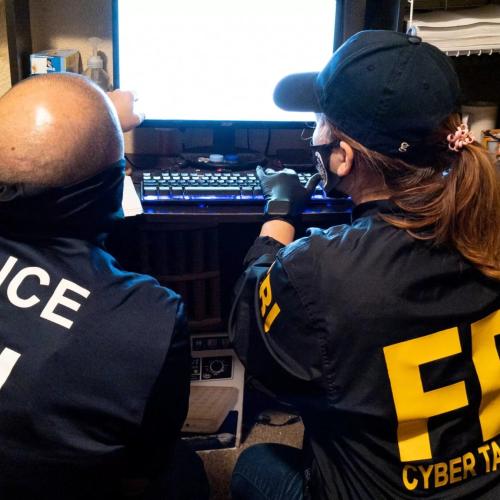
FBI headquarters in Washington, about a hundred analysts known as the
Links Unit are feeding raw data–phone bills, ATM receipts, fake IDs, odd
bits of Islamic verse, the testimony of Vegas strippers, the investigative
tidbits from a global manhunt–into banks of computers. They are looking
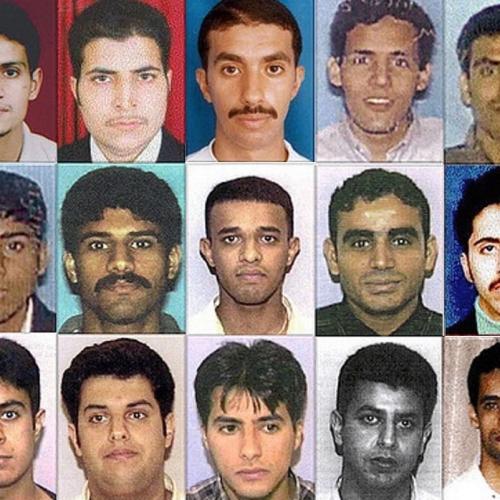
for patterns, examining the ties that bound Moqed and the 18 other suicide
hijackers to one another and to their shadowy masters. The G-men are not
just trying to solve a crime but hoping to avert another, bigger
catastrophe. Yet despite an impressive sense of urgency and an unusual
degree of cooperation between the historically wary CIA and FBI, the
investigators are making slow progress. In part they are having difficulty
following a well-concealed trail that weaves all over the world and far
back in time. And they are just plain stumped by the hellish nature of
their adversary.
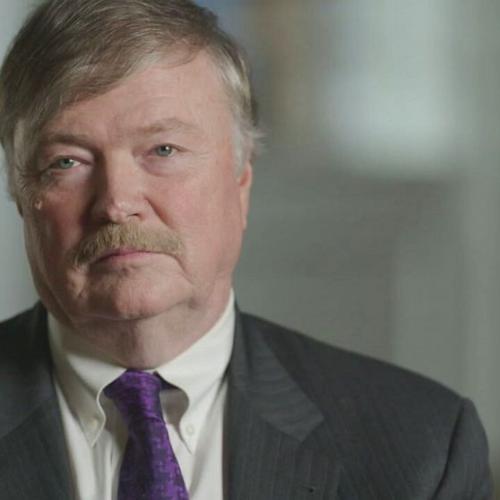
Consider the puzzle nagging at Charles Prouty, the chief of the
FBI's Boston office. Why, he wonders, did Mohamed Atta, the suspected
ringleader of the attack, and Abdulaziz Alomari make a quick side trip to
Portland, Maine, on the eve of the attack? Were they meeting with someone?
Were they trying to duck security at Logan airport? The two hijackers
nearly missed the connecting flight from Portland to Boston on the morning
of Sept. 11. (Their bags did miss the plane, giving investigators some
early clues.) They could have thrown off a plan that had been so carefully
plotted. An ex-Navy SEAL, Prouty told colleagues that it didn't make sense
for the hijackers to violate the standard rules of "op sec," military
lingo for "operational security."
But then again, Al Qaeda isn't the Navy SEALs. Americans were
chilled last week by the publication of a set of instructions, written by
hand in Arabic, found in Atta's luggage: "The Last Night," the document
reads. "1) Make an oath to die and renew your intentions. Shave excess
hair from the body and wear cologne. Shower..." On goes the assassins'
manual, a weird mix of hygiene for homicide and exhortation to stay
prayerful and focused, because the coming day will be "the day, God
willing, you spend with the women of Paradise."
A NEW BREED OF SUICIDE ATTACKER
Suicide squads are as old as the medieval Assassins and as modern
as the Japanese kamikaze pilots of World War II. What makes Al Qaeda
killers seem especially menacing is their apparent normalcy and
independence. Most of the Black Tuesday hijackers were not like the
Palestinian suicide bombers, poor losers brainwashed and bribed to strap
on a bomb and take a one-way bus ride to Allah. The half-dozen leaders
were educated and middle class. As pilots, several never did get the hang
of takeoffs and landings, but their navigation skills were perfect. They
depended more on the anonymity of American life than on their social
skills. Still, an examination of the plotters' path, as it has emerged
over the past month, reveals a mix of professionalism and fanaticism that
will make the next attack hard to stop.
The top plotters met last August in an odd location: Las Vegas.
They stayed in cheap hotels on a dreary stretch of the Strip frequented by
dope dealers and $10 street hookers. Perhaps they wished to be fortified
for their mission by visiting a shrine to American decadence. Or maybe
they just wanted a city that was easy to reach by air from their various
cells in Florida, New Jersey and San Diego. In the past, Al Qaeda has sent
a top lieutenant to trigger an attack and then slip away. FBI agents are
searching records for any Middle Eastern-looking man who visited Vegas in
August. The bureau is sure that six of the hijackers were present: the
four presumed pilots and two others, Nawaf Alhazmi, 25, and Khalid
Almihdhar, 26. These last two appear to have been an advance guard,
arriving in San Diego in the fall of 1999.
"They were nice." recalled their
– LANDLORD
The duo was remarkable for being unremarkable. They bought a car,
worked at odd jobs, obtained credit cards and insurance. "They were nice,"
recalled their landlord, Abdussattar Shaikh, though he did observe that
his tenants "went out to make their phone calls." The two men visited
strip clubs (Dancers and Cheetah's). Alhazmi apparently advertised,
unsuccessfully, for a Mexican bride. Shaikh remembers that Alhazmi was
"very caring" and even confiding: "He told me once that his father had
tried to kill him when he was a child. He never told me why, but he had a
long knife scar on his forearm." Almihdhar seems to have been a bit dimmer
and more standoffish. According to a flight instructor, Rick Garza,
Almihdhar drew the airplane wings backward in class. Garza, who described
the two as "Dumb and Dumber," said that Almihdhar and Alhazmi were
impatient students: "They wanted to bypass primary training and go right
to flying Boeings."
A QAEDA CONNECTION
The two terrorists may have been poor pilots, but they were well
connected: in January 2000 they were videotaped by Malaysian secret police
in Kuala Lumpur, meeting with a Qaeda operative who later emerged as a key
suspect in the bombing of the USS Cole. And to make up for their deficient
flying skills, Al Qaeda was able to provide reinforcements. In San Diego
the two were joined by Hani Hanjour, the man who, investigators believe,
eventually steered American Flight 77 into the Pentagon. The shy, devout
son of a well-to-do Saudi, Hanjour appears to have been the one true
"sleeper," living in the United States on and off for a decade and
starting flight school in the mid-'90s. He, too, was a poor flight
student, but he may have had a helping hand from his Qaeda bosses. It
appears that, in June, an Algerian pilot, Lotfi Raissi, came to the United
States to help train Hanjour on a jet simulator. (Raissi, now being held
in England, denies that he was in on the plot.)
No plotter moved around the world with more ease or frequency than
Mohamed Atta. In the months before the hijacking, he traveled to Zurich
(where he bought a couple of Swiss knives in the duty-free shop), Madrid
and Prague. In Spain last July he seems to have touched base with a ring
of Algerian terrorists. His meetings in Prague are more intriguing.
NEWSWEEK has learned that Atta met not once but twice with Iraqi
intelligence operatives, in June 2000 and again last April. The second
meeting was with Farouk Hijazi, Iraq's ambassador to Turkey, who was
called back to Baghdad before Sept. 11. One intelligence source called the
two meetings interesting but still far from proof of Iraqi involvement in
the plot.
While polite when necessary, Atta had a seething temper and an
almost pathological aversion to women. "I don't want any women to go to my
grave at all during the funeral or any occasion thereafter," Atta wrote in
a 1996 will. "I don't want a pregnant woman or a person who is not clean
to come and say goodbye to me," Atta wrote, adding, "the person who will
wash my body near the genitals must wear gloves on his hand so he won't
touch my genitals."
A SECOND WAVE?
This summer a second wave of hijackers slipped into the United
States. These men were the muscle: their job would be to slit the throats
of passengers and stab flight attendants (shouting "Allahu Akbar"–God is
great!–as they "slaughtered the animals," as their instructions put it).
Most stayed aloof. "You never heard them say a word," said Jamie Diaz, a
neighbor of some of the men in Paterson, N.J. The apartment shared by
hijacker brain as well as brawn in Paterson had no TV, no stereo, no
furniture, except for three smallish mattresses on the floor for as many
as six men. "Nobody ever saw them at mosques," said the city's mayor,
Marty Barnes. "But they liked the go-go clubs."
The Qaeda men living in New Jersey apparently did not use
electricity at times. A cost saver? Or Islamic asceticism? Investigators
following the money believe there was plenty of it–at least $500,000 to
finance the operation. But the money trail is well concealed. It leads
from well-known commercial banks to Dubai in the United Arab Emirates, a
financial fog bank. Investigators are looking for a paymaster named
Mustafa Ahmed, who appears to have at least 10 aliases, three dates of
birth, three Social Security numbers and four addresses in the United
States. He was last seen boarding a plane from Dubai to Kara-chi,
Pakistan, on Sept. 11. NEWSWEEK has learned that U.S. intelligence is
especially interested in bin Laden's possible dealings with a company once
known as Al Taqwa Management ("Al Taqwa" is Arabic for "the wrath of
God"). But the Swiss authorities have cleared Al Taqwa, which recently
changed its name to Nada Management. Already privacy-minded European
governments and banks are grousing about a "fishing expedition" and
balking at checking bank records against a list of more than 350 names
supplied by U.S. investigators.
The Sept. 11 plot was apparently planned abroad–but where? And by
whom? Investigators have ransacked the "terror apartment" in Hamburg,
Germany, that Atta shared with Ziad Samir Jarrah, one of the presumed
Sept. 11 suicide pilots, along with at least two other possible
conspirators now on the lam. One roommate, Said Bahaji, is believed to be
the hijackers' logistics man, providing passports, IDs, apartments. The
other, Ramzi bin al-Shib, tried and failed to get a visa for pilot
training in the United States; significantly, he received a phone call
sometime last summer from Zacarias Moussaoui, who was turned in to the
Feds by a suspicious flight instructor in Minnesota last August. Had the
FBI moved a little faster on Moussaoui, it's possible the Sept. 11 attack
might have been averted. FBI officials are still sorting out why a request
from the FBI's field office for permission to examine Moussaoui's computer
hard drive–just two weeks before the attack–was turned down by
headquarters, as reported by NEWSWEEK last week. The FBI knew from French
intelligence that Moussaoui was an Islamic extremist, but he wasn't
connected to any terror group–a prerequisite to getting a
national-security warrant. The FBI agents in Minneapolis then sought a
criminal warrant to search Moussaoui's computer. But they were again
turned down because current federal law prohibits the bureau from sharing
information in criminal probes with intelligence investigators. This
bureaucratic stumbling block is being cited by federal law-enforcement
officials as justification for easing the rules. After Sept. 11, gumshoes
found incriminating evidence on the hard drive, including instructions on
flying crop- dusters. Was Moussaoui planning some kind of chemical-weapon
attack? Now in jail, the French Moroccan isn't talking. His mother, Aicha,
interviewed over the phone by NEWSWEEK from her home in Narbonne, France,
lamented that her son had been "brainwashed" into becoming an Islamic
extremist. As a child, "he never cried or made a fuss," she said. "He
didn't wake me up at night, and he was always laughing." But when teachers
at his school told Moussaoui that he would be better off going to trade
school, "he began to rebel." He started smoking hash and watching porn
movies. "I'm glad that he didn't participate in the attacks," she said.
"Maybe I'll write him a letter." She paused. "I don't know where to send
it. I don't know anything now," she said. The FBI and CIA are going to
have to know a whole lot more to stop the next attack.
With Pat Wingert, Michael Isikoff and Daniel Klaidman in Washington,
Andrew Murr in Los Angeles, Jamie Reno in San Diego, Ana Figueroa in Las
Vegas, Sarah Downey in Minnesota, Kevin Peraino and Babak Dehghanpisheh in
Paterson, Tara Pepper in London, Scott Johnson in Paris and Mark
Hosenball, Christian Caryl and Stefan Theil in Germany
Cracking the Terror Code
1 of 2
1. Cracking the Terror Code
2. Next: The Battle Plan
© 2003 Newsweek, Inc.
FAIR USE NOTICE: This site contains copyrighted material the use of which has not always been specifically authorized by the copyright owner. We are making such material available in our efforts to advance understanding of criminal justice, political, human rights, economic, democracy, scientific, and social justice issues, etc. We believe this constitutes a 'fair use' of any such copyrighted material as provided for in section 107 of the US Copyright Law. In accordance with Title 17 U.S.C. Section 107, the material on this site is distributed without profit to those who have expressed a prior interest in receiving the included information for research and educational purposes. For more information go to: http://www.law.cornell.edu/uscode/17/107.shtml. If you wish to use copyrighted material from this site for purposes of your own that go beyond 'fair use', you must obtain permission from the copyright owner.
- Inform your media and political representatives of this vital information on 9/11. To contact those close to you, click here. Urge them to call for the release of classified documents and videos and to press for a new, impartial investigation.
- Explore the wealth of reliable, verifiable information on 9/11, including several excellent documentaries, in our 9/11 Information Center available here.
- Learn more about 9/11 and the secret societies likely involved in this powerful lesson from the free Insight Course.
- Explore inspiring ideas on building a brighter future by reading this short essay.
- Spread this news to your friends and colleagues, and recommend this article on key social networking websites so that we can fill the role at which the major media is sadly failing. Together, we can make a difference.
See our exceptional archive of revealing news articles.
Please support this important work: Donate here.
www.momentoflove.org - Every person in the world has a heart
www.personalgrowthcourses.net - Dynamic online courses powerfully expand your horizons
www.WantToKnow.info - Reliable, verifiable information on major cover-ups
www.weboflove.org - Strengthening the Web of Love that interconnects us all
Subscribe here to the WantToKnow.info email list (two messages a week)




