





























9/11 Cover-up Document
This
Article Now Very Difficult to Access
Free Copy Given Below
Before July 2003, you could download this article for $9.80 through the Wall Street Journal news library. The new search engine installed on their website, however, now makes it very difficult to find archived articles. For this reason, we are providing a link to the article which we downloaded before the change. To see the original archived article, click here. We also provide a free copy of the text below.
Politics & Policy
Intelligence Agencies Knew of Airplane Terror Threats, Report Says
By Nicholas Kulish
09/19/2002
The Wall Street Journal
Page A5
(Copyright (c) 2002, Dow Jones & Company, Inc.)
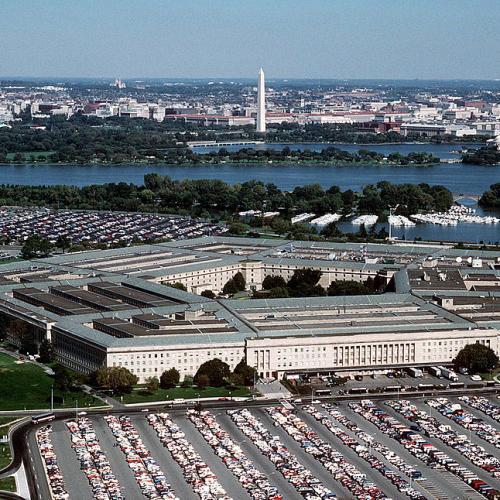
WASHINGTON -- Intelligence agencies were aware of numerous threats that terrorists might use airplanes as weapons against the U.S., despite government claims following Sept. 11 that the World Trade Center and Pentagon attacks came like bolts from the blue.
More than a year after the four hijackings, the joint House and Senate intelligence committees held their first public hearing yesterday into intelligence failures leading up to the attacks, detailing intelligence available before the assault.
Based on the comments of several lawmakers, interest appears to be growing for the appointment of an independent commission to delve further into the roots of the attacks and the efforts -- or lack thereof -- to protect the U.S. beforehand. Meanwhile, the two panels will continue their probe into what went wrong and whether it could have been avoided.
A 30-page report they released yesterday showed intelligence officials knew last summer that al Qaeda both hoped to use planes as weapons and sought to strike a violent blow within the U.S. But the investigation has yet to yield direct intelligence that would show with any certainty that the disaster could have been averted.
"From 1994 through as late as August 2001, the intelligence community had received information indicating that international terrorists had seriously considered the use of airplanes as a means of carrying out terrorist attacks," said the report, which was compiled from more than 400 interviews and after reviewing 400,000 pages of documents.
Much if not all of the report's findings already have been reported, however, as information filtered out of the closed-door hearings held by the panels earlier this year.
"These public hearings are part of our search for the truth -- not to point fingers or pin blame," said Sen. Bob Graham (D., Fla.), chairman of the Senate intelligence Committee. He added, though, that more probes are to come.
The top Republican on the Senate panel, Richard Shelby of Alabama, had harsher words, calling the attacks "an intelligence failure of unprecedented magnitude." He also questioned whether congressional investigators had sufficient time or resources to complete a full accounting of any intelligence failures.
For example, the report detailed examples of intelligence showing Osama bin Laden intended to carry out a strike inside U.S. borders, including an August 1998 report that "a group of unidentified Arabs planned to fly an explosive-laden plane from a foreign country into the World Trade Center." The Federal Bureau of Investigation relayed the information to the Federal Aviation Administration, which deemed the plot unlikely, the report said.
While there were signs of an impending attack, officials say there was never anything specific enough to act on.
"All of this seems more apparent with the benefit of 20-20 hindsight," said one U.S. intelligence official. At the same time, the report "certainly points to the CIA and intelligence community having reported on the seriousness and the immediacy of the threat posed by bin Laden and al Qaeda," the official said.
FAIR USE NOTICE: This site contains copyrighted material the use of which has not always been specifically authorized by the copyright owner. We are making such material available in our efforts to advance understanding of criminal justice, political, human rights, economic, democracy, scientific, and social justice issues, etc. We believe this constitutes a 'fair use' of any such copyrighted material as provided for in section 107 of the US Copyright Law. In accordance with Title 17 U.S.C. Section 107, the material on this site is distributed without profit to those who have expressed a prior interest in receiving the included information for research and educational purposes. For more information go to: http://www.law.cornell.edu/uscode/17/107.shtml. If you wish to use copyrighted material from this site for purposes of your own that go beyond 'fair use', you must obtain permission from the copyright owner.
- Inform your media and political representatives of this vital information on 9/11. To contact those close to you, click here. Urge them to call for the release of classified documents and videos and to press for a new, impartial investigation.
- Explore the wealth of reliable, verifiable information on 9/11, including several excellent documentaries, in our 9/11 Information Center available here.
- Learn more about 9/11 and the secret societies likely involved in this powerful lesson from the free Insight Course.
- Explore inspiring ideas on building a brighter future by reading this short essay.
- Spread this news to your friends and colleagues, and recommend this article on key social networking websites so that we can fill the role at which the major media is sadly failing. Together, we can make a difference.
See our exceptional archive of revealing news articles.
Please support this important work: Donate here.
www.momentoflove.org - Every person in the world has a heart
www.personalgrowthcourses.net - Dynamic online courses powerfully expand your horizons
www.WantToKnow.info - Reliable, verifiable information on major cover-ups
www.weboflove.org - Strengthening the Web of Love that interconnects us all
Subscribe here to the WantToKnow.info email list (two messages a week)