





















































Pharmaceutical
Industry Cover-up
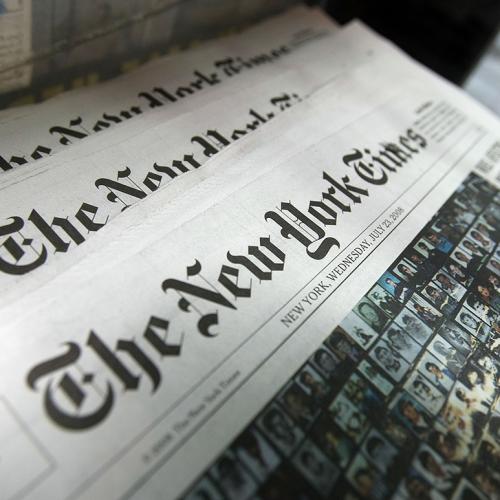
Revealed in New York Times
"When the drug industry
came under fire last summer for failing to disclose poor results from studies
of antidepressants, major drug makers promised to provide more information
about their research on new medicines. But nearly a year later, crucial facts
about many clinical trials remain hidden"
--
New York Times, 5/31/05
Dear friends,
The pharmaceutical industry is the most profitable industry on the stock market. Dr. Marcia Angell, former editor in chief of the prestigious New England Journal of Medicine, has stated, "The combined profits for the ten drug companies in the Fortune 500 ($35.9 billion) were more than the profits for all the other 490 businesses put together ($33.7 billion)." Click here to read about the highly revealing book she's written on the pharmaceutical industry cover-up. Wherever we find huge profits, unfortunately huge cover-ups are often not far behind.
The below New York Times article exposes the efforts of a number of major players in the pharmaceutical industry to hide or cover up the results of studies they used to obtain approval for drugs released for public consumption. One major company agreed to a settlement of $2.5 million for hiding the results of a study which showed their widely used drug, Paxil, could cause suicidal thoughts in children. Let us work towards a brighter future by first examining the places within ourselves where greed causes us to lose integrity. Then, let us also call on all businesses and industries to place integrity and honesty above profit. You take care and have a good day!
With best
wishes,
Fred Burks for WantToKnow.info
http://www.nytimes.com/2005/05/31/business/31trials.html
Despite Vow, Drug Makers Still Withhold Data
By ALEX BERENSON
Published: May 31, 2005
When the drug industry came under fire last summer for failing to disclose poor results from studies of antidepressants, major drug makers promised to provide more information about their research on new medicines. But nearly a year later, crucial facts about many clinical trials remain hidden, scientists independent of the companies say.
Within the drug industry, companies are sharply divided about how much information to reveal, both about new studies and completed studies for drugs already being sold. The split is unusual in the industry, where companies generally take similar stands on regulatory issues.
Eli Lilly and some other companies have posted hundreds of trial results on the Web and pledged to disclose all results for all drugs they sell. But other drug makers, including Merck and Pfizer, release less information and are reluctant to add more, citing competitive pressures.
As a result, doctors and patients lack critical information about important drugs, academic researchers say, and the companies can hide negative trial results by refusing to publish studies, or by cherry-picking and highlighting the most favorable data from studies they do publish.
"There are a lot of public statements from drug companies saying that they support the registration of clinical trials or the dissemination of trial results, but the devil is in the details," said Dr. Deborah Zarin, director of clinicaltrials.gov, a Web site financed by the National Institutes of Health that tracks many studies.
Journal editors and academic scientists have pressed big drug makers to release more information about their studies for years. But the calls for more disclosure grew stronger after reports last year that several companies had failed to publish studies that showed their antidepressants worked no better than placebos.
In August, GlaxoSmithKline agreed to pay $2.5 million to settle a suit by Eliot Spitzer, the New York attorney general, alleging that Glaxo had hidden results from trials showing that its antidepressant Paxil might increase suicidal thoughts in children and teenagers. At a House hearing in September, Republican and Democratic lawmakers excoriated executives from several top companies, including Pfizer and Wyeth, for hiding study results. In response, many companies promised to do better.
At the same time, Merck and Pfizer have been criticized for failing to disclose until this year clinical trial results that indicated that cox-2 painkillers like Vioxx might be dangerous to the heart.
Drug makers test their medicines in thousands of trials each year, and federal laws require the disclosure of all trials and trial results to the F.D.A. While too complex for many patients to understand, the trial results are useful to doctors and academic scientists, who use them to compare drugs and look for clues to possible side effects. But companies are not required to disclose trial results to scientists or the public.
Some scientists and lawmakers say new rules are needed, and a bill that would require the companies to provide more data was introduced in the Senate in February. So far no hearings have been scheduled on the legislation. The bill's prospects are uncertain, said a co-sponsor, Senator Christopher J. Dodd, Democrat of Connecticut.
The drug makers have been criticized both for failing to provide advance notice of clinical trials before they begin and for refusing to publish completed trial results for medicines that are already being sold.
The two issues are related, because companies cannot easily hide the results of trials that have been disclosed in advance, said Dr. Alan Breier, chief medical officer of Lilly, the company that has gone furthest in disclosing results.
"You're registering a trial - at some point, the results have got to show up," Dr. Breier said. He added that disclosing trial results was important both to give doctors and patients as much information as possible and to improve the industry's reputation, which has been damaged by several recent withdrawals of high-profile drugs.
"Fundamentally, what we're doing is in the interest of patients, and I think that that is the winning model, for academia, for industry and for the future," he said.
In September, Pharmaceutical Research and Manufacturers of America, an industry lobbying group known as PhRMA, said it would create a site for companies to post the results of completed trials. Then, under pressure from the editors of medical journals, the major drug companies in January agreed to expand the number of trials registered on clinicaltrials.gov, the N.I.H. site, which was originally created so patients with life-threatening diseases could find out about clinical trials.
But Merck, Pfizer and GlaxoSmithKline, three of the six largest drug companies, have met the letter but not the spirit of that agreement, Dr. Zarin said.
The three companies have filed only vague descriptions of many studies, often failing even to name the drugs under investigation, Dr. Zarin said. For example, Merck describes one trial as a "one-year study of an investigational drug in obese patients."
Drug names are crucial, because the clinicaltrials.gov registry is designed in part to prevent companies from conducting several trials of a drug, then publicizing the trials with positive results while hiding the negative ones. If the descriptions do not include drug names, it is hard to tell how many times a drug has been studied.
"If you're a systematic reviewer trying to understand all the results for a particular drug, you might never know," Dr. Zarin said. "You don't know whether you're seeing the one positive result and not the four negative results - you don't have context."
Pfizer, Merck and GlaxoSmithKline say that they disclose their largest trials, which determine whether a drug will be approved. Though they would not discuss their policies in detail, executives and press representatives at the companies said generally that disclosing too much information about early-stage trials might reveal business or scientific secrets.
Rick Koenig, a spokesman for Glaxo, said the company understood the concerns about disclosure and planned to add more information to clinicaltrials.gov. He declined to be more specific, saying Glaxo and other companies were discussing the issue with regulators and medical journal editors.
In contrast, Lilly has registered all but its smallest trials at clinicaltrials.gov. Dr. Breier of Lilly said the company believed that it could protect its intellectual property and still increase the amount of information it released.
Lilly has also posted the results of many completed studies to clinicalstudyresults.org, the Web site created last September by PhRMA. That site now contains some information on nearly 80 drugs that are already on the market. Both Lilly and Glaxo have posted detailed summaries of hundreds of studies.
Pfizer, on the other hand, has posted only a few, and Merck has posted none.
All the companies were meeting the group's guidelines for the site, said Dr. Alan Goldhammer, associate vice president for regulatory affairs at PhRMA. The lobbying group requires only that its members post a notice that a trial has been completed and a link to a published study or a summary of an unpublished study, he said. Studies completed before October 2002 are exempt from the requirements, and PhRMA has not set penalties for companies that do not comply.
"We're seeing pretty regular posting on a weekly basis, and as best we can assess right now, things are on track for meeting the goal we and our members set for ourselves," Dr. Goldhammer said.
The continued gaps in disclosure have caused some lawmakers to call for new federal laws. The bill introduced in February by Mr. Dodd and Senator Charles E. Grassley, Republican of Iowa, would convert clinicaltrials.gov into a national registry for both new trials and results and impose civil penalties of up to $10,000 a day for companies that hide trial data. But Mr. Dodd said that the chances the bill would pass in this Congress were even at best.
"I haven't had that pat on the back saying, 'This is a great idea, let's get going on this as fast as we can,' " Mr. Dodd said.
Dr. David Fassler, a psychiatry professor at the University of Vermont and a longtime proponent of more disclosure, said that trial reporting had improved in the last two years. But he said that a central federally run site, as opposed to the current mix of government and industry efforts, was the only long-term solution.
Note: For more on this vital topic, see our highly informative Health
Information Center.
Finding Balance: WantToKnow.info Inspiration Center
WantToKnow.info believes it is important to balance disturbing cover-up information with inspirational writings which call us to be all that we can be and to work together for positive change. For an abundance of uplifting material, please visit our Inspiration Center.
See our exceptional archive of revealing news articles.
Please support this important work: Donate here
www.momentoflove.org - Every person in the world has a heart
www.personalgrowthcourses.net - Dynamic online courses powerfully expand your horizons
www.WantToKnow.info - Reliable, verifiable information on major cover-ups
www.weboflove.org - Strengthening the Web of Love that interconnects us all
Subscribe to the WantToKnow.info email list (two messages a week)
Pharmaceutical Industry Cover-up