











































AIDS Spread Linked to Smallpox Vaccine
London Times Website Requires Payment to View
Article
on possible link between AIDS and Smallpox Vaccine
Free Copy Given Below

The London Times website requires payment to view their article linking the smallpox vaccine to the spread of the AIDS virus, though we provided the article free below. You must pay a fee by credit card on line in order to be able to view or download this article directly from the London Times website. To purchase the article, go to:
http://www.thetimes.co.uk/tto/archive/
In the free copy of the article provided below, sections most revealing of the AIDS to smallpox vaccine link have been highlighted in bold face for your viewing convenience.
London
Times
Edition 1 MON 11 MAY 1987
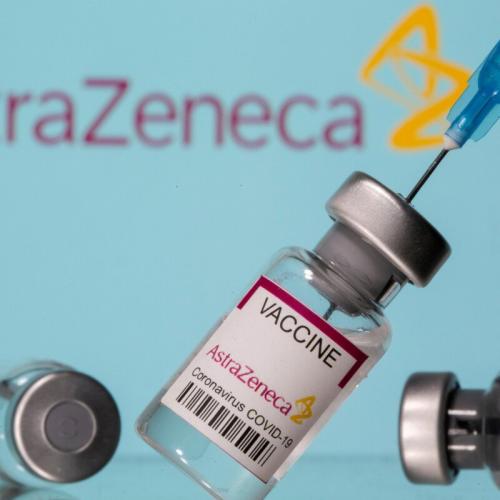
Smallpox vaccine 'triggered Aids virus'
BY PEARCE WRIGHT, SCIENCE EDITOR
The Aids epidemic may have been triggered by the mass vaccination campaign which eradicated smallpox. The World Health Organization, which masterminded the 13-year campaign, is studying new scientific evidence suggesting that immunization with the smallpox vaccine Vaccinia awakened the unsuspected, dormant human immuno defence virus infection (HIV).
Some experts fear that in obliterating one disease, another disease was transformed from a minor endemic illness of the Third World into the current pandemic. While doctors now accept that Vaccinia can activate other viruses, they are divided about whether it was the main catalyst to the Aids epidemic.
But an adviser to WHO who disclosed the problem, told The Times: 'I thought it was just a coincidence until we studied the latest findings about the reactions which can be caused by Vaccinia. Now I believe the smallpox vaccine theory is the explanation to the explosion of Aids.' 'In obliterating one disease, another was transformed.'
Further evidence comes from the Walter Reed Army Medical Centre in Washington. While smallpox vaccine is no longer kept for public health purposes, new recruits to the American armed services are immunized as a precaution against possible biological warfare. Routine vaccination of a 19-year-old recruit was the trigger for stimulation of dormant HIV virus into Aids.
This discovery of how people with subclinical HIV infection are at risk of rapid development of Aids as a vaccine-induced disease was made by a medical team working with Dr Robert Redfield at Walter Reed. The recruit who developed Aids after vaccination had been healthy throughout high school. He was given multiple immunizations, followed by his first smallpox vaccination.
Two and a half weeks later he developed fever, headaches, neck stiffness and night sweats. Three weeks later he was admitted to Walter Reed suffering from meningitis and rapidly developed further symptoms of Aids and died after responding for a short time to treatment. There was no evidence that the recruit had been involved in any homosexual activity.
In describing their discovery in a paper published in the New England Journal of Medicine a fortnight ago, the Walter Reed team gave a warning against a plan to use modified versions of the smallpox vaccine to combat other diseases in developing countries.
Other doctors who accept the connection between the anti-smallpox campaign and the Aids epidemic now see answers to questions which had baffled them. How, for instance, the Aids organism, previously regarded by scientists as 'weak, slow and vulnerable,' began to behave like a type capable of creating a plague.
Many experts are reluctant to support the theory publicly because they believe it would be interpreted unfairly as criticism of WHO. In addition, they are concerned about the impact on other public health campaigns with vaccines, such as against diptheria and the continued use of Vaccinia in potential Aids research.
The coincidence between the anti-smallpox campaign and the rise of Aids was discussed privately last year by experts at WHO. The possibility was dismissed on grounds of unsatisfactory evidence. Advisors to the organization believed then that too much attention was being focussed on Aids by the media.
It is now felt that doubts would have risen sooner if public health authorities in Africa had more willingly reported infection statistics to WHO. Instead, some African countries continued to ignore the existence of Aids even after US doctors alerted the world when the infection spread to the United States.
However, as epidemiologists gleaned more information about Aids from reluctant Central African countries, clues began to emerge from the new findings when examined against the wealth of detail known about smallpox as recorded in the Final Report of the Global Commission for the Certification of Smallpox Eradication.
The smallpox vaccine theory would account for the position of each of the seven Central African states which top the league table of most-affected countries; why Brazil became the most afflicted Latin American country; and how Haiti became the route for the spread of Aids to the US. It also provides an explanation of how the infection was spread more evenly between males and females in Africa than in the West and why there is less sign of infection among five to 11-year-olds in Central Africa.
Although no detailed figures are available, WHO information indicated that the Aids league table of Central Africa matches the concentration of vaccinations. The greatest spread of HIV infection coincides with the most intense immunization programmes, with the number of people immunised being as follows: Zaire 36,878,000; Zambia 19,060,000; Tanzania 14,972,000; Uganda 11,616,000; Malawai 8,118,000; Ruanda 3,382,000 and Burundi 3,274,000.
Brazil, the only South American country covered in the eradication campaign, has the highest incidence of Aids in that region. About 14,000 Haitians, on United Nations secondment to Central Africa, were covered in the campaign. They began to return home at a time when Haiti had become a popular playground for San Francisco homosexuals.
Dr Robert Gello, who first identified the Aids virus in the US, told The Times: 'The link between the WHO programme and the epidemic in Africa is an interesting and important hypothesis. 'I cannot say that it actually happened, but I have been saying for some years that the use of live vaccines such as that used for smallpox can activate a dormant infection such as HIV. 'No blame can be attached to WHO, but if the hypothesis is correct it is a tragic situation and a warning that we cannot ignore.'
Aids was first officially reported from San Francisco in 1981 and it was about two years later before Central African states were implicated. It is now known that these states had become a reservoir of Aids as long ago as the later 1970s.
Although detailed figures of Aids cases in Africa are difficult to collect, the more than two million carriers, and 50,000 deaths, estimated by the World Health Organization are concentrated in the Countries where the smallpox immunization programme was most intensive. The 13-year eradication campaign ended in 1980, with the saving of two million lives a year and 15 million infections. The global saving from eradication has been put at dollars 1,000 million a year.
Charity and health workers are convinced that millions of new Aids cases are about to hit southern Africa. After a meeting of 50 experts near Geneva this month it was revealed that up to 75 million, one third of the population, could have the disease within the next five years.
Some organizations which have closely studied Africa, such as War on Want, believe that South Africa's black population, so far largely protected from the disease, could be most affected as migrant workers bring it into the country from the worst hit areas further north. The apartheid policy, they predict, will intensify its outbreak by confining the groups into comparatively small, highly populated towns where it will be almost impossible to contain its spread.
FAIR USE NOTICE: This site contains copyrighted material the use of which has not always been specifically authorized by the copyright owner. We are making such material available in our efforts to advance understanding of criminal justice, political, human rights, economic, democracy, scientific, and social justice issues, etc. We believe this constitutes a 'fair use' of any such copyrighted material as provided for in section 107 of the US Copyright Law. In accordance with Title 17 U.S.C. Section 107, the material on this site is distributed without profit to those who have expressed a prior interest in receiving the included information for research and educational purposes. For more information go to: http://www.law.cornell.edu/uscode/17/107.shtml. If you wish to use copyrighted material from this site for purposes of your own that go beyond 'fair use', you must obtain permission from the copyright owner.
Health Cover-up Information Center