






























9/11 Cover-up Document
Time Website Requires
Payment to View Article
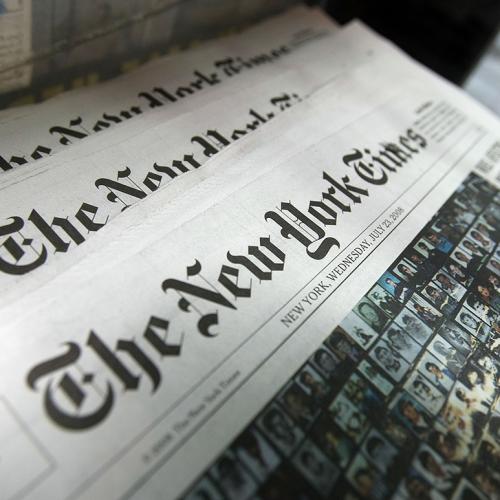
Free Copy Given Below
This is one of the documents on the 9/11 summary for which the media website requires payment. You must pay a small fee by credit card on line in order to be able to download this document from the Time website. Go to:
http://www.time.com/time/magazine/archives/advanced
In the search box, type "Inside the Hunt". Then click the circle titled "Date range" and type in December 21, 1998 in both the "From" and "To" dates. We provide a free copy of the article below. The text mentioned in the 9/11 timeline has been highlighted for your viewing convenience.
Dec. 21, 1998
Inside The Hunt For Osama
The Feds have tailed the Saudi and his secret network for years. So why didn't they stop the Africa bombings?
The exercise was code-named Poised Response. Attorney General Janet Reno had invited 200 policemen from the Washington metropolitan area to the FBI's headquarters last Oct. 14 to plan how they'd react to a terrorist attack in the nation's capital. They settled in that Wednesday morning to consider four scenarios: a car-bomb attack, a chemical-weapons strike on a Washington Redskins football game, the planting of an explosive device in a federal building and an assassination attempt on Madeleine Albright, the Secretary of State. But the war game--intended to help the agencies practice working together--quickly melted down into interagency squabbling and finger pointing.
Reno left the session feeling uneasy--understandably so, say Administration officials. Poised Response was anything but poised. And while the cops involved were never told which terrorist might carry out such an audacious attack, Reno and other top Administration aides had one man in mind: Osama bin Laden, whose Afghan camp had been blasted by U.S. cruise missiles two months earlier. His operatives might be coming to town soon. Intelligence sources tell TIME they have evidence that bin Laden may be planning his boldest move yet--a strike on Washington or possibly New York City in an eye-for-an-eye retaliation. "We've hit his headquarters, now he hits ours," says a State Department aide.
The hand-wringing and brainstorming are part of what Albright calls "the war of the future"--a battle in which the foot soldiers are elusive terrorists and the agents are in pursuit. The enemy in this case is a 41-year-old Goldfinger with a bank account of $100 million to $300 million, a far-flung network of cohorts and a fiery hatred for the U.S., which he badly wants out of Saudi Arabia, his homeland. The bloodiest round of this new war came on Aug. 7 when bin Laden's agents allegedly bombed U.S. embassies in Kenya and Tanzania, killing 224 people, 12 of them Americans.
Those simultaneous attacks were the most devastating terror assault the U.S. has suffered overseas since the bombing of the Marine barracks in Beirut in 1983. Though Washington retaliated 13 days later, with cruise-missile strikes at Osama's base in Afghanistan, U.S. officials are still licking their wounds. The bin Laden attacks came despite a four-year secret campaign by the U.S. government to contain and control his activities--a frustrating war of attrition in which Washington has both won and lost battles. American agents have tracked, arrested and interrogated members of Osama's terror cells in dozens of countries. Now two government inquiries--one by the CIA's inspector general, the other by a State Department Accountability Review Board--have begun to raise a troubling question: Could the East Africa attacks have been prevented?
The targeting of Osama's network began in earnest almost two years after the 1993 World Trade Center bombing, which killed six people and injured more than 1,000. On a chilly, clear February night in 1995, a helicopter soared over the Hudson River to the FBI's office at New York City's Federal Plaza. Sitting blindfolded in the chopper next to the bureau's Lewis Schiliro was Ramzi Yousef, the mastermind of the Trade Center attack, who had just been nabbed in Pakistan. During the transatlantic leg of the flight back to the U.S., Yousef had bragged that his original plan had been to plant enough explosives in one of the 110-story twin buildings to topple it, killing maybe 250,000 people in the tower and on the ground. But his shoestring operation couldn't afford enough dynamite, and settled for a much smaller blast.
As the chopper neared the Trade Center, agents removed Yousef's blindfold. "See?" said one. "It's still standing." Yousef squinted at the high-rise. "Next time, if I have more money," he finally said, "I'll knock it down."
Schiliro, who's now running the FBI's investigation of the Africa bombings, remembers feeling a chill run through his body. His fellow agents had already discovered that the terrorist now had the cash to back up his threat. Yousef apparently had a benefactor, a wealthy Saudi expatriate named Osama bin Laden, who in the 1980s had bankrolled mujahedin guerrillas fighting the Soviets in Afghanistan and who had fled his Saudi homeland after he had been charged with inciting fundamentalist opposition to the country's royal family.
Until then, the FBI and the CIA considered bin Laden, son of a Saudi construction magnate, to be a "Gucci terrorist" with a fat wallet and a big mouth. His followers were a loosely bound group of former Afghan freedom fighters called al Qaeda, meaning (military) base. But bin Laden was moving into the big leagues. Al Qaeda operatives or sympathizers are accused of attacking American soldiers in Somalia, Yemen and Saudi Arabia. They had plans to kidnap U.S. military personnel in the Persian Gulf, and they might have U.S.-made Stinger missiles left over from the Afghan war. Worse, intelligence officials discovered that by 1993 bin Laden had begun hunting for nuclear weapons. First on his shopping list was a Russian nuclear warhead he hoped to buy on the black market. He abandoned that effort when no warhead could be found. Instead, his agents began scouring former Soviet republics for enriched uranium and weapons components that could be used to set off the fuel.
Fortunately, "Osama's buyers weren't physicists, and the people selling to him were trying to rip him off," says an Energy Department official. The enriched uranium they were offered turned out to be low-grade reactor fuel unusable for a weapon. Another con man tried to sell them radioactive garbage, claiming it was "red mercury," a supposedly lethal Russian bomb the CIA says never existed. Frustrated, bin Laden instead settled on chemical weapons, which are easier to manufacture. Although U.S. intelligence officials have been unable to pinpoint hidden caches, they suspect that during a five-year stay in Sudan before moving to Afghanistan in 1996, bin Laden tested, with the help of Sudanese officials, nerve agents that would be dispensed from bombs or artillery shells.
By the end of 1995 President Clinton signed a top-secret order, approved by the congressional intelligence committees, that authorized the CIA to begin covert operations to break up bin Laden's terror network. The agency's counterterrorism center--200 operatives housed in a windowless warren of cubicles in the CIA's Langley, Va., headquarters--had set up a special bin Laden task force. Analysts were assigned to read every word the Saudi had spoken or written. Computers with sophisticated "link analysis" programs were busy printing out diagrams of bin Laden's loose-knit network, which included thousands of Muslim fighters with varying degrees of allegiance to him in almost a dozen countries. In early 1996, intelligence sources tell TIME, the CIA also began making plans to "snatch" Osama from a foreign country and bring him to the U.S. for trial. But bin Laden avoided some of the nations where the U.S. was waiting to pounce--including Qatar and Kuwait.
With bin Laden out of reach, the CIA launched a secret program to harass his network. Using its own informants plus the counterterrorism center's computers, which tracks passports worldwide, the CIA would spot bin Laden operatives in foreign countries, then quietly enlist the local security service to arrest or deport them and allow the agency to sift through materials left in their apartments. In many cases, the CIA didn't know "exactly what each person was doing," says an intelligence official, "just that he was doing something with a terror organization, so we should disrupt it."
One operation would produce clues that led to another. For example, a CIA analyst perusing a slip of paper scooped up in one raid realized that scribbled on it was part of a phone number for a bin Laden cell in another country. That cell became the next target and yielded another round of evidence.
The CIA had a similar "disruption operation" under way in Kenya a year before the bombing. The agency's station in Nairobi is one of the busiest in Africa, responsible for keeping watch as well on the war-torn countries of Somalia, Sudan, Rwanda and the Democratic Republic of Congo. In Kenya, CIA and embassy security officers believed the biggest threat to Americans was common crime. But the risk of terror lurked below the surface. Nairobi had become a transit stop for Iranian and Sudanese intelligence agents. Along the country's Indian Ocean coast were Kenyan veterans of the Afghan war that bin Laden agents had been recruiting.
By August 1997 the CIA had identified a bin Laden cell operating in Nairobi. The agency believed it was headed by Wadih el Hage, a Lebanese who held American citizenship and who, according to court documents, once served as bin Laden's personal secretary. Washington sent a secret request to Kenyan authorities in Nairobi: roust Wadih el Hage. For several weeks Kenyan police, sometimes accompanied by visiting FBI agents, began paying visits to el Hage's Nairobi home, searching its rooms, confiscating computer disks and darkly warning him that he'd face more hassling if he remained in the country.
The raids never uncovered a list of operatives in the cell but did rattle many of the members. One typed on el Hage's computer a "security report" to a senior bin Laden aide complaining that "the cell is at 100% danger" because of hostile intelligence agencies. FBI agents believe the report's author was Abdullah Mohammed Fazul, whom the CIA at the time had identified only as a distant associate of el Hage's. He was later accused of being a key planner of the embassy bombings the next year. El Hage moved with his family to Texas, where he lived and worked as a tire repairman until he was charged this fall with conspiracy in the Africa bombings.
Meanwhile, the CIA station conducted another covert operation in Kenya. It was prompted by a tipster who walked into the Nairobi embassy in September 1997 and claimed that seven Arabs who worked for a local Islamic charity had connections with a bin Laden terror group. The agency confirmed that there were indirect ties, so Kenyan authorities deported the men to their home countries, and CIA officers began sifting through all the documents left behind.
State Department officials now question whether the CIA missed clues to a future attack in those papers. Intelligence officials insist that none of the evidence taken revealed a bombing plot. Bin Laden definitely had a cell in Nairobi, the CIA reported to the embassy at the time, but the agency had no idea what he planned to do with it. Bin Laden had made plenty of public threats against the U.S., but the CIA believed he would be most likely to carry them out in Persian Gulf countries, where there was a U.S. military presence he hated, not in East Africa.
Two months later, in November 1997, another informant walked into the Nairobi embassy. He was Mustafa Mahmoud Said Ahmed, an Egyptian, who warned that unnamed terrorists planned to car bomb the compound. Ahmed had details about the planned attack--details that would end up being eerily similar to what happened in the bombing nine months later. (He is under arrest in Dar es Salaam, accused in the Tanzania embassy blast.)
CIA officers grilled Ahmed for days but finally concluded he was making up the tale. If an informant is credible, the agency often dispatches a special countersurveillance unit, nicknamed the snapshot team, which will sit in the embassy, wearing night-vision goggles from dusk to dawn, and peer out windows to spot terrorists casing the building. No snapshot team was dispatched to Nairobi. Instead, the station sent out another warning report: Ahmed is probably fabricating the story, but he could be telling the truth, or he could be approaching the embassy to check its security.
It was the kind of report embassy security officers detest. A warning that tells you everything and nothing. Nevertheless, extra guards were posted at the front and back of the building, and nervous security officers convinced their ambassador, Prudence Bushnell, to fire off a letter to Albright warning that the embassy was vulnerable to car bombs. But Nairobi's remained low on the priority list of embassies due for major security upgrades.
For the next nine months, East Africa went off the intelligence radar screen. No more CIA reports of terror threats were delivered to the Nairobi embassy. In hindsight, it was probably a tip-off that something bad might happen. Terror cells go quiet before they attack. The CIA thought it had busted up the bin Laden cell, but during the silent period, "the B-team came in," says a U.S. intelligence official. Mohamed Rashed Daoud al-'Owhali and Mohamed Sadeek Odeh, trained in explosives at a bin Laden camp, eventually joined Fazul in Nairobi to organize the strike.
The CIA was battling bin Laden on additional fronts. In the spring of 1998, a small CIA-FBI team collected intelligence on him by parking itself at what agents call the "zero line," Pakistan's border with Afghanistan. Back at Langley, CIA and Army special-operations officers drafted contingency plans for commandos to fight their way into Afghanistan for a snatch. CIA director George Tenet nixed the operation, fearing too many U.S. casualties. But in June the agency scored a win. CIA officers working with Albanian police grabbed four members of a bin Laden-affiliated group, the Egyptian Islamic Jihad, who planned to bomb the U.S. embassy in Tirana.
It was before sunrise in Langley on Aug. 7 when the bombs went off in Africa. Within hours of the blast, the CIA's counter-terrorism officers began crowding into their "fusion center," a small room used to monitor terror crises overseas that is crammed with computers and large screens displaying satellite photos. The carpet still had burn marks from the time an excited Tenet dropped his cigar upon learning that CIA officers had apprehended Mir Amal Kasi, who had murdered two agency employees outside Langley. Tension was high as early casualty figures flowed in from Africa. Almost immediately, the CIA officers had a good idea who triggered the explosions at Nairobi and Dar es Salaam. The bin Laden cell. The covert operation the year before apparently had not cleaned out that nest of terrorists.
The conclusion hardened within days. The FBI took Odeh and al-'Owhali into custody in Nairobi, and they began spilling secrets. The security protecting bin Laden's network was porous, and other informants began talking, revealing that bin Laden planned assaults on other U.S. embassies in Africa, Asia and the Middle East.
Though the U.S. soon flexed its military muscle with the cruise-missile strike against bin Laden, and his network has been quiet for four months, Washington still sees him as a major threat. The White House has ordered stepped-up efforts to disrupt the terror network, but with mixed results. Treasury Department officials have made no headway dismantling bin Laden's financial empire. Most of his investments are in European or African companies that are unaffected by U.S. economic sanctions and don't deal in dollars, which Treasury could track. The State Department, likewise, has not convinced Afghanistan's ruling Taliban to evict bin Laden so the FBI can get its hands on him.
The Pentagon is still looking at targets to hit, and the CIA continues covert operations to trip up bin Laden operatives. His aides have recently been arrested in Britain and Germany. Three months ago, intelligence sources tell TIME, the CIA broke up a bin Laden ring that had been planning an attack on the U.S. embassy in Baku, Azerbaijan. Egyptian terrorists identified in the plot were deported to Cairo.
Washington remains sure that bin Laden will strike back. And when he draws blood again, all the past covert operations will be deemed failures because they did not prevent the latest attack. In the calculus of terrorism, the last side to show its fangs becomes the victor for the moment. "The game is tilted in Osama's favor until he's gone," admits a White House aide. "That's the problem we face." If so, this may be a war--for now--without end.
FAIR USE NOTICE: This site contains copyrighted material the use of which has not always been specifically authorized by the copyright owner. We are making such material available in our efforts to advance understanding of criminal justice, political, human rights, economic, democracy, scientific, and social justice issues, etc. We believe this constitutes a 'fair use' of any such copyrighted material as provided for in section 107 of the US Copyright Law. In accordance with Title 17 U.S.C. Section 107, the material on this site is distributed without profit to those who have expressed a prior interest in receiving the included information for research and educational purposes. For more information go to: http://www.law.cornell.edu/uscode/17/107.shtml. If you wish to use copyrighted material from this site for purposes of your own that go beyond 'fair use', you must obtain permission from the copyright owner.
- Inform your media and political representatives of this vital information on 9/11. To contact those close to you, click here. Urge them to call for the release of classified documents and videos and to press for a new, impartial investigation.
- Explore the wealth of reliable, verifiable information on 9/11, including several excellent documentaries, in our 9/11 Information Center available here.
- Learn more about 9/11 and the secret societies likely involved in this powerful lesson from the free Insight Course.
- Explore inspiring ideas on building a brighter future by reading this short essay.
- Spread this news to your friends and colleagues, and recommend this article on key social networking websites so that we can fill the role at which the major media is sadly failing. Together, we can make a difference.
See our exceptional archive of revealing news articles.
Please support this important work: Donate here.
www.momentoflove.org - Every person in the world has a heart
www.personalgrowthcourses.net - Dynamic online courses powerfully expand your horizons
www.WantToKnow.info - Reliable, verifiable information on major cover-ups
www.weboflove.org - Strengthening the Web of Love that interconnects us all
Subscribe here to the WantToKnow.info email list (two messages a week)