




















Related Stories
Why did Japan surrender?
Key Excerpts from Article on Website of Boston Globe
Posted: August 16th, 2011
http://www.boston.com/bostonglobe/ideas/articles/2011/08/07/...
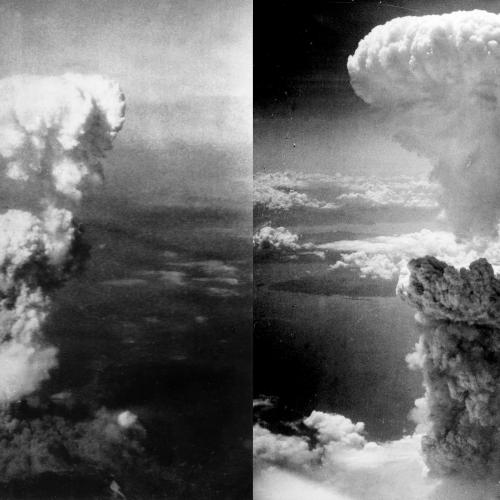
For nearly seven decades, the American public has accepted one version of the events that led to Japans surrender. Aug. 6 [is] the anniversary of the Hiroshima bombings mixed legacy. The leader of our democracy purposefully executed civilians on a mass scale. Yet the bombing also ended the deadliest conflict in human history. In recent years, however, a new interpretation of events has emerged. Tsuyoshi Hasegawa - a highly respected historian at the University of California, Santa Barbara - has marshaled compelling evidence that it was the Soviet entry into the Pacific conflict, not Hiroshima and Nagasaki, that forced Japans surrender. According to his close examination of the evidence, Japan was not poised to surrender before Hiroshima, ... nor was it ready to give in immediately after the atomic bomb. Instead, it took the Soviet declaration of war on Japan, several days after Hiroshima, to bring the capitulation. Both the American and Japanese public have clung to the idea that the mushroom clouds ended the war. That may help explain why Hasegawas thesis, which he first detailed in an award-winning 2005 book and has continued to bolster with new material, is still little known outside of academic circles.
Note: The atomic bombs almost certainly played a role in the decision to end the war, yet this new thesis shows that there were other factors of key importance which may have been downplayed.
Related Stories
Latest News
Key News Articles from Years Past