





































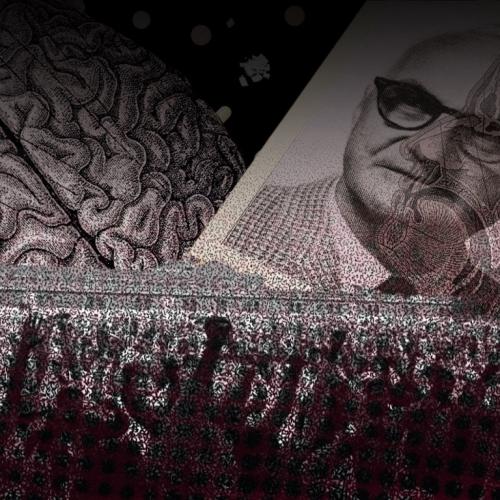

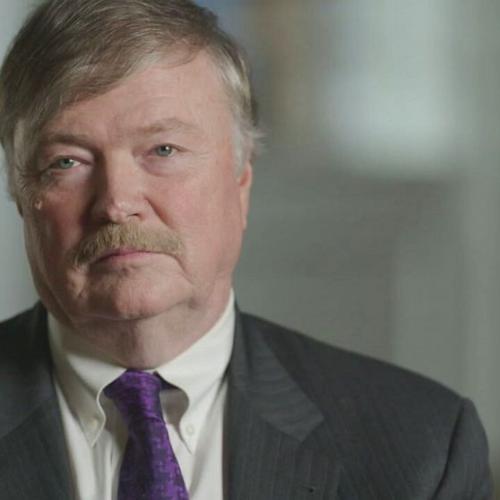

Zbigniew Brzezinski
The Grand Chessboard
American Primacy And It's Geostrategic Imperatives
Key Quotes From Zbigniew Brzezinksi's Seminal 1998 Book
Note: For highly revealing news articles on elite groups and secret societies in which Zbigniew Brzezinski is involved, click here.
"Ever since the continents started interacting politically, some five hundred years ago, Eurasia has been the center of world power."- (p. xiii)
"It is imperative that no Eurasian challenger emerges capable of dominating Eurasia and thus of also challenging America. The formulation of a comprehensive and integrated Eurasian geostrategy is therefore the purpose of this book." (p. xiv)
"How America 'manages' Eurasia is critical. A power that dominates Eurasia would control two of the world's three most advanced and economically productive regions. A mere glance at the map also suggests that control over Eurasia would almost automatically entail Africa's subordination, rendering the Western Hemisphere and Oceania geopolitically peripheral to the world's central continent. About 75 per cent of the world's people live in Eurasia, and most of the world's physical wealth is there as well, both in its enterprises and underneath its soil. Eurasia accounts for about three-fourths of the world's known energy resources." (p.31)
"Never before has a populist democracy attained international supremacy. But the pursuit of power is not a goal that commands popular passion, except in conditions of a sudden threat or challenge to the public's sense of domestic well-being. The economic self-denial (that is, defense spending) and the human sacrifice (casualties, even among professional soldiers) required in the effort are uncongenial to democratic instincts. Democracy is inimical to imperial mobilization." (p.35)
"The momentum of Asia's economic development is already generating massive pressures for the exploration and exploitation of new sources of energy and the Central Asian region and the Caspian Sea basin are known to contain reserves of natural gas and oil that dwarf those of Kuwait, the Gulf of Mexico, or the North Sea." (p.125)
"In the long run, global politics are bound to become increasingly uncongenial to the concentration of hegemonic power in the hands of a single state. Hence, America is not only the first, as well as the only, truly global superpower, but it is also likely to be the very last." (p.209)
"Moreover, as America becomes an increasingly multi-cultural society, it may find it more difficult to fashion a consensus on foreign policy issues, except in the circumstance of a truly massive and widely perceived direct external threat." (p. 211)
Zbigniew Brzezinski's Background
According to his resume, Zbigniew Brzezinski lists the following achievements:
Harvard Ph.D. in 1953
Counselor, Center for Strategic
and International Studies
Professor of American Foreign
Policy, Johns Hopkins University
National Security Advisor
to President Jimmy Carter (1977-81)
Trustee and founder of the Trilateral
Commission
International advisor of several
major US/Global corporations
Associate of Henry Kissinger
Under Ronald Reagan - member
of NSC-Defense Department Commission on Integrated Long-Term Strategy
Under Ronald Reagan - member
of the President's Foreign Intelligence Advisory Board
Past member, Board of Directors,
The Council on Foreign Relations
1988 - Co-chairman of the Bush
National Security Advisory Task Force.
Zbigniew Brzezinski is also a past attendee and presenter at conferences of the Bilderberg Group - a non-partisan affiliation of the wealthiest, most powerful families and corporations on the planet.
The Grand Chessboard by Zbigniew Brzezinski – More Quotes
"The last decade of the twentieth century has witnessed a tectonic shift in world affairs. For the first time ever, a non-Eurasian power has emerged not only as a key arbiter of Eurasian power relations but also as the world's paramount power. The defeat and collapse of the Soviet Union was the final step in the rapid ascendance of a Western Hemisphere power, the United States, as the sole and, indeed, the first truly global power." (p. xiii)
"The attitude of the American public toward the external projection of American power has been much more ambivalent. The public supported America's engagement in World War II largely because of the shock effect of the Japanese attack on Pearl Harbor." (pp 24-5)
"For America, the chief geopolitical prize is Eurasia... Now a non-Eurasian power is preeminent in Eurasia - and America's global primacy is directly dependent on how long and how effectively its preponderance on the Eurasian continent is sustained." (p.30)
"America's withdrawal from the world or because of the sudden emergence of a successful rival - would produce massive international instability. It would prompt global anarchy." (p. 30)
"Two basic steps are thus required: first, to identify the geostrategically dynamic Eurasian states that have the power to cause a potentially important shift in the international distribution of power and to decipher the central external goals of their respective political elites and the likely consequences of their seeking to attain them;... second, to formulate specific U.S. policies to offset, co-opt, and/or control the above..." (p. 40)
"To put it in a terminology that harkens back to the more brutal age of ancient empires, the three grand imperatives of imperial geostrategy are to prevent collusion and maintain security dependence among the vassals, to keep tributaries pliant and protected, and to keep the barbarians from coming together." (p.40)
"Henceforth, the United States may have to determine how to cope with regional coalitions that seek to push America out of Eurasia, thereby threatening America's status as a global power." (p.55)
"Uzbekistan, nationally the most vital and the most populous of the central Asian states, represents the major obstacle to any renewed Russian control over the region. Its independence is critical to the survival of the other Central Asian states, and it is the least vulnerable to Russian pressures." (p. 121)
[Referring to an area he calls the "Eurasian Balkans" and a 1997 map in which he has circled the exact location of the current conflict - describing it as the central region of pending conflict for world dominance] "Moreover, they [the Central Asian Republics] are of importance from the standpoint of security and historical ambitions to at least three of their most immediate and more powerful neighbors, namely Russia, Turkey and Iran, with China also signaling an increasing political interest in the region. But the Eurasian Balkans are infinitely more important as a potential economic prize: an enormous concentration of natural gas and oil reserves is located in the region, in addition to important minerals, including gold." (p.124)
"The world's energy consumption is bound to vastly increase over the next two or three decades. Estimates by the U.S. Department of energy anticipate that world demand will rise by more than 50 percent between 1993 and 2015, with the most significant increase in consumption occurring in the Far East. The momentum of Asia's economic development is already generating massive pressures for the exploration and exploitation of new sources of energy and the Central Asian region and the Caspian Sea basin are known to contain reserves of natural gas and oil that dwarf those of Kuwait, the Gulf of Mexico, or the North Sea." (p.125)
"Uzbekistan is, in fact, the prime candidate for regional leadership in Central Asia." (p.130)
"Once pipelines to the area have been developed, Turkmenistan's truly vast natural gas reserves augur a prosperous future for the country's people." (p.132)
"In fact, an Islamic revival - already abetted from the outside not only by Iran but also by Saudi Arabia - is likely to become the mobilizing impulse for the increasingly pervasive new nationalisms, determined to oppose any reintegration under Russian - and hence infidel - control." (p. 133).
"For Pakistan, the primary interest is to gain Geostrategic depth through political influence in Afghanistan - and to deny to Iran the exercise of such influence in Afghanistan and Tajikistan - and to benefit eventually from any pipeline construction linking Central Asia with the Arabian Sea." (p.139)
"Turkmenistan... has been actively exploring the construction of a new pipeline through Afghanistan and Pakistan to the Arabian Sea..." (p.145)
"It follows that America's primary interest is to help ensure that no single power comes to control this geopolitical space and that the global community has unhindered financial and economic access to it." (p148)
"China's growing economic presence in the region and its political stake in the area's independence are also congruent with America's interests." (p.149)
"America is now the only global superpower, and Eurasia is the globe's central arena. Hence, what happens to the distribution of power on the Eurasian continent will be of decisive importance to America's global primacy and to America's historical legacy." (p.194)
"Without sustained and directed American involvement, before long the forces of global disorder could come to dominate the world scene. And the possibility of such a fragmentation is inherent in the geopolitical tensions not only of today's Eurasia but of the world more generally." (p.194)
"With warning signs on the horizon across Europe and Asia, any successful American policy must focus on Eurasia as a whole and be guided by a Geostrategic design." (p.197)
"That puts a premium on maneuver and manipulation in order to prevent the emergence of a hostile coalition that could eventually seek to challenge America's primacy." (p. 198)
"The most immediate task is to make certain that no state or combination of states gains the capacity to expel the United States from Eurasia or even to diminish significantly its decisive arbitration role." (p. 198)
"Moreover, as America becomes an increasingly multi-cultural society, it may find it more difficult to fashion a consensus on foreign policy issues, except in the circumstance of a truly massive and widely perceived direct external threat." (p. 211)
Note: This essay is drawn largely from the work of former LAPD narcotics investigator Michael Ruppert in his essay "A War in the Planning for Four Years: How Stupic Do They Think We Are?"
To order The Grand Chessboard by Zbigniew Brzezinski through amazon.com, click here
For revealing news articles on elite groups in which Brzezinski is involved, click here
To explore our reliable, verifiable two-page summary of the 9/11 cover-up, click here
To visit our reliable, verifiable ten-page summary of the 9/11 cover-up, click here
FAIR USE NOTICE: This site contains copyrighted material the use of which has not always been specifically authorized by the copyright owner. We are making such material available in our efforts to advance understanding of criminal justice, political, human rights, economic, democracy, scientific, and social justice issues, etc. We believe this constitutes a 'fair use' of any such copyrighted material as provided for in section 107 of the US Copyright Law. In accordance with Title 17 U.S.C. Section 107, the material on this site is distributed without profit to those who have expressed a prior interest in receiving the included information for research and educational purposes. For more information go to: http://www.law.cornell.edu/uscode/17/107.shtml. If you wish to use copyrighted material from this site for purposes of your own that go beyond 'fair use', you must obtain permission from the copyright owner.




